
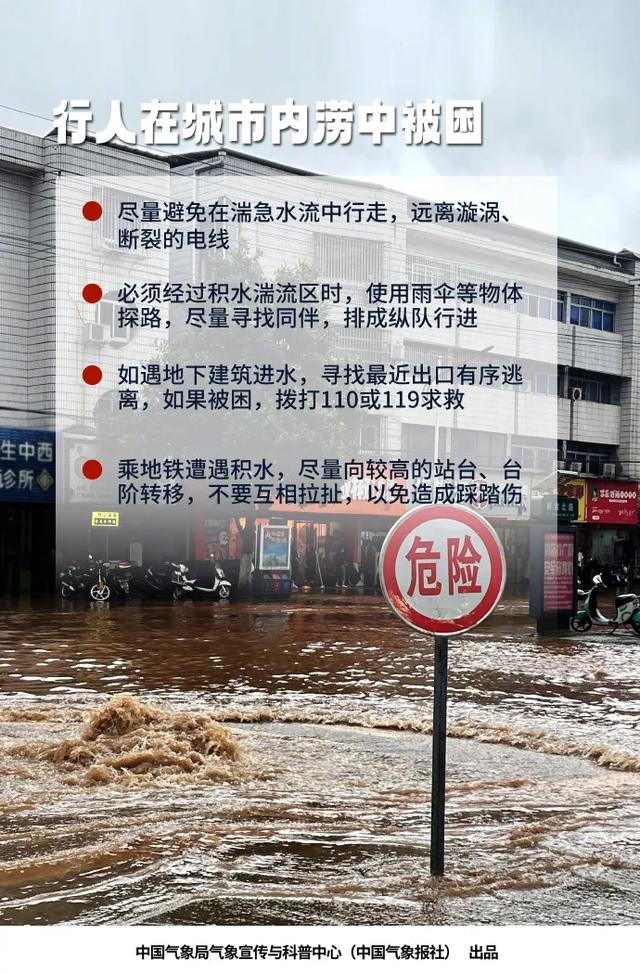
The China Meteorological Administration (CMA) escalated its emergency response to severe weather on Monday, June 15, 2026, raising the alert level for violent rain and thunderstorms from Level IV to Level III—a move signaling heightened risk across multiple provinces. The decision follows forecasts of catastrophic flooding in southern China, where some regions face hourly rainfall exceeding 90 millimeters and localized totals surpassing 600 millimeters over three days.
Why the Emergency Response Was Upgraded
The CMA’s upgrade reflects a rare convergence of extreme weather systems, with Guangdong, Guangxi, Fujian, and Yunnan under the most severe threat. According to Everyday Finance Network, the agency cited “persistent heavy rainfall” and “localized extreme precipitation” as justification for the III-level response—the second-highest tier. Central Meteorological Observatory warnings already included yellow alerts for flooding and blue alerts for thunderstorms, but the CMA’s decision marks a shift from monitoring to active crisis management.
- Rainfall totals: Will Guangdong’s coastal areas exceed the 600-millimeter threshold, triggering provincial-level evacuations?
- Infrastructure strain: Can Haimen Bay’s 24-span bridge and other drainage systems handle the volume, or will urban flooding worsen?
- Government coordination: Will the CMA’s III-level alert prompt central funding for affected regions, or will local governments bear the cost?
- Climate signals: Is this event part of a broader trend of “dragon boat water” intensification, or an isolated anomaly?
The CMA’s decision underscores a harsh reality: China’s southern provinces are on the front lines of a warming climate, where extreme rainfall is no longer a seasonal nuisance but a recurring crisis. For now, the focus remains on survival—but the long-term question is whether emergency protocols can keep pace with the changing weather.

- Record-breaking rainfall: Guangdong’s coastal areas and Guangxi’s eastern regions are projected to receive 250–280 millimeters in 24 hours, with some locales exceeding 600 millimeters over three days—a threshold that typically triggers provincial-level emergency declarations.
- Secondary hazards: Short bursts of 90+ millimeters per hour could overwhelm drainage systems, while thunderstorms with 10-level winds (gusts over 22 meters per second) threaten infrastructure in Hebei and Shanxi.
- Historical precedent: The CMA’s III-level response has been activated only three times since 2010, most recently during Typhoon In-fa in 2021, when Fujian and Zhejiang faced similar flooding risks.
The decision aligns with a broader pattern of escalating weather emergencies in China this year. As Guangming Daily noted, the “dragon boat water” phenomenon—an annual surge in June rainfall—has arrived earlier and with greater intensity than in past decades. Meteorologists attribute this to a stalled subtropical high-pressure system over the South China Sea, which is funneling moisture from the Pacific into southern provinces.
Ground-Level Impact: Flooding and Evacuations
While the CMA’s alert is a national-level directive, its immediate effects are being felt in Guangdong’s Shantou and Shanwei regions, where local authorities have already activated emergency protocols. According to China News Service, Shantou issued its first orange-level flood warning of 2026 on June 14 after provincial roads were submerged and agricultural fields flooded. In nearby Haimen Bay, a 24-span bridge was opened to its full capacity to drain excess water, though officials reported no major structural damage as of Monday afternoon.
The human toll remains limited but growing. In Pingdu County, authorities have relocated 44 residents from low-lying villages, while coastal towns like Jiangmen have suspended fishing operations due to storm surges. The CMA’s warnings also urge residents to avoid outdoor activities, particularly near rivers or construction sites, where debris and landslides pose additional risks.
What Comes Next: Forecasts, Risks, and Response
The next 72 hours will determine whether the CMA’s response is sufficient.
| Region | Rainfall Forecast (mm) | Threat Level | Key Risks |
|---|---|---|---|
| Guangdong (east coast) | 250–600+ | Critical | Urban flooding, landslides, power outages |
| Guangxi (south) | 150–300 | High | River overflow, agricultural damage |
| Hebei/Shanxi | 50–100 | Moderate | Thunderstorm winds, localized flooding |
Beyond immediate weather, the CMA’s response raises questions about long-term preparedness. While the agency’s III-level alert is a reactive measure, climate scientists have warned for years that China’s southern provinces are increasingly vulnerable to “pluvial flooding”—a term for extreme rainfall events unlinked to typhoons. As Sina Finance highlighted, the absence of a dedicated “pluvial flood” alert system in China’s emergency protocols may delay responses to non-typhoon rainfall disasters.
How This Compares to Past Disasters
The current crisis shares striking parallels with the 2014 Hunan floods, when a similar subtropical high-pressure system dumped 400 millimeters of rain in 48 hours across Hunan and Jiangxi. Then, as now, the CMA’s initial response was slow, with provincial governments bearing the brunt of evacuation efforts. The difference in 2026? The CMA’s preemptive upgrade suggests a shift toward national coordination—though whether local governments will have the resources to match the alert level remains unclear.
One critical distinction: this year’s event lacks the typhoon trigger that often justifies emergency declarations. Without a named storm, media and public attention may lag, complicating relief efforts. “The danger is that people underestimate the threat when there’s no typhoon warning,” said a CMA spokesperson in a briefing cited by Everyday Finance Network. “This is purely a rainfall-driven disaster.”
What Readers Should Watch For
The next 48 hours will reveal whether the CMA’s response is enough.
- Rainfall totals: Will Guangdong’s coastal areas exceed the 600-millimeter threshold, triggering provincial-level evacuations?
- Infrastructure strain: Can Haimen Bay’s 24-span bridge and other drainage systems handle the volume, or will urban flooding worsen?
- Government coordination: Will the CMA’s III-level alert prompt central funding for affected regions, or will local governments bear the cost?
- Climate signals: Is this event part of a broader trend of “dragon boat water” intensification, or an isolated anomaly?
The CMA’s decision underscores a harsh reality: China’s southern provinces are on the front lines of a warming climate, where extreme rainfall is no longer a seasonal nuisance but a recurring crisis. For now, the focus remains on survival—but the long-term question is whether emergency protocols can keep pace with the changing weather.
Find more reporting in our News section.
