
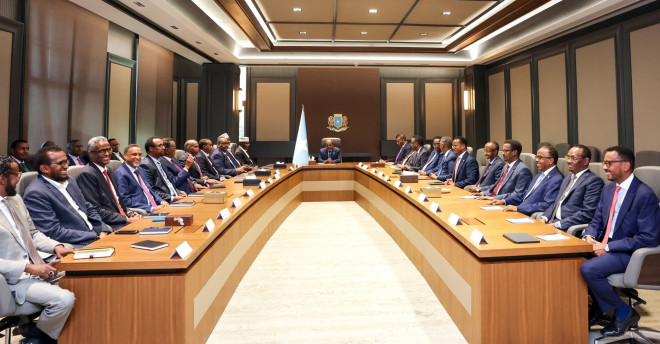
Federal Government of Somalia (FGS) forces engaged in armed clashes with opposition-aligned militias in Mogadishu on June 3 and June 4, 2026, amid a deepening political crisis over constitutional amendments. The violence followed the FGS’s controversial move to extend presidential and parliamentary terms by one year, prompting widespread protests from opposition leaders.
Constitutional Amendments and the Shift to Direct Elections
The current standoff is rooted in a series of legislative changes finalized between March 2024 and March 2026. According to reporting by Hiiraan, the Somali Federal Parliament enacted amendments that extended presidential and parliamentary terms from four to five years and replaced the country’s long-standing indirect, clan-based electoral model with a system of direct universal suffrage.

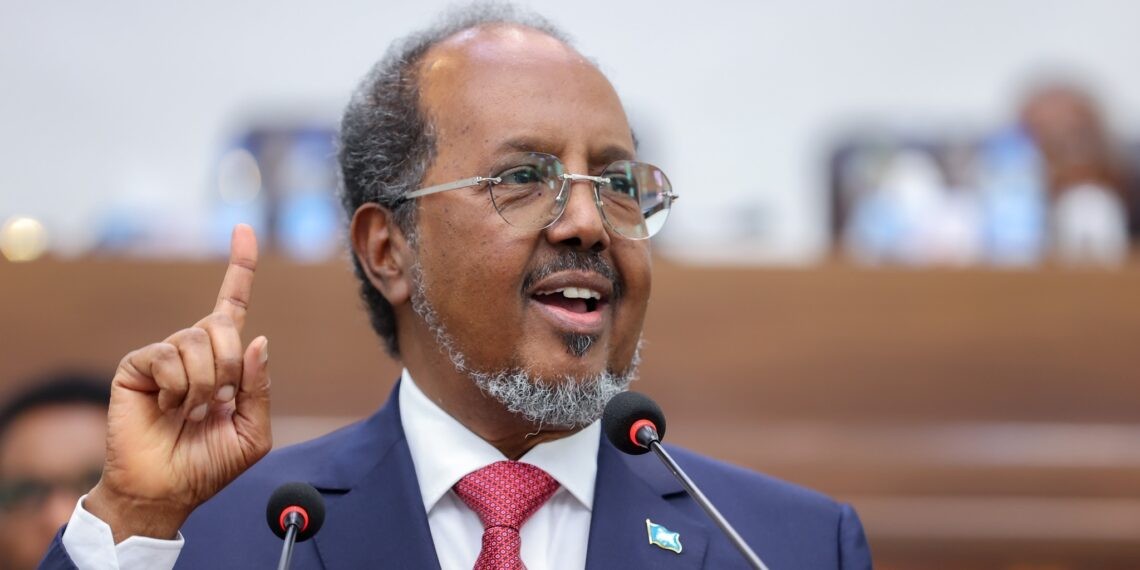
President Hassan Sheikh Mohamud has framed these changes as a necessary evolution for Somali democracy, arguing that the traditional clan-based system is susceptible to corruption. Supporters of the reform, including lawmaker Mohamed Ibrahim Moalimuu, suggested the previous process was fundamentally broken. “This system is too dirty and keeps people out,” Moalimuu told Foreign Policy, adding that parliamentary seats could be bought for anywhere from $100,000 to $1.3 million.
In Somalia’s political history, the transition from the “4.5” power-sharing formula—a clan-based system that has governed the nation since the 2000 Arta Conference—to direct elections has been a long-sought but elusive goal. Previous administrations, including those of Mohamed Abdullahi Mohamed (Farmaajo) and Hassan Sheikh Mohamud himself in his first term, had frequently deferred the move to universal suffrage due to logistical, security, and political hurdles. The 2026 legislative push represents a significant departure from these precedents, aiming to establish a centralized democratic mandate. However, the lack of a national census and the ongoing security threat posed by the militant group al-Shabaab have led critics to argue that the infrastructure required for such an election is currently non-existent, making the term extensions appear to be a strategy for consolidating power rather than facilitating democratic participation.
Escalation of Violence in Mogadishu
Tensions reached a breaking point in early June when FGS forces deployed to central Mogadishu to block planned protests organized by the Somali Future Council (SFC), a coalition of opposition leaders. As detailed by Critical Threats, security forces surrounded the temporary headquarters of former Prime Minister Hassan Ali Khaire and former President Sharif Sheikh Ahmed. The resulting skirmishes persisted for two days, forcing both leaders to abandon their positions.
Casualty reports regarding the clashes remain inconsistent. The Somali Ministry of Health and Human Services recorded one death and 55 injuries, while a United Nations report cited at least nine fatalities, according to the same analysis from Critical Threats. Opposition figures have characterized the government’s actions as a targeted campaign to silence political dissent. In a statement reported by Foreign Policy, former President Sharif Sheikh Ahmed alleged that “Mohamud has directed a sustained and indiscriminate military assault with the apparent objective of killing me, former President Sheikh Sharif Sheikh Ahmed, dozens of respected traditional elders, and other political leaders in Mogadishu.”
The geography of the violence was confined largely to the capital’s central districts, which are typically heavily secured. The deployment of state security forces against high-level political figures is a rare escalation that echoes the political instability seen in early 2021, when similar electoral disputes resulted in gunfire between government forces and opposition-allied guards. The mobilization of militias by opposition figures highlights the reliance on private or clan-based security arrangements, which continue to operate in parallel to the Somali National Army (SNA) and the Somali Police Force. This dual-security structure is a recurring feature of Somali politics, where leaders often maintain personal security details drawn from their specific sub-clans for protection in the absence of a fully unified national security apparatus.
International Response and the Future of AUSSOM
The violence has drawn sharp rebukes from regional and international bodies, with the African Union Commission and the Intergovernmental Authority on Development (IGAD) calling for immediate restraint. As analyzed by Amani Africa, the timing is particularly precarious for the African Union Support and Stabilisation Mission in Somalia (AUSSOM), which is already navigating significant financial and operational constraints. The mission aims to transfer security responsibilities to Somali forces, but the current political volatility threatens to undermine years of security gains.

AUSSOM is the successor to the African Union Transition Mission in Somalia (ATMIS), which was established to gradually draw down international forces while training Somali counterparts. The mission functions under a United Nations mandate that requires close coordination between the African Union, the Federal Government of Somalia, and international donors. The effectiveness of this transition is contingent upon political stability in Mogadishu; when the central government focuses its military assets on internal political suppression rather than counter-insurgency, the security vacuum is frequently exploited by al-Shabaab. International partners, including the United States, the European Union, and the United Kingdom, often provide the primary funding for these missions, and they have historically exerted pressure on Somali leadership to prioritize consensus-building to avoid jeopardizing the mission’s funding and the broader security architecture.
While the immediate fighting has subsided following mediation by clan elders, the underlying political impasse remains unresolved. The government’s goal of direct elections faces stiff opposition from figures like former President Mohamed Abdullahi Mohamed, who argue that the new constitutional framework is a pretext for an illegal power grab. With formal dialogue between the government and the opposition having collapsed on May 15, the path toward a stable electoral process remains unclear as the country heads into the remainder of 2026. The reliance on traditional clan elders to mediate the conflict highlights the limits of current state institutions, as these elders continue to function as the ultimate arbiters in disputes where formal legal and political mechanisms fail to command the trust of all parties.
Find more reporting in our World section.
