

Researchers at the University of Zurich and ETH Zurich developed a method to observe protein dynamics in real-time, moving beyond static structural snapshots. Published June 10, 2026, in the journal Nature, the study combines time-resolved serial crystallography with machine learning to visualize protein “breathing” motions at room temperature.
Imaging Protein Motion at Room Temperature
Traditional structural biology has long relied on X-ray crystallography to determine the shapes of proteins. However, this method typically requires cooling samples to cryogenic temperatures, which effectively freezes the protein in a single, rigid state. This process obscures the functional movements—often described as “breathing”—that proteins undergo during chemical reactions. In standard crystallography, proteins are crystallized and exposed to X-rays, which diffract off the atoms to create a pattern that reveals the molecule’s spatial arrangement. By cooling samples to liquid nitrogen temperatures, researchers prevent the high-energy X-ray beams from causing immediate radiation damage, which would otherwise vaporize the delicate biological samples before enough data could be collected.
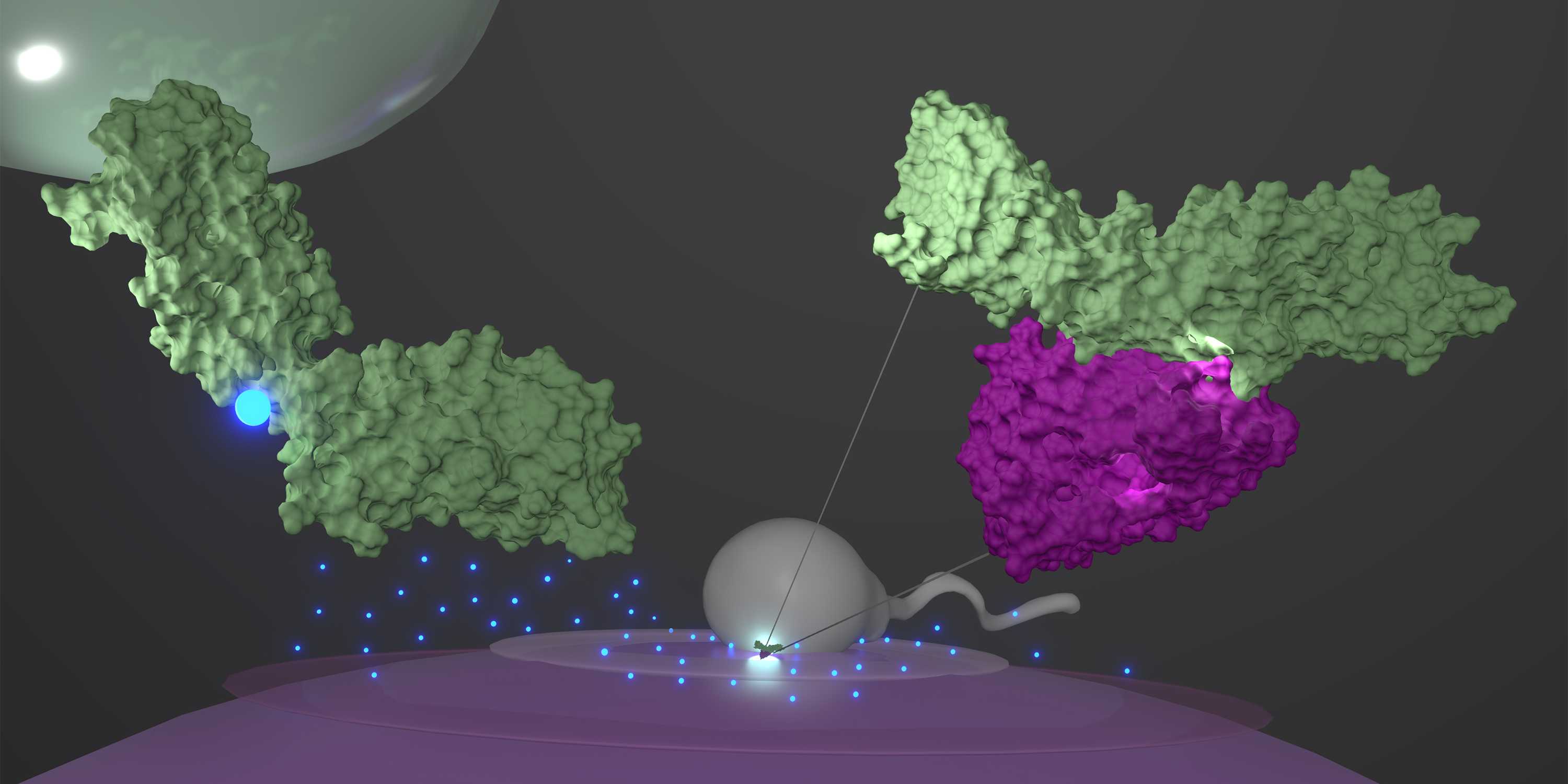

The research team, led by Dr. Elena Rossi at the University of Zurich, utilized X-ray free-electron lasers (XFELs) to capture diffraction data from protein microcrystals at room temperature. By delivering extremely short, high-intensity pulses of X-ray light, the researchers recorded data before the radiation could destroy the samples. This technique allowed for the observation of structural states that were previously hidden by cryogenic cooling. The use of XFEL technology, such as the facilities found at the European XFEL or the Linac Coherent Light Source (LCLS), is essential for this “diffraction-before-destruction” paradigm, where the pulse duration is shorter than the timescale of the atomic motion induced by radiation damage.
Applying Machine Learning to Structural Data
Capturing the data is only the first step; interpreting the high-speed snapshots requires significant computational power. The team integrated a machine learning framework designed to reconstruct the continuous motion of the protein from thousands of individual, disordered images. In typical crystallography, crystals are rotated to get a full 3D map. With serial crystallography using XFELs, crystals are injected into the beam in a random, disordered stream, meaning each snapshot offers a unique, unpredictable orientation and state of the protein.
The algorithm functions by identifying correlations between the scattered X-ray patterns. By mapping these patterns, the software generates a trajectory of the protein’s movement. According to the study, this approach provides a high-resolution view of the structural transitions that occur within milliseconds. This represents a significant shift from traditional post-processing, which often averages out structural heterogeneity. Instead, the machine learning model treats the diversity of the snapshots as a feature to be analyzed, rather than noise to be filtered out.
The integration of machine learning allows us to turn thousands of snapshots into a coherent movie of atomic movement, revealing the flexibility essential for biological function. Dr. Elena Rossi, lead researcher.
Implications for Drug Design and Biochemistry
This advancement offers a new perspective on how enzymes and receptors interact with drugs. Many pharmaceutical compounds function by binding to specific, transient shapes of a protein. If a drug designer only observes the “frozen” state, they may miss the binding site that only opens during the protein’s natural breathing cycle. This is particularly critical for G protein-coupled receptors (GPCRs) and other membrane proteins, which are the targets for a vast majority of modern medicines but are notoriously difficult to capture in their active, moving states.
The methodology provides a more accurate representation of the physiological environment. While cryogenic methods remain standard for high-resolution static mapping, the new room-temperature approach highlights the importance of conformational flexibility. In biochemistry, the “lock-and-key” model of protein binding has long been superseded by the “induced fit” model, which posits that proteins adjust their shape to accommodate ligands. Being able to visualize these adjustments in real-time provides concrete data to support these theoretical models of molecular interaction.
Next Steps in Dynamic Imaging
While the current study demonstrates the feasibility of combining XFEL data with machine learning, the researchers noted that the technique requires substantial data sets to achieve high structural fidelity. Future efforts will focus on increasing the throughput of the imaging process to study more complex, membrane-bound proteins. Currently, the bottleneck remains the speed at which microcrystals can be delivered into the X-ray path and the sheer volume of images required for the machine learning model to converge on an accurate structural map.
The research team intends to refine the machine learning models to reduce the amount of raw data required for reconstruction. As of June 2026, the scientific community is evaluating how to scale this method for broader applications in structural genomics and drug discovery, aiming to transition from static modeling to a more dynamic understanding of molecular life. The broader goal is to eventually enable high-throughput screening of drug candidates against these dynamic protein states, potentially identifying novel inhibitors that were previously invisible to conventional structural biology techniques.
Find more reporting in our Tech section.
