
Six of nine Volkswagen Group board members recently identified the company’s existence as being under threat, according to an internal survey. The findings, reported by Der Spiegel, reveal deep-seated anxiety among top leadership regarding the automaker’s future, as the firm grapples with declining European demand, high production costs, and intense competition from Chinese manufacturers.
Internal Survey Reveals Leadership Crisis
The sentiment within Volkswagen’s executive ranks is stark. As reported by Sostav.ru, an anonymous survey conducted to assess management cohesion and efficiency yielded no votes for the company’s current situation being stable. Instead, six out of nine board members characterized the company’s position as an existential threat, while the remaining three described the environment as merely tense.
This internal assessment, which was reportedly integrated into an analytical document for CEO Oliver Blume by consultants from Boston Consulting Group, suggests that the concerns are not merely external speculation but are held by the company’s own architects. The lack of consensus on a path forward adds another layer of complexity; according to die Welt, four executives explicitly stated that the board lacks agreement on key strategic issues. The involvement of external consultants like Boston Consulting Group is a standard corporate practice during periods of severe financial distress, typically intended to provide an objective, data-driven framework for restructuring when internal consensus has collapsed.
Production Cuts and Workforce Reductions
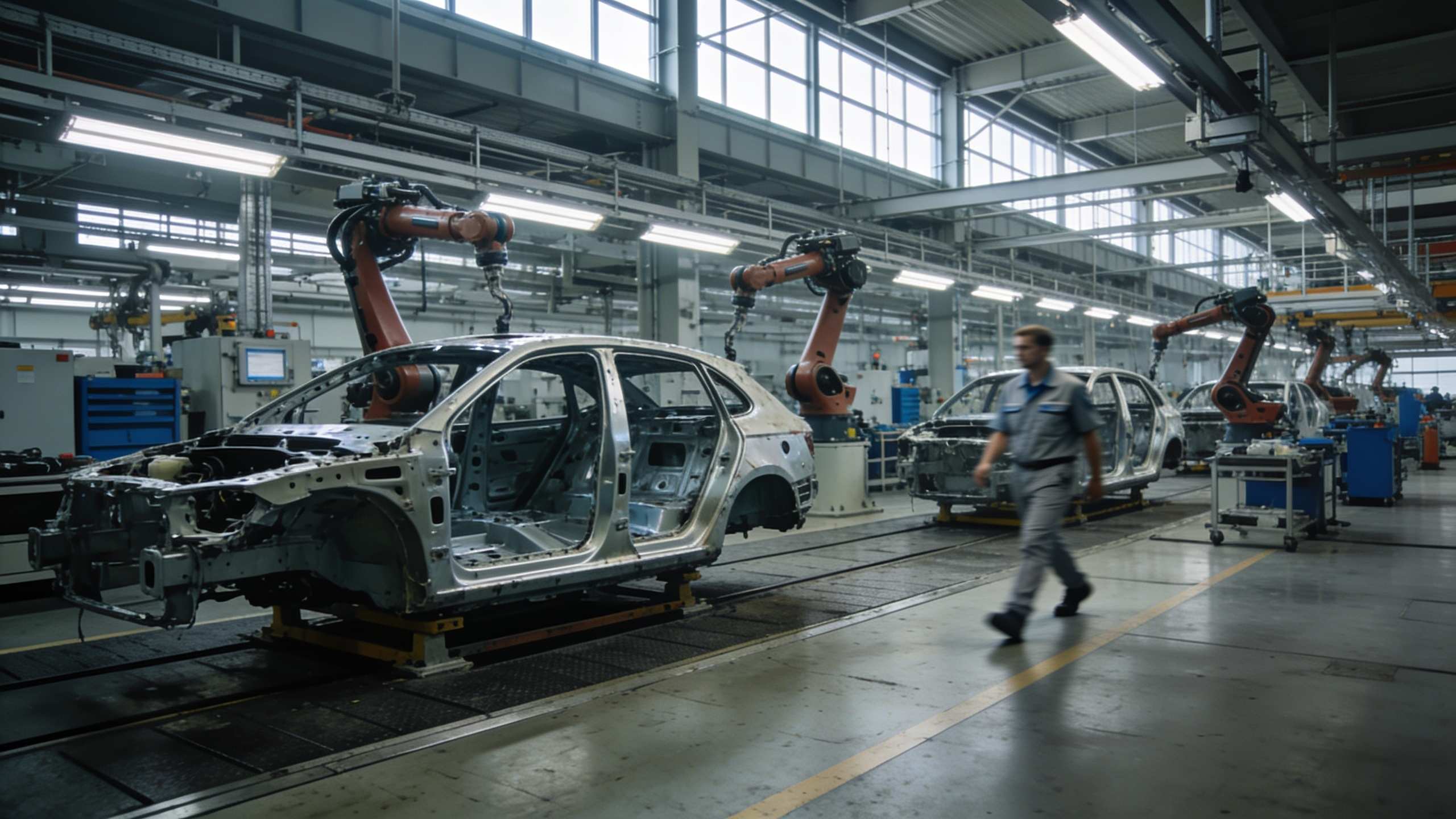
Volkswagen is responding to these pressures with a multi-year restructuring plan. The company aims to reduce its annual production capacity by approximately 730,000 vehicles by 2028, as detailed by 110km.ru. The workforce impact is equally significant: the group plans to cut 50,000 jobs by 2030, a figure that encompasses reductions across the broader group, including Audi and Porsche.
The shift is already visible in the company’s physical footprint. In late 2025, Volkswagen stopped vehicle production at its Dresden plant for the first time in 88 years. The facility is being repurposed as a research hub focused on artificial intelligence, robotics, and chip design—a pivot necessitated by the company’s need to cut costs and innovate in a rapidly changing market. This represents a broader trend in the automotive sector, where legacy manufacturers are increasingly attempting to pivot toward high-margin technology services to offset the erosion of margins in traditional internal combustion and electric vehicle manufacturing.
Market Headwinds and Strategic Pivots
The crisis at Volkswagen is largely attributed to a “perfect storm” of economic factors. BFM.ru reports that the primary drivers are aggressive competition from Chinese auto manufacturers and a sharp decline in European demand for electric vehicles following the removal of government subsidies. European automakers have historically relied on government incentives to bridge the price gap between electric and fossil-fuel vehicles; the withdrawal of these supports has left many firms with high inventory levels and underutilized factories.
These market conditions have forced the automaker to look beyond its traditional business model. Reports indicate the company is exploring unconventional revenue streams to stabilize its operations. This includes potential negotiations to produce components for Israel’s Iron Dome defense system by 2027, according to EA Daily. Such diversification efforts are consistent with the company’s need to leverage its existing manufacturing expertise in industrial engineering and precision robotics for sectors outside of consumer automotive, which faces a cyclical downturn.
Broader Significance and Regulatory Context
The stakes for Volkswagen are uniquely high given its role as a cornerstone of the German industrial economy. As a multinational entity, its financial health directly influences supply chains across Europe. The current tension between board members mirrors historical struggles within the group, where the competing interests of labor representatives, regional government stakeholders—such as the state of Lower Saxony, which holds a significant voting stake—and private shareholders have often complicated rapid decision-making.
In the automotive industry, structural overcapacity is typically addressed through plant closures and consolidation of platforms. However, European labor laws and collective bargaining agreements, such as those governing Volkswagen’s German workforce, often impose significant costs and administrative hurdles on such reductions. The move to shift the Dresden plant into a technology hub is a strategic attempt to circumvent these limitations by retraining rather than merely terminating the workforce.
The Road Ahead
The next 30 days are critical as the firm attempts to reconcile its board’s internal divisions with the reality of its shrinking market share. With no consensus on the company’s future direction, the pressure on CEO Oliver Blume to deliver a unified strategy remains intense. Investors and industry analysts are watching closely to see if the proposed shift toward AI and defense-related manufacturing can offset the structural decline in traditional automotive production.
The situation in the Volkswagen concern may turn out to be potentially much more dramatic than previously thought. Such a conclusion was reached not by automotive experts or external consultants, but by the company’s own managers. The lack of alignment within the highest echelons of the organization serves as a diagnostic indicator of the severity of the crisis, suggesting that the firm is in the midst of a fundamental transformation of its identity as a global manufacturer.
Find more reporting in our Business section.
