
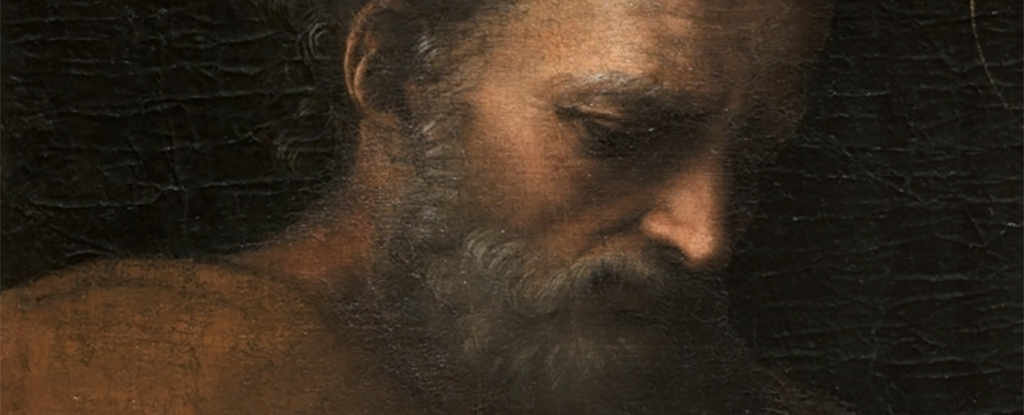
AI Identifies Possible Forgery in Raphael Painting’s St. Joseph Face
An artificial intelligence algorithm has identified the face of St. Joseph in Raphael’s “Madonna della Rosa” as likely not painted by the Renaissance master himself, potentially reshaping the understanding of the artwork’s origins.
Researchers from the UK and US developed a custom analysis algorithm trained on authenticated Raphael paintings to recognize his distinctive style, examining brushstrokes, color palettes, and shading at a microscopic level. The AI, based on Microsoft’s ResNet50 architecture and a Support Vector Machine, previously demonstrated 98 percent accuracy in identifying Raphael’s work. While the Madonna, the Child, and St. John were confirmed as Raphael’s work, the analysis flagged St. Joseph’s face as an anomaly. This discovery adds to a long-running debate about the painting’s complete authorship.
“Using deep feature analysis, we used pictures of authenticated Raphael paintings to train the computer to recognize his style to a very detailed degree, from the brushstrokes, the color palette, the shading and every aspect of the work,” explained mathematician and computer scientist Hassan Ugail of the University of Bradford. “The computer sees far more deeply than the human eye.” Art critics have long suspected that Raphael may not have completed the entire painting, which was created between 1518 and 1520 and is currently housed at the Museo Nacional del Prado in Madrid.
The team believes that one of Raphael’s pupils, possibly Giulio Romano, may have painted St. Joseph’s face, though further investigation is needed. Ugail emphasized that the AI is intended to assist art experts, not replace them, and that authentication requires considering provenance, pigments, and the condition of the artwork, as detailed in their research published in Heritage Science. The use of AI in art authentication represents a growing trend in the field, offering new tools for uncovering hidden details and verifying artistic legacies.
Researchers will continue to refine the algorithm and apply it to other works of art, hoping to shed light on the authorship of disputed paintings and deepen our understanding of artistic techniques.
