
AI Pioneer Fei-Fei Li to Receive Top Engineering Prize Alongside ‘Godfathers’ of AI
Professor Fei-Fei Li will today be presented with the 2025 Queen Elizabeth Prize for Engineering, becoming the only woman among seven artificial intelligence pioneers recognized for their groundbreaking contributions to modern machine learning – a field rapidly transforming industries and daily life.
The ceremony, taking place at St James’s Palace, will honor Professor Li alongside Yoshua Bengio, Bill Dally, Geoffrey Hinton, John Hopfield, Nvidia founder Jensen Huang, and Meta’s Chief AI Scientist Yann LeCun. Professors Hinton, Bengio, and LeCun have been widely acknowledged as the “Godfathers of AI” since jointly receiving the 2018 Turing Award. Professor Li, however, has embraced the title of “godmother” of AI, stating, “For all the young women I work with and the generations of girls to come, I’m okay now accepting this title.” She initially hesitated, recognizing the importance of visibility for women in STEM, adding, “Because men are pretty easily called godfathers or founding fathers.”
Professor Li’s work centers on computer vision, notably her development of ImageNet, a large-scale image recognition dataset that has been pivotal in advancing AI capabilities. This dataset “open[ed] the floodgate of data-driven AI,” enabling computers to “see” and interpret images with increasing accuracy. She currently co-directs Stanford’s Human-Centered AI Institute and is co-founder and CEO of World Labs. The laureates hold differing views on the potential risks of AI; while Dr. Hinton has warned of potential “extinction-level threat,” Dr. LeCun believes such concerns are overstated. Professor Li advocates for a “science based, pragmatic method” in discussing AI, emphasizing the need for “moderated and grounded in facts and science instead of the extreme rhetorics.” You can learn more about the ethical considerations surrounding AI at the Markkula Center for Applied Ethics.
This marks the first time all seven recipients will gather in person to accept the Queen Elizabeth Prize for Engineering, awarded annually to engineers whose innovations benefit humanity – previous winners include Sir Tim Berners-Lee, inventor of the World Wide Web. Lord Vallance, chair of the Queen Elizabeth Prize for Engineering Foundation, stated the winners “represent the very best of engineering.”
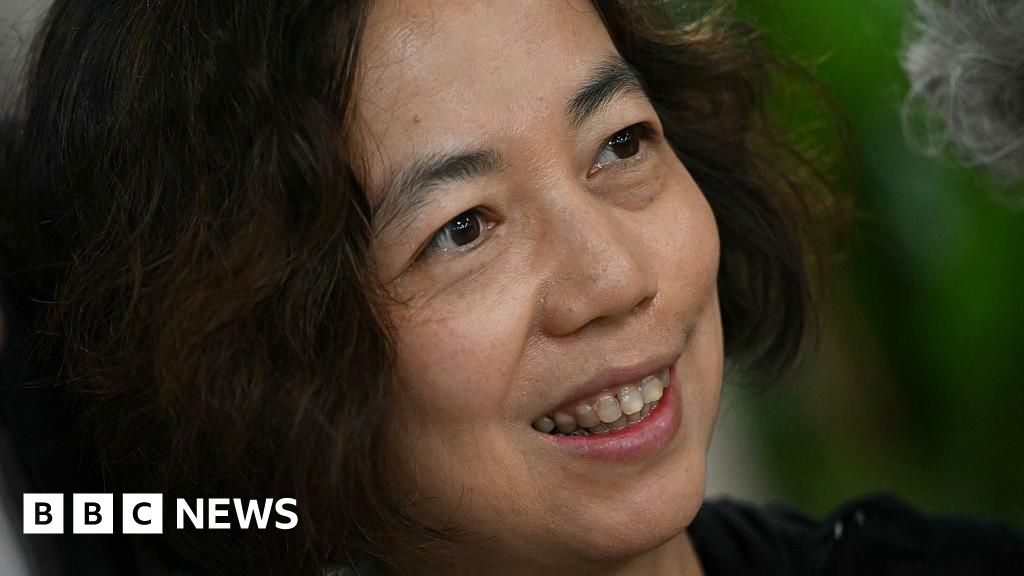
The ‘godmother’ of AI, Professor Fei-Fei Li has told the BBC that being the only woman amongst seven pioneers of artificial Intelligence being presented with a top engineering prize by the King today makes her “proud to be different”.
The King will present the 2025 Queen Elizabeth Prize for Engineering to Prof Li and six others during a ceremony at St James’s Palace.
Those honoured alongside her are Prof Yoshua Bengio, Dr Bill Dally, Dr Geoffrey Hinton, Prof John Hopfield, Nvidia founder Jensen Huang and Meta’s Chief AI Scientist Dr Yann LeCun.
They are being recognised for their contributions to the development of modern machine learning, a field that underpins the rapid advancement of AI.
Dr Hinton, Prof Bengio and Yann LeCun, currently Chief AI Scientist at Meta have widely been recognised as the “Godfathers of AI” since they were jointly awarded the 2018 Turing Award.
There is however only one so-called “godmother” of AI and Prof Li told the BBC she has grown to accept the moniker.
“I would not call myself godmother of anything,” she said.
She said a few years ago when people started calling her that, she had to “pause and recognise if I rejected this, it would miss an opportunity for women scientists and technologists to be recognised this way”.
“Because men are pretty easily called godfathers or founding fathers.”
“For all the young women I work with and the generations of girls to come, I’m okay now accepting this title,” she added.
Born in China, Prof Li emigrated to the US as a teenager and went on to excel in computer science. She is co-director for Stanford’s Human-Centered AI Institute and co-founder and CEO of World Labs.
It is her work on ImageNet a project which enabled major advances in computer vision for which she is recognised.
She and her students created large-scale image recognition datasets upon which a lot of artificial intelligence technology is now built. It paved the way for computer vision – working out how computers could ‘see’.
She says the importance of that data set “open the floodgate of data-driven AI”.
She thinks the next AI milestone will come when it is able to interact with the world around it.
This ability was is “innately important and native to animals and humans”, and if this could be unlocked in AI, it could “superpower” humans in many ways, “including creativity, robotic learning, design and architecture”.
This will be the first time all seven laureates have come together in person.
The three “godfathers” have publicly stated opposing views on how dangerous AI could be.
Dr Hinton has repeatedly expressed serious concerns about the potential for AI to pose an “extinction-level threat”. But Prof LeCun, who also works at Meta has written that apocalyptic warnings are overblown.
Prof Li says she takes a more “pragmatic approach” and says the disagreement amongst scientists is “healthy”.
“We’re used to even disagreement, and I think that’s healthy. A topic as profound and impactful as AI requires a lot of healthy debate and public discourse.
“I think in the case of AI, both extreme rhetorics concern me…I have always advocated for a much more science based, pragmatic method in communicating and educating the public.
“So, yes, I would like to see our communication of AI to be much more moderated and grounded in facts and science instead of the extreme rhetorics”.
The Queen Elizabeth prize is awarded annually to engineers responsible for groundbreaking innovations which globally benefit humanity. Previous recipients include Sir Tim Berners Lee, the creator of the World Wide Web.
Lord Vallance, chair of the Queen Elizabeth Prize for Engineering Foundation, said the winners “represent the very best of engineering,” adding that their work “demonstrates how engineering can both sustain our planet and transform the way we live and learn.”
Additional reporting by Philippa Wain
