

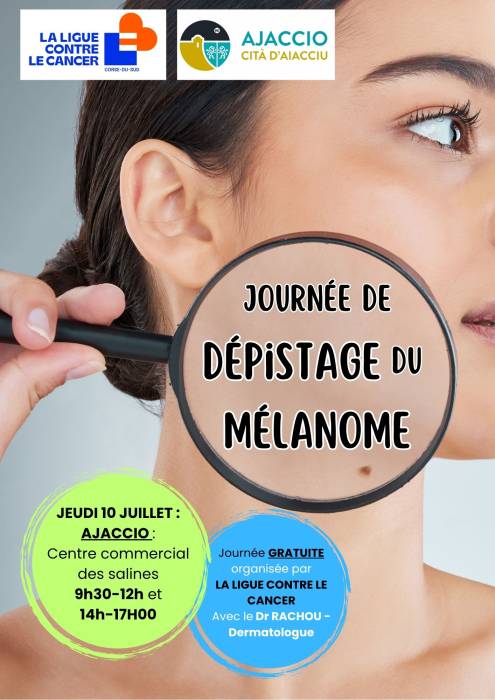
Public health initiatives in Ajaccio, Corsica, have recently prioritized skin cancer awareness, organizing free screening events to address the risks posed by excessive ultraviolet exposure. These local efforts reflect a broader regional commitment to early melanoma detection, aimed at reducing the long-term health impacts of sun-related skin damage among residents.
Addressing Skin Cancer Risks in Coastal Regions
The Mediterranean climate, while a significant draw for tourism and outdoor activity, presents a persistent public health challenge regarding dermatological safety. In Ajaccio, health authorities and medical professionals have increasingly focused on the intersection of lifestyle and oncology, specifically targeting the prevalence of melanoma. By offering free, accessible screening sessions, these organizers seek to bypass the traditional barriers to dermatological care, such as long wait times for specialist consultations and the lack of systematic preventative check-ups in some demographics.
According to data from the French National Cancer Institute (INCa), melanoma incidence rates in France have tripled over the past three decades. The regional health agency (ARS Corse) has identified the Mediterranean basin as a high-exposure zone where the Ultraviolet Index (UVI) frequently exceeds 8 during summer months. Clinical research published in the Journal of the European Academy of Dermatology and Venereology indicates that intermittent, high-intensity UV exposure—typical of holiday-based sun seeking—is a significant risk factor for the development of cutaneous melanoma compared to chronic, low-level exposure.

Public health strategies in the region emphasize that early detection is the most effective tool in managing melanoma. Because skin cancer often develops in areas exposed to intense UV rays, regular monitoring of moles and skin lesions is essential for identifying malignant changes before they progress to more advanced stages. These initiatives serve to educate the public on the importance of self-examination while providing a direct pipeline to clinical evaluation.
The screening events in Ajaccio utilize the “ABCDE” criteria—Asymmetry, Border irregularity, Color variation, Diameter greater than 6mm, and Evolving morphology—as established by the American Academy of Dermatology and mirrored in protocols used by the French Society of Dermatology. Clinicians managing these local screenings, often dermatologists volunteering from the Centre Hospitalier d’Ajaccio, report that these events serve as a primary diagnostic filter. Patients flagged with suspicious lesions are referred into the formal healthcare pathway for dermoscopic assessment, a non-invasive imaging technique that increases diagnostic accuracy for malignant melanoma by approximately 20% compared to clinical examination with the naked eye alone.
Clinical Focus and Preventative Education
The outreach programs in Ajaccio are not limited to screening alone; they incorporate comprehensive educational components designed to modify sun-seeking behaviors. Participants are frequently provided with guidance on the use of high-SPF sunscreens, the necessity of protective clothing, and the importance of avoiding peak solar radiation hours. This dual approach—combining immediate clinical screening with long-term behavioral guidance—is a cornerstone of modern dermatological health policy.
The World Health Organization (WHO) and the International Agency for Research on Cancer (IARC) advise that broad-spectrum sunscreen with a minimum SPF of 30 should be reapplied every two hours, a metric emphasized during the Ajaccio sessions. Clinical trials cited by the IARC suggest that consistent use of sunscreen reduces the incidence of squamous cell carcinoma by approximately 40% and melanoma by 50% in high-risk populations. However, local organizers caution that sunscreen should not be treated as a license for prolonged sun exposure, as no product provides a total block against UV radiation.
Medical experts involved in these programs underscore that the damage caused by UV radiation is cumulative. Consequently, the messaging is tailored not just to those with visible signs of concern, but to the general population, including younger residents who may be at risk of future health complications due to current sun exposure habits. By demystifying the screening process, organizers aim to normalize routine skin checks as a standard component of personal health maintenance.
Data from the French national health insurance database (Assurance Maladie) suggests that early-stage diagnosis of melanoma results in a five-year survival rate exceeding 90%, whereas late-stage diagnosis, once the tumor has metastasized to lymph nodes or distant organs, sees survival rates plummet to approximately 20-30%. This clinical reality drives the urgency of the Ajaccio screening campaigns. Researchers at the Institut Bergonié, a comprehensive cancer center, emphasize that screening is not a preventative procedure in the sense of stopping the cancer from forming, but rather a secondary prevention strategy designed to catch the disease in its thin, localized state.
Navigating Future Health Challenges
As the summer season approaches, the focus on sun safety remains a priority for local health services. The success of these screening events is often measured by the number of individuals who are referred for further diagnostic testing or biopsy, providing a clearer picture of the local burden of skin disease.
Despite these efforts, challenges remain in ensuring long-term adherence to sun-safe practices. The cultural appeal of outdoor activities in Corsica necessitates a consistent, year-round approach to awareness rather than seasonal campaigns. Health officials continue to evaluate the effectiveness of these public screening models, looking for ways to integrate them more deeply into the primary care framework. For residents and visitors alike, the message remains consistent: professional dermatological assessment is the only definitive way to monitor skin health.
Readers should be aware that while public screening events are valuable for triage, they are not a substitute for a comprehensive dermatological exam performed by a board-certified dermatologist. These events cannot detect all forms of skin cancer, particularly those occurring in non-exposed areas or internal tissues. Furthermore, a negative result at a screening event does not preclude the development of skin cancer in the future. Residents are encouraged to consult their primary care physician or a qualified dermatologist for an individualized risk assessment based on their personal and family medical history. Any new, changing, or persistent skin lesion should be evaluated by a medical professional to rule out malignancy.
Individuals who identify suspicious changes in their skin, such as asymmetrical moles, irregular borders, or changes in color and size, are encouraged to consult their healthcare provider for a thorough examination.
