
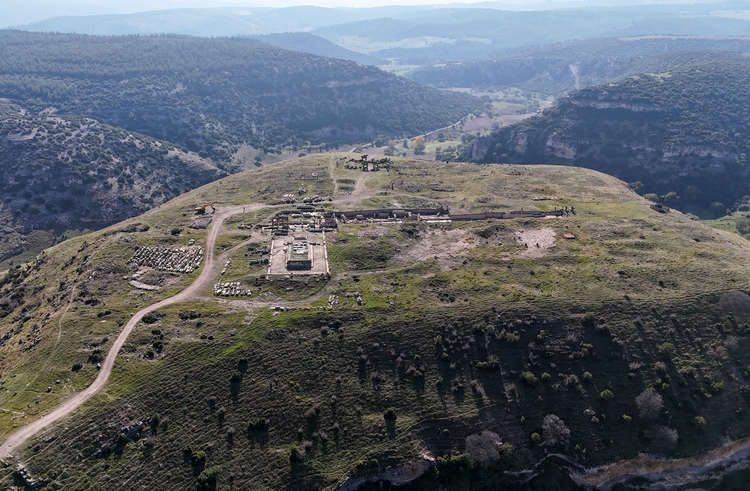
Archaeologists in western Turkey have unearthed a remarkably well-preserved Roman stadium at the ancient city of Blaundos,a site with roots stretching back to Alexander the Great‘s campaigns. The ongoing excavations, now in their fifth year, are revealing new details about the city’s history as a strategic garrison and offering a glimpse into the architectural styles of the 1st century AD.Officials hope the restored stadium will one day serve as a venue for cultural events, further enriching the historical landscape of the region.
Archaeologists in western Turkey are uncovering a well-preserved Roman stadium at the ancient city of Blaundos, a site once settled by soldiers accompanying Alexander the Great during his campaigns in Anatolia. The discovery offers a new window into the region’s rich history and could eventually become a venue for cultural events.
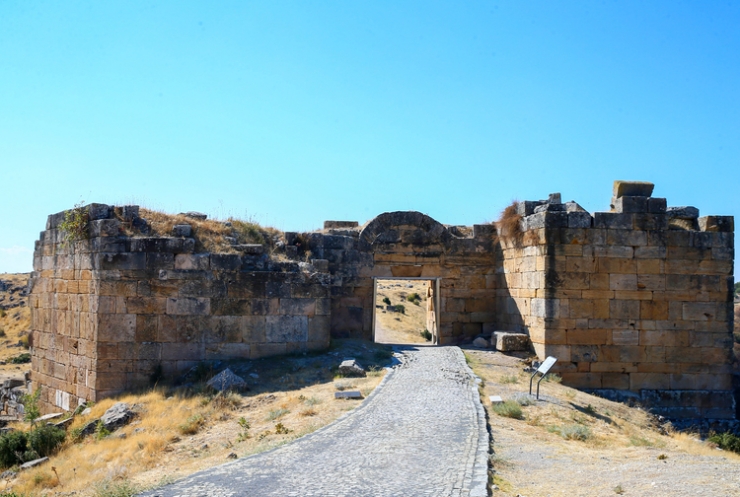
Known as a “garrison city,” Blaundos has been the focus of archaeological digs since 2018. The site’s unique location, surrounded by the steep valleys of the Ulubey Canyon, provided a natural defensive advantage with only one point of access.
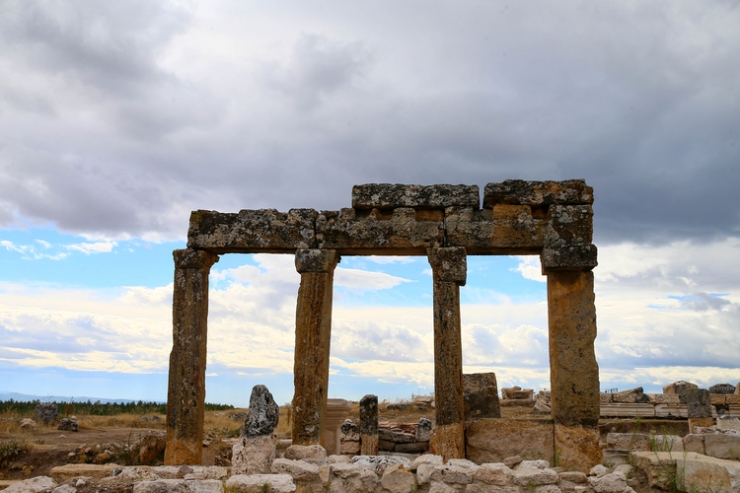
Restored Roman-era arches – nine in total – stand 500 meters from the ancient city’s main gate, alongside a 2,000-year-old monumental tomb, offering insights into the architectural styles of the period. The city’s heart, a colonnaded street, reveals remnants of both Roman and Byzantine architecture. A temple dedicated to Demeter, the goddess of agriculture and fertility, remains a striking feature of the site.
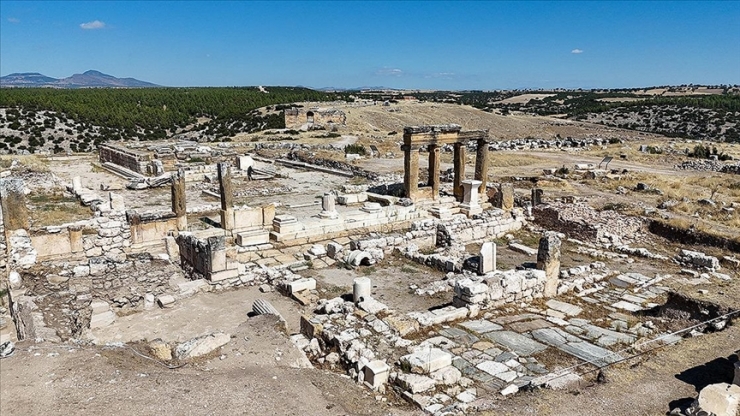
Visitors can also explore three standing stones at the city’s edge, reminiscent of Stonehenge in Britain, and rock-cut tombs carved into the slopes of the Ulubey Canyon. Recent excavations have focused on the stadium, measuring 140 meters long and 37 meters wide.
Stadium Believed to Date Back to the 1st Century
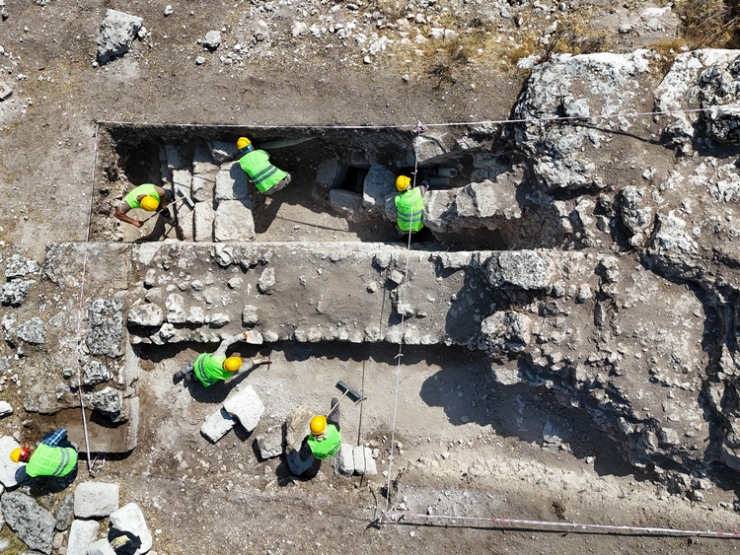
Work began on the stadium this year following excavations on the main street and at the North Temple. During the stadium dig, archaeologists uncovered a water channel carved into the bedrock, designed to supply a Roman-era bathhouse adjacent to the structure.
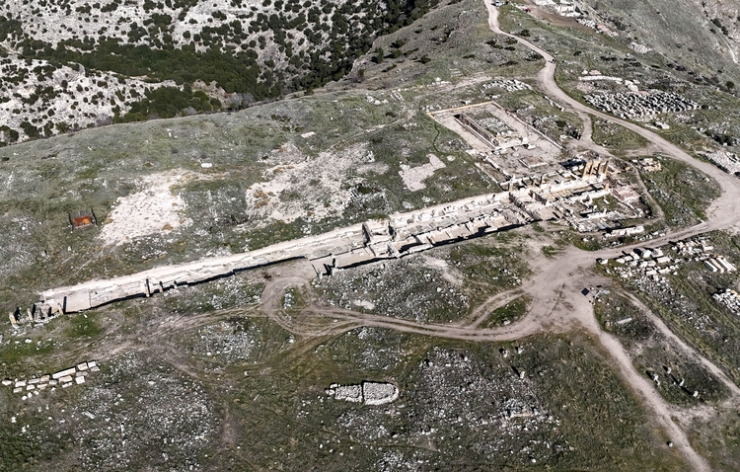
Excavations also revealed a stepped structure at the stadium’s entrance and a retaining wall, believed to have been built to stabilize the terrain. According to Şerif Söyler, head of the Blaundos Ancient City excavation and director of the Uşak Museum, the city’s history dates back to the 3rd century BC, with most structures built in the 1st century AD.
“Our stadium is 140 meters by 37 meters, reflecting the fact that Blaundos is a medium-sized ancient city,” Söyler explained. “It’s a complex located right at the entrance to the city. A bath complex was previously discovered in front of it during earlier excavations. Based on our current data, we know the stadium was built in the 1st century AD. The water systems leading to the bathhouse are located right at the entrance to the stadium. Further archaeological work may change the dating, or reveal previous phases, damage, or destruction from earthquakes.”
‘A Space for Concerts Will Be Created’
Söyler noted that the excavation and restoration work will take time due to the size of the structure, but anticipates the site will eventually host events. “We will create a space where concerts, theater performances, or competitions can be held. We believe this will add significant value to Blaundos. It’s exciting for us to begin excavations this year at a stadium that is approximately 2,000 years old, dating back to the 1st century AD.”
“Once we complete the excavation and restoration, the full emergence of the structure will add great value to the Ancient City of Blaundos, and that excites us,” he added.
