

The Swiss Parliament reached a compromise on Friday, June 19, 2026, to fund the 13th AHV (Old Age and Survivors’ Insurance) pension payment via an indefinite 0.4 percentage point increase in the value-added tax (VAT). The decision follows a tense legislative struggle, with the first 13th pension payments scheduled for distribution this December.
Legislative Compromise and Fiscal Implementation
After three rounds of debate and a formal conciliation conference, the National Council and the Council of States finalized a financing model for the 13th pension. According to SRF, the legislative body rejected an increase in wage contributions, opting instead for a permanent 0.4 percentage point rise in the VAT. While this measure provides a funding mechanism, it covers only approximately half of the total costs associated with the new pension installment.
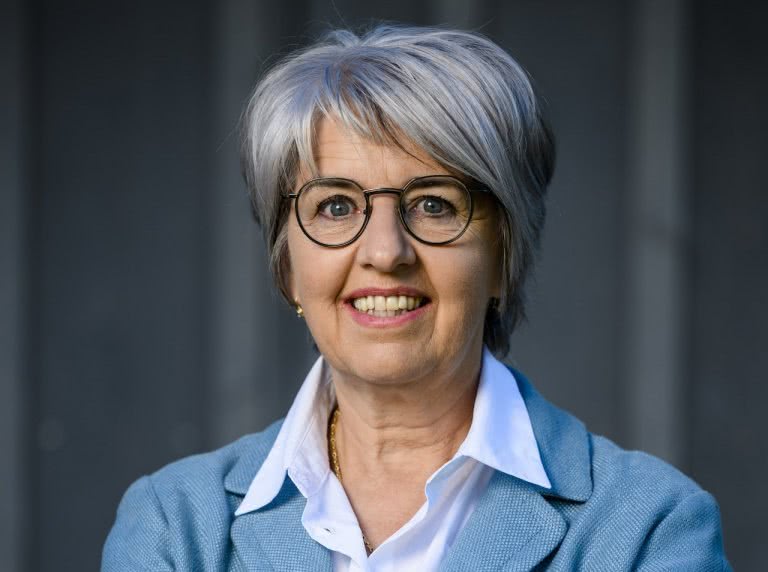
Federal Councillor Elisabeth Baume-Schneider, head of the Federal Department of Home Affairs (EDI), expressed relief that a concrete solution exists. As reported by SRF News, the Federal Council views this as a necessary, if partial, step toward long-term sustainability. The government faces the task of convincing the voting public to approve the VAT hike in a November referendum, as the 13th pension payout is estimated to cost nearly 9 billion francs next year.
The AHV is the primary pillar of the Swiss social security system, designed to provide basic financial support during retirement. Unlike private pension plans, the AHV operates on a pay-as-you-go basis, where current contributions from the workforce fund the pensions of current retirees. Any structural change to this system, such as the introduction of a permanent 13th-month payment, requires a stable, long-term funding source to maintain the fund’s solvency against the backdrop of an aging population.
Political Friction and Divergent Funding Visions
The solution has left few stakeholders satisfied. During a recent broadcast of the SRF program «Arena», representatives of various parties and social partners clashed over the fairness of the tax-based approach. SP National Councillor Samira Marti argued that the compromise was a necessary evil, noting that her party initially favored a mix of wage contributions and VAT increases. She criticized the FDP and SVP for their refusal to engage in broader discussions, accusing them of prioritizing a higher retirement age over fiscal cooperation.
In contrast, FDP National Councillor Andri Silberschmidt maintained that his party’s resistance to the current funding model is rooted in a desire for structural reform. As detailed by Watson, Silberschmidt argued that any tax increase should be tied to structural measures, specifically raising the retirement age. He suggested that individuals who enter the workforce later—such as those completing long academic paths—could reasonably work longer, while those who begin working at 18 might retire earlier.
Social Equity and the Retirement Age Debate
The debate over the retirement age exposed deep ideological divides. Marti highlighted that current early retirement trends are concentrated in the banking and insurance sectors, where over 65 percent of employees exit the workforce before age 65. She contended that lower-income workers often cannot afford to retire early, making a blanket increase in the retirement age socially regressive.
Erich Ettlin, a Council of States member from Die Mitte, criticized the burden the VAT increase places on middle-income families. He provided a calculation suggesting that a family earning 60,000 francs would have fared better under a hybrid model of VAT and wage contributions. However, SVP Council of States member Hannes Germann defended the VAT hike as a solidarity-based instrument. “One who has an income of a million also spends much more on consumption,” Germann stated during the debate.
The argument for a VAT-based funding model often centers on its broad base. Because VAT is applied to almost all goods and services, it ensures that every consumer contributes to the AHV system, regardless of their employment status. Proponents argue this creates a more stable revenue stream than relying solely on payroll taxes, which are directly tied to the number of active workers in the economy. Conversely, critics frequently point out that VAT is regressive, as lower-income households spend a larger share of their income on essential goods compared to wealthier households.
Next Steps for the AHV and the November Referendum
The immediate focus for federal authorities is the upcoming November vote. If the public rejects the VAT increase, the government will have to re-evaluate its options. Baume-Schneider indicated that if the current proposal fails, the financing question must be integrated into the broader “AHV 30/40” reform package. For now, the administration is focusing on clear communication: the 13th pension is a reality, and the VAT increase is the price of its implementation.
In the Swiss political system, a referendum is a standard tool of direct democracy, allowing voters to have the final say on legislative changes proposed by Parliament. Given the financial scale of the 13th pension—costing nearly 9 billion francs annually—the upcoming vote is viewed as a critical test of public support for the expansion of social benefits. Should the voters reject the VAT increase, the legal mandate to provide the 13th pension payment would remain, but the funding mechanism would be invalidated, forcing the Federal Council to return to the drawing board to find alternative revenue or cost-saving measures.
| Stakeholder | Position on Funding |
|---|---|
| SP (Samira Marti) | Supports compromise, opposes higher retirement age |
| FDP (Andri Silberschmidt) | Demands structural measures, links tax to retirement age |
| Die Mitte (Erich Ettlin) | Accepts compromise, concerned about middle-class burden |
| SVP (Hannes Germann) | Views VAT as a solidaristic solution |
The political divide over the pension reform underscores the need for urgent compromise to secure long-term sustainability without deepening societal divisions.
Find more reporting in our News section.
