
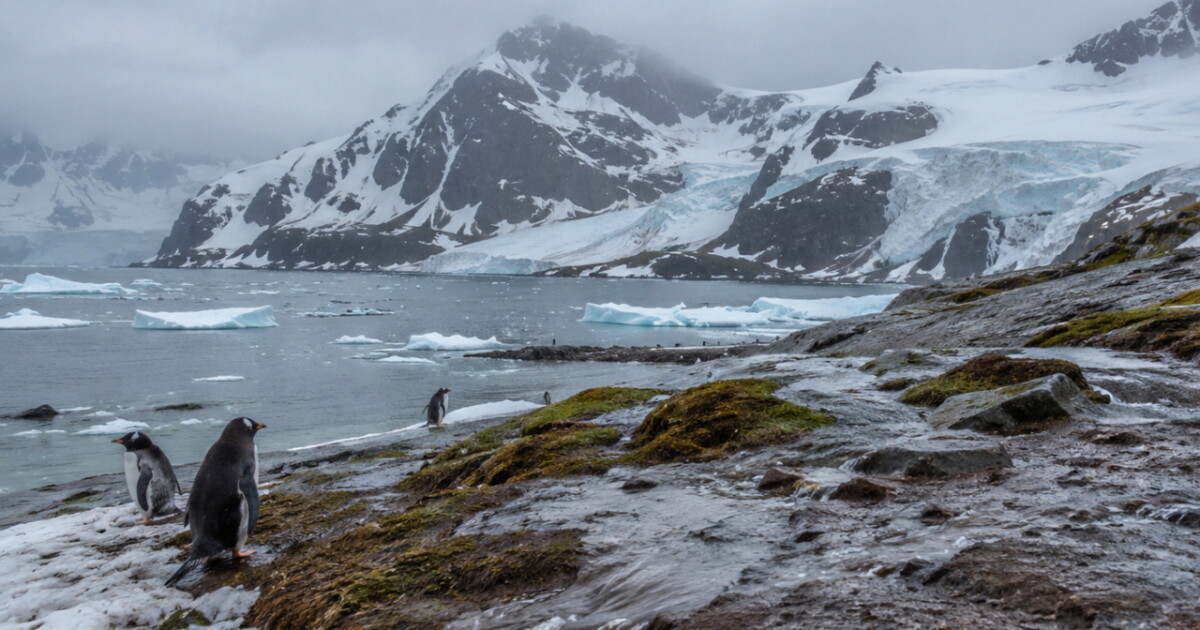
The Antarctic Peninsula shattered a temperature record in June 2026, with Base Esperanza reporting 15.4°C on June 6—a stark contrast to the region’s typical winter lows. This event, described as “unprecedented” by scientists, coincided with a critical loss of sea ice, with 650,000 square kilometers missing in the Bellingshausen Sea, an area equivalent to France’s size, according to El Confidencial and Gizmodo en Español. The dual anomalies—unseasonal warmth and ice loss—have intensified concerns about climate change’s accelerating impact on the region.
Historic Heat and Unprecedented Ice Loss
The temperature spike at Base Esperanza, a research station in Argentina’s Antarctic territory, marked the highest recorded for June in the peninsula. This surpassed the previous record of 13.3°C set in 1998 and exceeded the historical average of -6.2°C by nearly 20°C, as noted by Noticias RCN and ELTIEMPO.COM. Similar anomalies were reported at other Argentine bases, including Marambio (11.8°C) and San Martín (9.4°C), both exceeding their historical June maxima.
:format(jpg):quality(99):watermark(f.elconfidencial.com/file/65c/43d/0ca/65c43d0ca5dbd5ff8f19b44167343db9.png,0,275,1)/f.elconfidencial.com/original/0f6/f0e/71d/0f6f0e71d762af2f6b0f277276f5074c.jpg "Photo: El Confidencial")
The heatwave coincided with a dramatic reduction in sea ice. By June 10, the Antarctic had 11.4 million square kilometers of ice—nearly 1.2 million less than the 1991–2020 average, according to El Confidencial. The Bellingshausen Sea, in particular, showed “virtually no ice,” a situation described as “depressing” by Will Hobbs, a researcher at the University of Tasmania and the Australian Antarctic Program Partnership. “It’s alarming we’re in June and there’s no sea ice there,” he told El Confidencial.
Ecological and Climatic Consequences
The loss of sea ice has immediate ecological repercussions. Peter Fretwell of the British Antarctic Survey warned that the absence of ice “poses a serious threat to emperor penguins,” whose breeding cycles depend on stable ice platforms. The 2022 penguin breeding season, marked by mass chick deaths, has raised fears that similar disasters could recur. “Without ice, krill populations—essential to the food chain—face disruption,” Fretwell said, citing El Confidencial.
Scientists also note a feedback loop between the heatwave and ice loss. Will Hobbs suggested that the lack of ice allowed warmer air from the north to penetrate further south, exacerbating the temperature anomaly. “This is a self-reinforcing cycle,” he explained. Meanwhile, Raúl Cordero of the University of Groningen emphasized that the event “confirms a trend” of increasing Antarctic temperatures, warning that “without halting global warming, such events will grow more frequent.”
Historical Context and Scientific Debate
This is the third time in four years that the Bellingshausen Sea has experienced minimal ice coverage in June, according to Gizmodo en Español. While some researchers attribute this to natural variability, others, like Thomas Caton Harrison of the British Antarctic Survey, caution that the region’s “extreme temperature fluctuations” complicate long-term analysis.
Find more reporting in our World section.

