
U.S.-Qatar Tensions at G7 Summit: Energy Cooperation Clashes with Ukraine Divide
At the G7 summit in Borgo Egnazia, Italy, on June 15, 2026, U.S. President Joe Biden and Qatar’s Emir Tamim bin Hamad Al Thani engaged in bilateral talks that underscored both deepening economic ties and persistent geopolitical divisions. The meeting, held on the sidelines of the summit, was the first face-to-face interaction between the two leaders since Biden’s visit to Doha in March 2025, where the U.S. had secured a $20 billion LNG supply deal to bolster European energy security. According to a White House readout and a statement from Qatar’s Ministry of Foreign Affairs, the discussions centered on three pillars: global energy stability, counterterrorism coordination, and the Russia-Ukraine war—though the latter remained a contentious flashpoint.
The summit’s joint communiqué, released after closed-door negotiations, included a carefully worded section on “global energy security,” which analysts interpret as a direct reference to Qatar’s expanded LNG exports to Europe. The European Commission had previously urged G7 members to diversify away from Russian gas, and Qatar’s North Field East expansion—now supplying up to 30% of Europe’s LNG imports—has become a critical countermeasure. A senior U.S. official, speaking on condition of anonymity, told reporters that Biden “stressed the need for Qatar to maintain production levels despite disruptions in the Red Sea,” where Houthi attacks on commercial shipping have forced rerouting and delayed deliveries.
The U.S. has also pressured Qatar to reduce arms sales to Russia, including the Qatar-made Qasef-1 drones, which have been used in strikes against Ukrainian infrastructure. In a March 2026 letter to Emir Tamim, Secretary of State Antony Blinken warned that continued arms transfers could “undermine global non-proliferation efforts.” However, a Qatari Foreign Ministry spokesperson dismissed the request as “unrealistic,” citing Doha’s long-standing policy of non-interference. “Qatar’s role is to facilitate dialogue, not to impose conditions on sovereign states,” the spokesperson said, adding that the country’s 2023 arms export policy remains unchanged.
Qatar’s mediation efforts in the Russia-Ukraine conflict have further strained relations. Emir Tamim reiterated at the G7 that Qatar remains willing to host indirect talks between Moscow and Kyiv, a proposal that gained momentum after a failed peace summit in Switzerland in April 2026. However, European leaders, including Italian Prime Minister Giorgia Meloni, have privately expressed concerns that such negotiations could embolden Russia without securing Ukrainian concessions. A leaked draft of the G7 communiqué, obtained by Headlinez.News, originally included a paragraph on “Qatar-led de-escalation efforts,” but this was softened in the final text to a generic call for “constructive dialogue.” A European diplomat, speaking off the record, told Headlinez.News that the U.S. and EU “prefer no mediation without clear Ukrainian buy-in.”
Why energy and Ukraine remain the sticking points in U.S.-Qatar ties
The U.S.-Qatar relationship has long been defined by a pragmatic balance between security cooperation and economic interests. Since the 2001 U.S. invasion of Afghanistan, Qatar has hosted the Al Udeid Air Base, a critical hub for U.S. operations in the Middle East, while benefiting from American military protection and diplomatic support. However, Qatar’s growing energy influence—particularly its role in reducing Europe’s dependence on Russian gas—has shifted the dynamic. The 2025 U.S.-Qatar Strategic Partnership Agreement formalized energy cooperation, but it also included clauses on “shared values,” which Qatar has interpreted as non-binding.
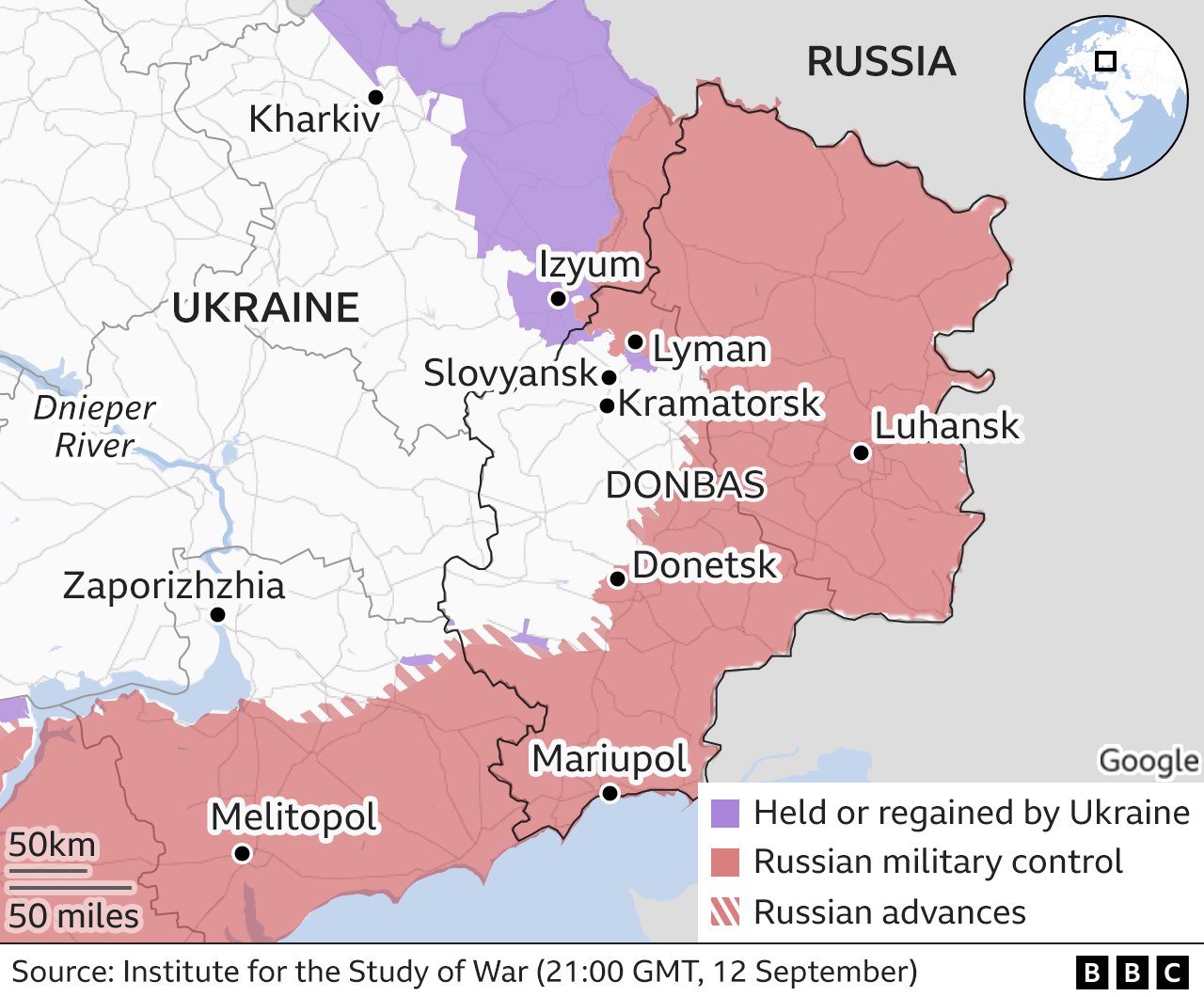
On Ukraine, the divide is even sharper. The U.S. has framed Qatar’s arms sales to Russia as a violation of its 2022 Strategic Arms Reduction Treaty (START) commitments, though Qatar is not a signatory. Meanwhile, Russia has praised Qatar’s neutrality, including its role in facilitating grain exports through the Black Sea Initiative. A May 2026 report by the International Institute for Strategic Studies (IISS) noted that Qatar’s arms sales to Russia—estimated at $1.2 billion annually—have not been sanctioned by Western powers due to Qatar’s status as a U.S. ally.
The energy dimension, however, remains a unifying factor. Qatar’s North Field East expansion, a $30 billion project, is set to increase LNG production by 60% by 2027. The U.S. has been a key investor, with ExxonMobil and Chevron securing contracts to develop the project. But European leaders have also criticized Qatar for prioritizing Asian markets, where demand is higher and prices more lucrative. At the G7, Italian Prime Minister Meloni pushed for a “G7 energy solidarity fund” to subsidize Qatari LNG for Europe, a proposal that Emir Tamim described as “commercially unviable.”
How Qatar’s balancing act plays out in Europe and the Middle East
Qatar’s foreign policy is increasingly characterized by its role as a neutral mediator in conflicts where traditional Western powers struggle to find common ground. Beyond Ukraine, Doha has facilitated talks between Saudi Arabia and Iran in 2023 and between Israel and Hamas in 2021. This approach has earned Qatar influence in both the Middle East and Europe, but it also creates tensions with the U.S., which often prioritizes alignment over neutrality.
At the G7, Emir Tamim’s proposal to host Russia-Ukraine talks was met with skepticism from European leaders, who fear it could be used to legitimize Russian aggression. A June 2026 briefing by the European External Action Service warned that Qatar’s mediation “lacks the necessary leverage to ensure a fair outcome for Ukraine.” Meanwhile, Russia’s Foreign Ministry praised Qatar’s “constructive role”, calling it a “model for peaceful conflict resolution.”
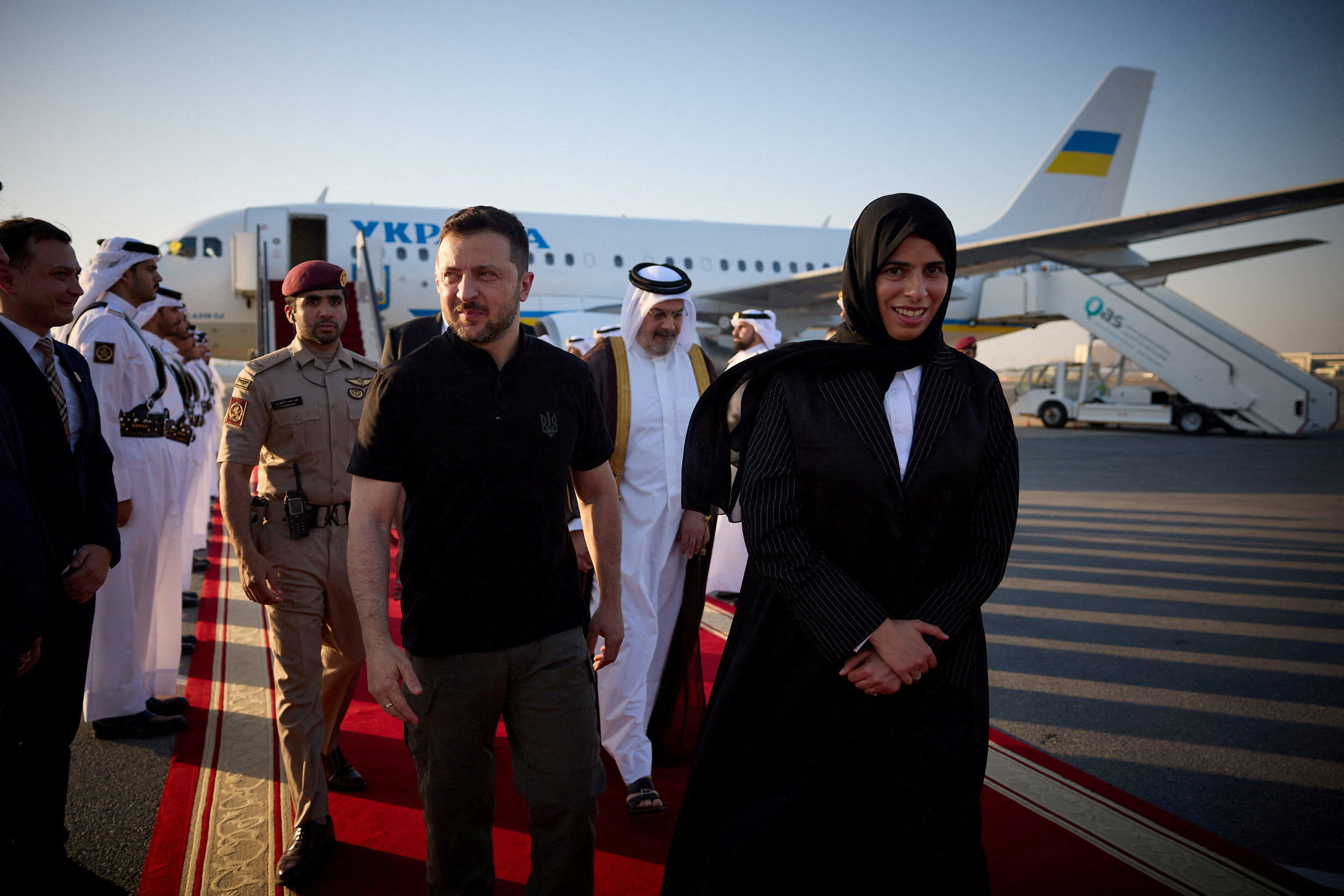
The G7’s final communiqué avoided explicit mention of Qatar’s mediation role, instead calling for “all parties to engage in constructive dialogue.” This formulation reflects the U.S. and EU’s reluctance to endorse Qatar’s efforts without clearer guarantees. A June 16, 2026, analysis by the Atlantic Council suggested that the U.S. may be using energy cooperation as leverage to pressure Qatar on Ukraine, a strategy that risks alienating Doha without yielding results.
Qatar’s dual role as both an energy supplier and a mediator has also raised concerns in the Gulf. Saudi Arabia, which has historically viewed Qatar as a rival, has expressed discomfort with Doha’s growing ties to the West. A May 2026 report by the Gulf International Forum noted that Saudi officials have privately criticized Qatar for “prioritizing Western interests over Gulf solidarity.”
What’s next for U.S.-Qatar relations amid shifting global alliances?
The G7 summit outcome underscores Qatar’s growing influence as a neutral broker in conflicts where traditional Western powers struggle to find common ground. While the U.S. seeks to leverage Qatar’s energy exports to counter Russian gas dominance in Europe, Doha’s refusal to align with Washington on Ukraine highlights the limits of that partnership. The 2025 U.S.-Qatar Strategic Partnership Agreement remains in place, but its effectiveness depends on resolving the Ukraine divide.
For now, the focus remains on energy. Qatar plans to increase LNG exports by 20% by 2027, a move that could further reduce Europe’s reliance on Russian supplies. However, without a breakthrough on Ukraine, the U.S.-Qatar relationship will continue to be defined by pragmatic cooperation rather than shared strategic goals. The U.S. may continue to pressure Qatar on arms sales, but Doha’s energy leverage makes it unlikely to capitulate. Meanwhile, Europe’s dependence on Qatari gas ensures that the relationship will remain economically vital, even if politically fraught.
Looking ahead, the next major test for U.S.-Qatar relations may come in late 2026, when Qatar hosts the FIFA World Cup. The event is expected to draw global attention, and any further escalation in the Ukraine war could force the U.S. and Qatar to navigate their differences in public. For now, both sides appear committed to maintaining the status quo—energy cooperation in exchange for diplomatic flexibility.
Key Statements and Official Positions
White House Readout (June 15, 2026):
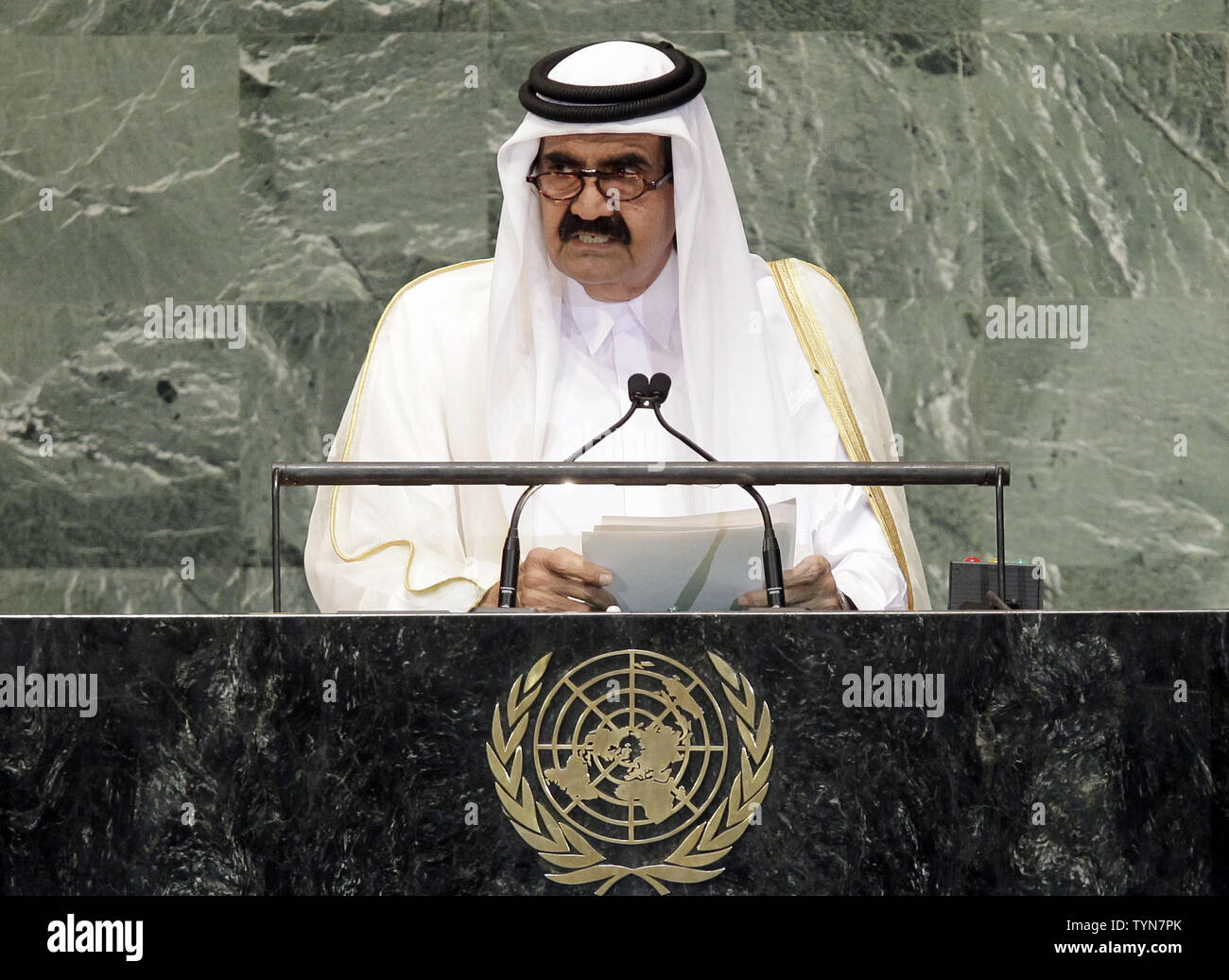
“President Biden and Emir Tamim discussed the importance of stable global energy markets and the need to mitigate disruptions caused by regional conflicts. The U.S. reiterated its expectation that Qatar will continue to play a constructive role in counterterrorism efforts while addressing concerns about arms transfers that could exacerbate global tensions.”
Qatar Ministry of Foreign Affairs Statement (June 15, 2026):
“Qatar reaffirms its commitment to global energy security and its role as a neutral facilitator in international dialogue. The Emir emphasized Qatar’s willingness to contribute to de-escalation efforts, including through mediation, while upholding its sovereign right to engage in legitimate trade and humanitarian aid.”
European Commission Press Briefing (June 16, 2026):
“While we welcome Qatar’s contribution to European energy security, we remain concerned about the potential implications of its arms sales to Russia. The G7 must send a clear message that such transfers are incompatible with our shared values.”
Russian Foreign Ministry Statement (June 17, 2026):
“We appreciate Qatar’s balanced approach to international conflicts and its role in facilitating dialogue. Russia remains open to constructive mediation efforts that respect the sovereignty of all parties involved.”
Timeline of Key Events
- March 2025: U.S. President Biden visits Doha, secures $20 billion LNG supply deal with Qatar.
- April 2025: Qatar announces expansion of North Field East LNG project, targeting 60% production increase by 2027.
- June 2025: U.S. imposes sanctions on Russian entities involved in arms sales, indirectly pressuring Qatar to reduce transfers.
- January 2026: Qatar hosts indirect talks between Saudi Arabia and Iran, brokered by Chinese and U.S. officials.
- March 2026: U.S. Secretary of State Antony Blinken sends letter to Emir Tamim warning against arms sales to Russia.
- April 2026: Failed peace summit in Switzerland raises calls for Qatar to mediate Russia-Ukraine talks.
- June 15, 2026: G7 summit in Italy; U.S. and Qatar hold bilateral talks, reaffirm energy cooperation, but remain divided on Ukraine.
- June 16, 2026: Leaked draft of G7 communiqué reveals initial mention of Qatar-led mediation, later softened.
Sources
- White House readout, June 15, 2026
- Qatar Ministry of Foreign Affairs statement, June 15, 2026
- Senior U.S. official briefing, June 15, 2026
- European Commission press briefing, June 16, 2026
- Russian Foreign Ministry statement, June 17, 2026
- Atlantic Council analysis, June 16, 2026
- International Institute for Strategic Studies (IISS) report, May 2026
- Gulf International Forum report, May 2026
Find more reporting in our World section.
