
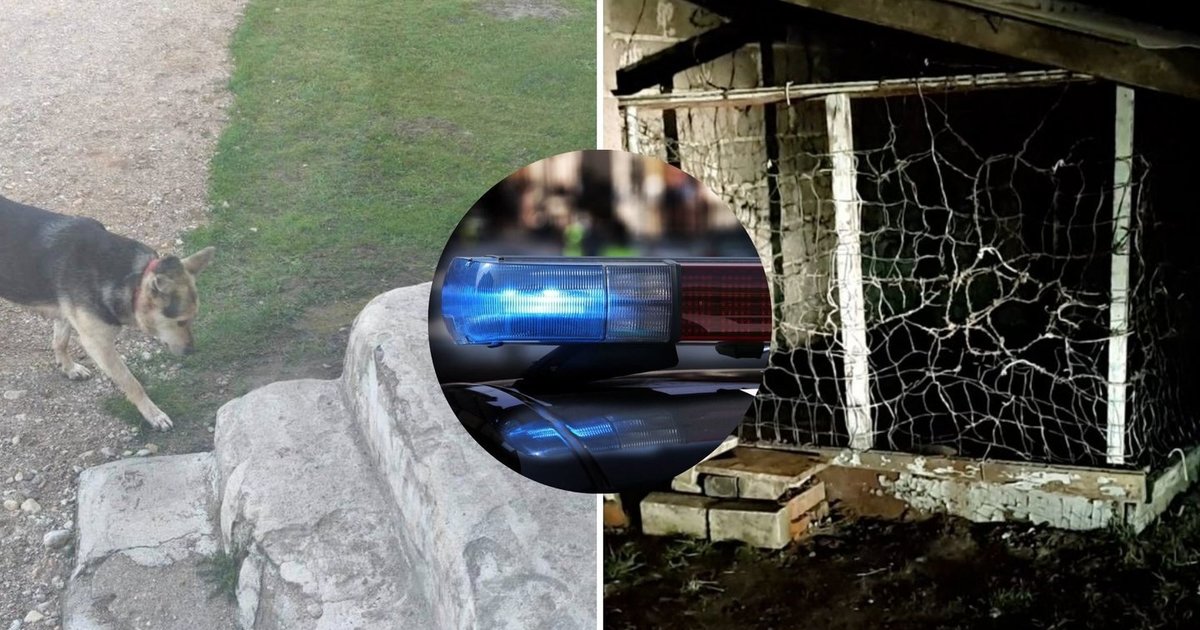
Residents of Čekonys village in Lithuania’s Anykščiai district are reporting heightened fear after two neglected dogs escaped their enclosure and killed a neighbor’s pet on June 3, 2026. Local authorities have opened an administrative investigation, though residents and regional officials report frustration over the slow pace of institutional intervention regarding the animals’ welfare.
The Incident and Initial Police Response
On June 3, 2026, police received reports regarding two dogs that had escaped from a residential property in Čekonys and attacked a neighbor’s dog, according to the Utena County Chief Police Commissariat, as reported by TV3.lt. The attacking animals, which had been left in an enclosure while their owners were reportedly absent from the village, managed to dig under a fence to reach the neighboring property.
The attack resulted in the death of the neighbor’s pet. Local officials noted that the dogs remained loose in the village overnight before being returned to their enclosure by acquaintances of the owner, as described by Nykščiai.lt. According to reports from the scene, the village residents identified the animals as being in a state of neglect, citing long-term concerns about their physical condition and the security of their containment area. The escape was not an isolated observation of the animals’ behavior, but rather the culmination of community concerns regarding the property owner’s ability to maintain the animals securely.
Administrative Proceedings and Legal Limitations
Law enforcement has initiated an administrative case under Article 346, Part 4 of the Code of Administrative Offenses of the Republic of Lithuania. This statute covers violations of animal keeping requirements that result in damage to property or other animals. Penalties for such infractions range from 150 to 300 euros.

The legal framework in Lithuania for addressing dangerous or neglected animals is divided between various agencies, which often complicates the response to incidents in rural areas. While the police are tasked with maintaining public order and documenting the immediate threat to life or property, they do not possess the statutory authority to seize animals solely on the grounds of poor welfare. As noted by Ūkininko patarėjas, officers involved in the case expressed that they lack the specific veterinary or regulatory expertise to determine if the animals are being kept in accordance with welfare standards, leading to a reliance on other institutions for a resolution. This separation of powers is intended to ensure that professional veterinary assessments dictate welfare intervention, but in practice, it creates a jurisdictional gap when owners are absent or unreachable.
Institutional Gridlock and Community Concern
Anykščiai district council member Dominykas Puzinas has become a central figure in coordinating between concerned residents and local government. He described a state of institutional inaction, noting that while residents are frightened—particularly for the safety of children playing outdoors—the process to remove the neglected animals has been delayed by bureaucratic hurdles.
The core of the community’s frustration lies in the perceived inability of state institutions to act decisively in the face of an ongoing threat. According to Puzinas, the State Food and Veterinary Service (VMVT) indicated that its role is limited to verifying whether animals have been vaccinated or microchipped, rather than addressing the immediate threat posed by the enclosure conditions. Puzinas stated:

“I call on everyone to evaluate the situation, for animal welfare institutions to pay attention to neglected, suffering pets. For my part, I will appeal to the district municipality so that responsible municipal employees can speed up the question of taking the animals.”
— Dominykas Puzinas, Anykščiai District Council Member
In Lithuania, the process for the forced removal of pets requires a verified report of animal cruelty or a clear violation of welfare standards that endangers public safety. Even when such reports are filed, the legal process often necessitates a period of investigation, during which the owner must be notified and given an opportunity to rectify the conditions. In rural districts like Anykščiai, this can lead to situations where, despite clear evidence of neglect or dangerous behavior, the animals remain in the same location for weeks while authorities finalize the necessary paperwork for seizure.
Broader Significance and Current Status
The situation remains unresolved as of mid-June 2026. While the owner of the dogs has reportedly begun seeking solutions for their care, community members continue to express unease. The municipality has acknowledged the need for action, but the gap between the incident and the removal of the animals has left residents feeling vulnerable in their own neighborhood. This incident highlights a recurring challenge in local governance: the tension between individual property rights and the collective responsibility to ensure that domestic animals do not become a public safety hazard. As the investigation proceeds, the residents of Čekonys remain in a state of uncertainty, waiting for a definitive resolution that ensures the safety of their households and their pets.
Find more reporting in our News section.
