Apple has unveiled a new generation of CarPlay that integrates more deeply with vehicle hardware, alongside a major, albeit geographically limited, release of its artificial intelligence features. While the enhanced CarPlay promises deeper vehicle data synchronization, the newly launched Siri AI remains unavailable in the European Union due to ongoing regulatory disputes.
CarPlay’s Deep Vehicle Integration: What Changes for Drivers
Photo: Jablíčkář.cz
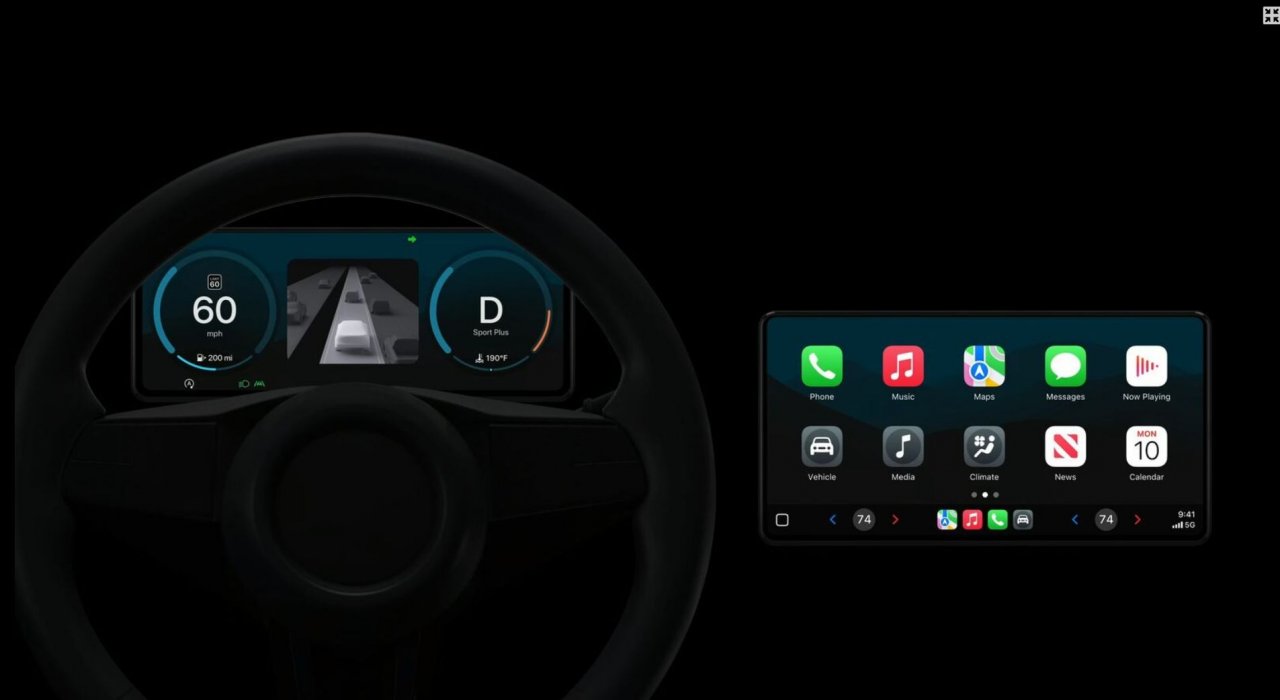
The next iteration of Apple’s automotive software, CarPlay, is moving beyond the infotainment screen to command a larger presence in the cockpit. Unlike previous versions, the new system will display data directly on digital instrument clusters and secondary cabin screens. This integration allows for the real-time visualization of vehicle telemetry, including speed, tire pressure, and battery status.
Beyond mere display, the system will offer granular control over vehicle functions such as climate settings, driving modes, and driver-assistance systems. For electric vehicle owners, the interface will provide notifications regarding the completion of battery charging cycles. However, this level of functionality comes with hardware prerequisites; Apple confirmed the software will require specific new hardware, meaning it will not be a simple over-the-air update for most existing vehicles. Porsche and Aston Martin are slated as the first manufacturers to implement the system, though Apple is currently in negotiations with other automakers to broaden adoption.
The Regulatory Impasse Behind Siri AI in Europe
Photo: si.bloombergadria.com
While the automotive sector sees expansion, Apple’s flagship Siri AI launch faces a significant roadblock in the European Union. Although the software debuts with the rollout of iOS 27 and iPadOS 27, the advanced artificial intelligence features will not be active for European users.
The conflict centers on the European Union’s Digital Markets Act (DMA), which designates iOS and iPadOS as “gatekeeper” platforms. According to the European Commission, Apple failed to develop solutions that satisfy strict privacy and security standards. Apple, conversely, argues that the DMA’s requirements for platform openness would compromise user data by forcing them to grant third-party AI models deep, unrestricted access to the device’s internal systems.
Craig Federighi, Apple’s head of software engineering, expressed frustration with the negotiations, noting that the company’s proposal for a “Trusted System Agent”—intended to provide third-party AI models with secure, regulated access—was rejected by regulators. Thomas Regnier, a spokesperson for the European Commission, countered that Apple’s request for a complete exemption from these legal obligations was never a viable option. As a result, there is currently no confirmed timeline for when European users might gain access to the full suite of Siri AI features.
What the New Siri AI Brings to Global Users
Apple CarPlay Ultra Will Soon Become A Part Of These Vehicle Brands
For users outside the European Union, the updated Siri AI represents a shift toward more conversational and context-aware interaction. Powered by Google’s Gemini technology, the assistant is designed to handle complex, multi-layered requests. As reported by Bloomberg Adria, the assistant is now “bolj inteligentna, bolje poučena in zmogljivejša”—translated as “more intelligent, better informed and more capable.”
The new assistant can manage tasks like searching through emails, scheduling calendar events, and answering complex, contextual questions. This marks a strategic effort by Apple to close the gap with competitors who have integrated generative AI into their platforms over the past two years. The update includes a standalone Siri application and a chat-like interface, a departure from the original 2011 voice-command model.
System-Wide Enhancements in iOS 27 and Beyond
Beyond the headline-grabbing AI features, Apple’s latest software update includes over 250 functional refinements across its ecosystem, including iOS 27, iPadOS 27, and macOS 27, according to Jablíčkář.cz. These updates are aimed at improving the daily user experience through minor but impactful adjustments:
Device Flexibility: Users can now operate two iPhones using the same phone number.
Dynamic Island: Support for live activities has been expanded to include horizontal orientation.
Photography: The Photos app now allows users to save video frames as images and add custom keywords.
Efficiency: Safari has been optimized for lower power consumption, and the system now features smoother transitions between Wi-Fi and mobile data networks.
Health: watchOS 27 introduces tracking for perimenopause and menopause symptoms, alongside tailored Fitness+ workouts.
These incremental changes appear designed to stabilize the user experience while Apple navigates the broader, more complex challenges of AI integration and international regulatory compliance. As the company moves toward the autumn release of these platforms, the focus remains on balancing rapid feature deployment with the stringent security and privacy frameworks demanded by global regulators.
Sophie Williams is the Tech Editor at Headlinez.News, covering innovation, artificial intelligence, cybersecurity, and emerging technology trends. Before joining the publication, she worked as a technology correspondent and product analyst for multiple tech-focused media outlets. With a background in computer science and digital media, Sophie bridges technical depth with accessible reporting, bringing readers closer to the technologies transforming everyday life.
Expertise: Artificial intelligence, consumer tech, cybersecurity, startups, digital transformation.
Location: San Francisco, California, USA