
New research suggests a previously unknown volcanic eruption played a critical role in the spread of the black death across Europe in the mid-14th century, potentially explaining anomalies in the pandemic’s timeline that have long puzzled historians. The study, published in *Communications Earth & Environment*, links the eruption – detected through tree ring data and ice core samples – to a cascade of climate disruptions, crop failures, and trade imbalances that created ideal conditions for the deadly bacterium *Yersinia pestis* to thrive and spread [[1]].Understanding these complex connections offers valuable insight into how environmental factors can influence the emergence and dissemination of modern-day outbreaks [[2]], [[3]].
A mysterious volcanic eruption may have played a critical role in the spread of one of history’s deadliest pandemics, the Black Death, according to new research. Understanding the factors that contributed to the rapid dissemination of this medieval plague offers valuable insights into how modern-day outbreaks can be influenced by environmental factors.
The Black Death, which ravaged Europe between 1346 and 1353, is estimated to have killed at least 30 million people – roughly half of the continent’s population. While the bacterium Yersinia pestis, spread by fleas and rodents, is known to be the cause, the timing of the pandemic’s spread has long puzzled scientists. Now, a multidisciplinary study suggests a “perfect storm” of events, including a previously unknown volcanic event, may explain how the disease took hold.
Published in the journal Communications Earth & Environment, the research team compared a vast dataset including tree rings, ice cores, historical records, letters, grain trade documents, and even poetry and inscriptions to pinpoint the timing of the Black Death. Their analysis points to a volcanic eruption as a key trigger.
During the Black Death, doctors wore “plague doctor” costumes as a common method of protection. These included long, black robes to prevent direct contact, and masks with bird-like beaks filled with lavender, thyme, and other spices, as people believed diseases spread through bad smells.
The investigation revealed a significant disruption in climate patterns around 1345. Researchers, led by geographer Ulf Büntgen from the University of Cambridge, noticed inconsistencies in tree ring data across Europe. While temperatures appeared slightly above average, the tree rings indicated a period of unusually cold weather lasting two to three years. This discrepancy led Büntgen to suspect volcanic activity.
Further analysis of ice cores from Antarctica and Greenland confirmed the presence of high levels of sulfur dating back to around 1345 – a telltale sign of a large volcanic eruption. The eruption likely released sulfur-rich aerosols into the atmosphere, blocking sunlight and causing regional cooling for several years.
This climate crisis coincided with the arrival of the Black Death in Europe. Historian Martin Bauch uncovered another anomaly while examining historical records: reports of “phantom” lunar eclipses in China and Bohemia – events that shouldn’t have occurred. Bauch believes these optical illusions were caused by volcanic particles altering the appearance of the sky. Letters and administrative documents from Germany, Italy, and Bohemia also described unusually dark skies and a dimming of the moonlight.

The cooling climate had a devastating impact on European economies and food security. Between 1345 and 1347, crops failed, leading to widespread grain shortages and soaring food prices. Italian city-states, facing famine, began desperately importing grain from North Africa and the Black Sea region. This trade, however, inadvertently created ideal conditions for the spread of the plague.
The increased grain trade provided a pathway for rats and fleas – carrying Yersinia pestis – to travel on ships. Fleas could survive on both rat blood and grain dust, allowing them to endure the long voyages from the Black Sea to the Mediterranean. A trade war between the Venetian Republic and the Mongol Golden Horde further exacerbated the situation. When the Mongols were decimated by the plague and the Italians faced starvation, trade resumed in 1346-1347, sealing the fate of millions.
“This study demonstrates how socially induced behaviors triggered by climate change can have deadly consequences,” said Timothy Newfield, a historian specializing in large-scale disease events at Georgetown University.
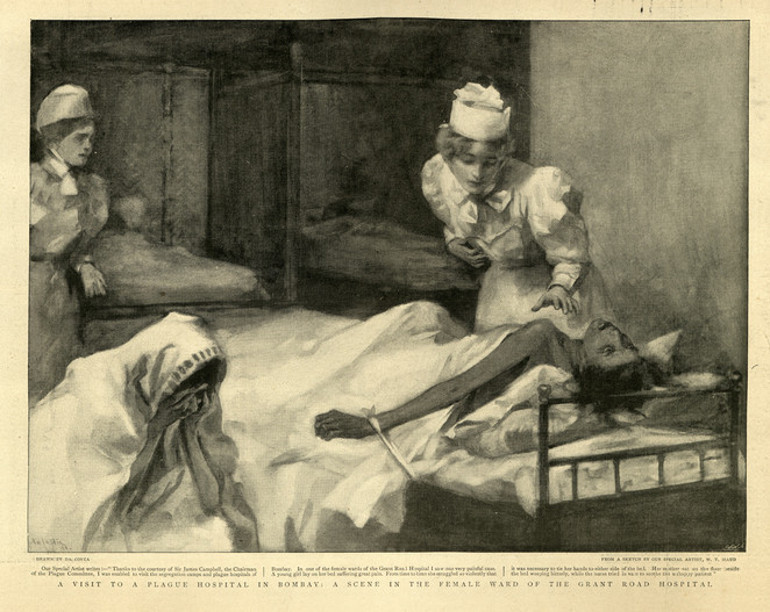
By 1347, the Black Death had reached the Italian peninsula, rapidly transforming the continent. Contemporary accounts describe populations being halved in some areas, entire households wiped out, and the emergence of mass graves, alongside an atmosphere of fear, despair, and societal collapse.
The research highlights how the resumption of grain trade routes not only impacted the economy but also accelerated the spread of the Black Death across Europe. Cities like Venice sent grain to Padua and Trento, where some of the first major outbreaks occurred.
By 1348, much of Italy, Mediterranean cities, and key trade centers were firmly in the grip of the plague.

The confluence of factors – volcanic eruption, climate cooling, crop failure, famine, and increased trade – created a “perfect storm” for the pandemic.
Historian Hannah Barker, from Arizona State University, who was not involved in the study, commented: “This pandemic required a confluence of conditions. If any one of them hadn’t occurred, the Black Death wouldn’t have unfolded on this scale.”
These conditions can be summarized as follows:
1- Volcanic eruption = climate cooling
2- Climate cooling = crop loss, risk of famine
3- Risk of famine = long-distance grain imports
4- Grain imports = transport of fleas and rats on ships
5- Flea transport = arrival of Yersinia pestis in port cities
6- Trade networks = spread of the disease across Europe
Mark Welford, a geographer at North Iowa University, summarized the research: “This study provides a valuable contribution to the scientific understanding of how climate change and disease intersect.”

Interestingly, some cities, like Rome and Milan, were largely spared from the plague despite being major metropolitan areas. Researchers believe their reliance on local grain production – rather than constant imports like Venice and Genoa – offered a degree of protection. “Cities with low grain import needs were relatively protected because they weren’t involved in the trade networks where the plague was most rampant,” explained Martin Bauch.
The rewriting of disease history
Kyle Harper, a historian at the University of Oklahoma, emphasized the significance of the study: “This work shows the power of bringing together climate records and historical sources. It also demonstrates that this was a rare event resulting from the convergence of extraordinary circumstances.”
Alex Brown, a medieval economic historian at Durham University in England, concluded: “This study powerfully demonstrates the importance of the relationship between humans, animals, and the environment in the emergence of pandemics.”
Brown argues that the interconnectedness of the medieval economy serves as a stark warning for today’s globalized world.
Compiled from CNN’s “Volcanic eruption led to the Black Death, new research suggests” and National Geographic’s “Volcanoes may have helped spread the Black Death.”
