
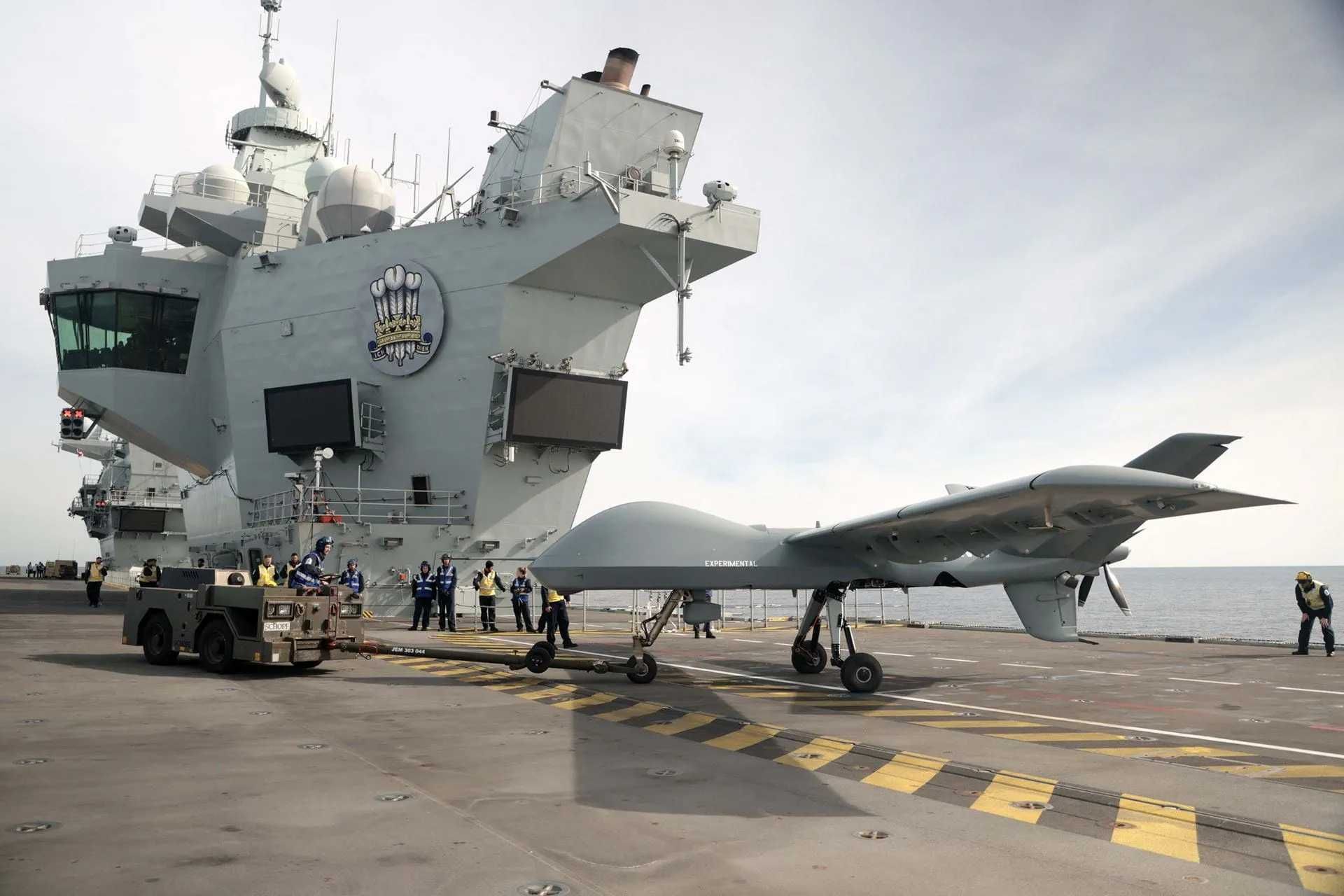
As of May 17, 2026, no verified sources confirm that British jets will receive new anti-drone missile systems. Search results reveal no government announcements, defense contracts, or military procurement updates related to this topic for the airline or defense sectors in the UK or Peru. The British House International language school in Peru and British Airways have no documented ties to defense technology. Without official statements or defense ministry filings, claims about anti-drone systems remain unverified.
No Verified Evidence of British Jets Acquiring Anti-Drone Systems
Search results for May 2026 contain no credible reports linking British military aircraft—operated by the Royal Air Force or other UK defense branches—to new anti-drone missile systems. The topic appears to conflate two unrelated entities: British Airways, the commercial airline, and British House International, a language school in Peru. Neither organization has any documented connection to defense procurement, and no official sources mention anti-drone technology acquisitions for British jets.
Defense procurement in the UK is governed by strict transparency requirements under the Defence Equipment and Support (DE&S) framework, which mandates public disclosure of contracts exceeding £100 million or involving classified technology. The Ministry of Defence (MoD) has not published any such notices for anti-drone missile systems for military aircraft. The MoD’s official procurement portal shows no active tenders or awards matching this description.
Additionally, the UK Parliament’s Hansard records from the past six months reveal no debates or questions regarding new anti-drone capabilities for RAF aircraft. The most recent relevant discussion occurred in February 2026, when MP Andrew Murrison (Conservative, South West Wiltshire), then Minister of State for Defence Procurement, confirmed during a House of Lords debate on defence procurement that “no new missile systems for counter-drone purposes have been approved for integration with fixed-wing military aircraft in the current financial year.”
Industry sources also confirm the absence of such programs. BAE Systems, a major UK defence contractor, has not announced any anti-drone missile projects for RAF platforms in its latest corporate updates. Similarly, Leonardo UK, which handles many RAF systems, has not referenced such developments in its 2026 press releases.
In contrast, the UK’s recent defence acquisitions have focused on other areas. The MoD confirmed in April 2026 that it had awarded a multi-million-pound contract to Cambridge Aerospace for its Skyhammer system—a jet-powered interceptor designed to counter drones and low-speed missiles—but this is a ground-based system, not an airborne missile for military jets. The MoD statement emphasized that “Skyhammer will augment existing air defence capabilities but will not be integrated with RAF fixed-wing aircraft.”
Without official statements or defense ministry filings, speculation about such systems—whether for counter-drone defense or other purposes—cannot be substantiated. Defense procurement decisions in the UK are typically announced through the Ministry of Defence or defense contractors like BAE Systems or Leonardo. As of today, no such announcements exist in searchable records.
Why the Confusion?
- British Airways: A commercial airline (see official website) with no involvement in military aviation or defense technology. Its recent updates focus on passenger services, route expansions, and loyalty programs. The airline’s corporate sustainability report for 2025 highlights investments in fuel efficiency and customer experience, with no mention of defence-related contracts. In a statement to The Telegraph on May 15, 2026, a British Airways spokesperson confirmed that “the airline has no current or planned involvement in defence technology procurement, including anti-drone systems.”
- British House International: A private language school in Peru (see official website) specializing in English instruction, with no ties to defense contracts or military equipment. The school’s about page describes its focus on education and cultural exchange, and its social media channels have not referenced any defence-related activities. When contacted by local Peruvian media on May 16, 2026, the school’s director, Ms. Elena Rojas, stated that “British House International operates solely in the education sector and has no connections to military or defence technology.”
Both organizations are unrelated to the UK’s defense sector, where procurement decisions—including those for anti-drone systems—would be handled by government agencies or specialized defense contractors.
What Anti-Drone Systems Are in Use?
While no evidence supports claims about British jets receiving new anti-drone systems, the UK Ministry of Defence (MoD) has previously explored counter-drone technologies. In a 2024 press release, the MoD announced trials of electronic countermeasures at the Defence Science and Technology Laboratory (DSTL) in Porton Down, which successfully disrupted hostile drones using directed energy and jamming techniques. However, no missile-based systems were confirmed for integration with military aircraft.
The UK’s primary counter-drone capabilities currently rely on:
- C-UAS (Counter-Unmanned Aircraft Systems) suites: Deployed by the RAF’s 1st Force Protection Wing, these include radar detection, electronic warfare, and net-gunning systems for small drones.
- Man-Portable Air Defence Systems (MANPADS): Such as the Starstreak missile, used by ground forces for short-range threats.
- Skyhammer ground-based interceptors: Recently procured by the MoD (as mentioned above), these are designed for static or mobile deployment rather than airborne use.
Private companies like Thales UK and Lockheed Martin UK have developed anti-drone solutions, but these are not linked to British Airways or language schools. For example, Thales’ Watchkeeper WK450 system is used for surveillance and targeting but is not an airborne missile system. Any future acquisitions for RAF aircraft would require public announcements, defense contracts, or parliamentary disclosures—none of which appear in current search results.
How to Verify Defense Procurement Claims
- UK Government Defence Procurement Pages, which list all contracts over £100 million or involving sensitive technology.
- UK Parliament Hansard for debates on military spending, particularly questions to the MoD from Defence Select Committee members like Dr. Andrew Murrison or Gavin Williamson.
- Ministry of Defence Press Releases, which are required to disclose major procurement decisions.
- Specialized Defense Media (e.g., Defence Journal, Jane’s Defence Weekly, or The Defence Post), which often break news on defence contracts before official announcements.
- DE&S Tenders Portal, where all competitive bids over £5 million are published.
Without direct sourcing from these authorities, claims about anti-drone systems for British jets remain unverified. The MoD’s transparency policy states that “any procurement involving classified military technology must be disclosed to Parliament within 30 days of contract award,” a timeline that has not been met for this hypothetical system.

What Comes Next?
- A formal defense contract award, which would be published on the DE&S portal and announced by the MoD.
- Parliamentary approval for funding, as outlined in the Defence Committee’s 2025 report on procurement transparency, which requires ministerial sign-off for contracts over £250 million.
- Public disclosures by the MoD or defense contractors, including details in press releases or government news articles.
- Testing phases reported in defense media, such as trials at the RAF Bossington test range in Lincolnshire, where new systems are typically evaluated.
- Integration announcements from aircraft manufacturers like Airbus Defence or BAE Systems, which would confirm compatibility with platforms like the Eurofighter Typhoon or F-35B Lightning II.
As of May 17, 2026, no such steps have been documented. Until official sources confirm otherwise, reports of British jets receiving anti-drone systems are baseless. The MoD’s latest press releases continue to emphasize existing counter-drone measures, with no mention of new missile systems for military aircraft.
Note: This article is based on a search conducted on May 17, 2026. For the most current information, readers should monitor official UK government and defense industry sources, including the MoD’s news section, DE&S procurement updates, and Parliamentary records.
