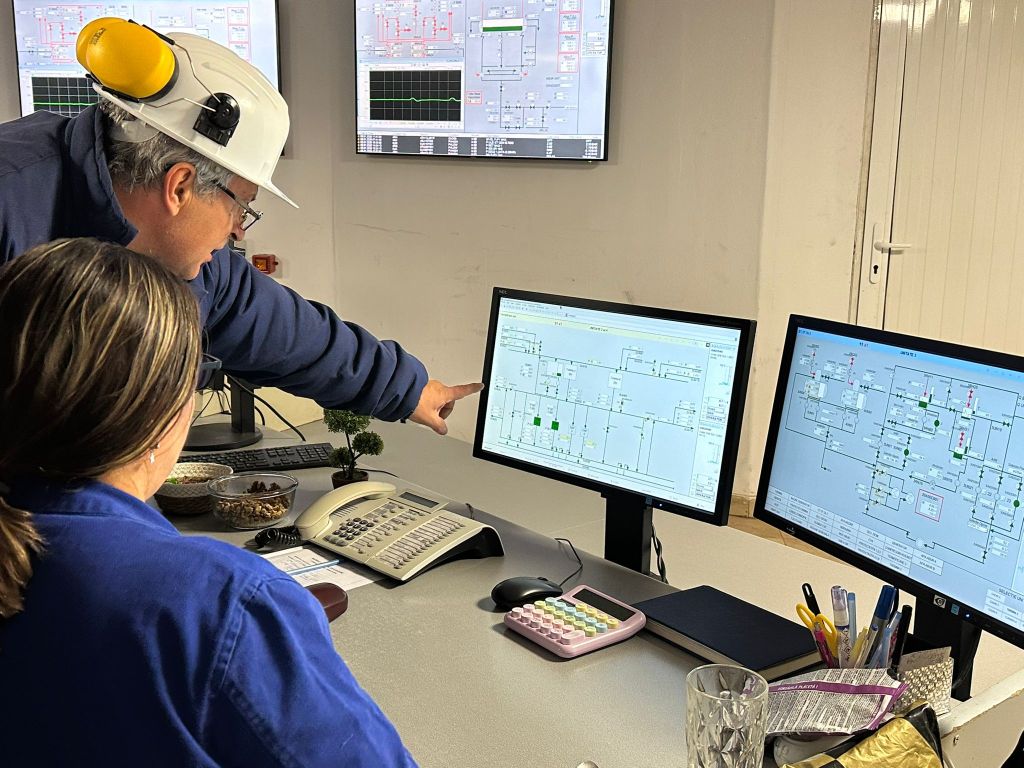
Bucharest residents are facing days without heat and hot water following a major breakdown at the CET București Sud power plant, triggered by a meaningful crack in a steam boiler described as being the size of an 8-10 story apartment building. The incident highlights the precarious state of the city’s aging energy infrastructure, with engineers citing decades of underinvestment and equipment operating far beyond its expected lifespan. Headlinez.news was granted exclusive access to the plant to assess the damage and understand the challenges facing repair crews as thousands remain affected.
A significant crack in a steam boiler – described by the engineer who maintains it as being the size of an 8-10 story apartment building – has reduced the capacity of the CET București Sud power plant. The breakdown left thousands of buildings without heating and hot water for days. On Friday, reporters were given access to the plant to see the extent of the damage and hear from the specialists working to repair the aging system.
- Residents in the affected buildings, frustrated by the lack of heat, angrily remarked that authorities were “doing nothing.” As journalists, it’s our responsibility to also hear from those facing public criticism.
- Marius Bucur, chief engineer at CET Sud, explained why repairs to these types of facilities take days, not hours. The engineer believes that “simple administrative reorganization solves nothing. Technical problems are solved with investment.”
When you picture a boiler, you might think of something small, at most the size of a barrel. But this is something else entirely. You look up, and it just doesn’t end. “In terms of height, each boiler is comparable to an 8-10 story building,” explains Marius Bucur, chief engineer at the CET București Sud plant. “That size also gives them a very large thermal inertia.”
VIDEO – What the inside of CET Sud looks like:
Table of Contents
Steam Towers on the Road to the Sea
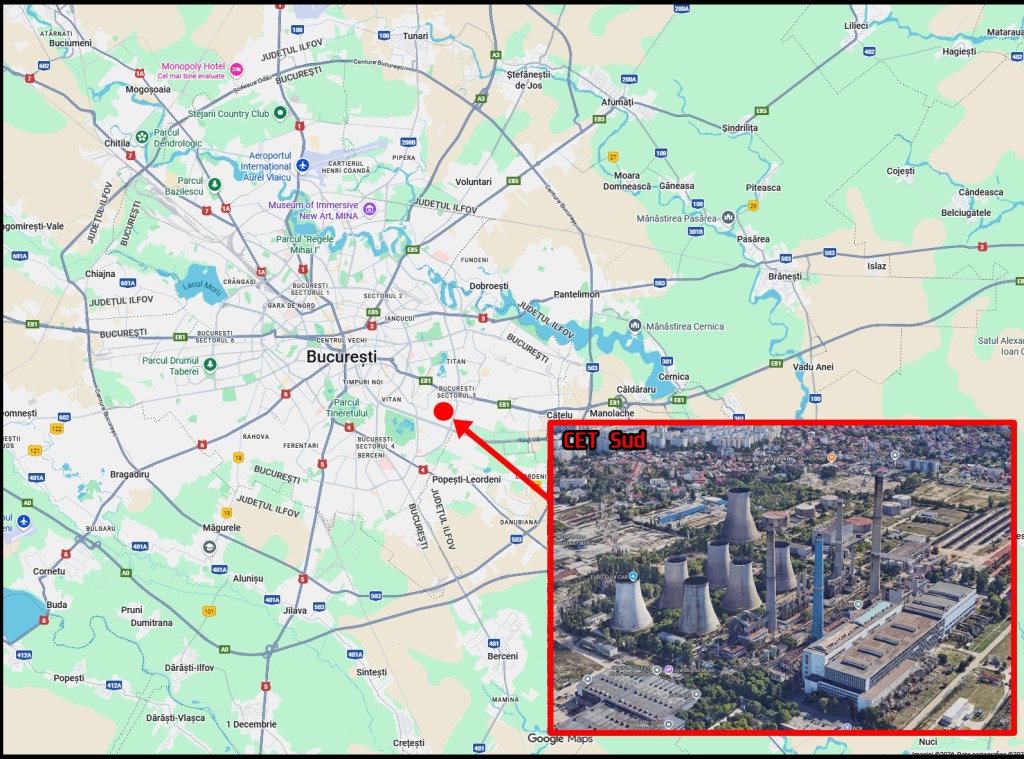
The CET Sud plant is located in the south of the city, beyond the Dâmbovița River from Văcărești Natural Park. It’s almost opposite the Vitan market, a landmark known to Bucharest residents. Its smokestacks are visible from afar on the road leading to the highway towards the Black Sea.
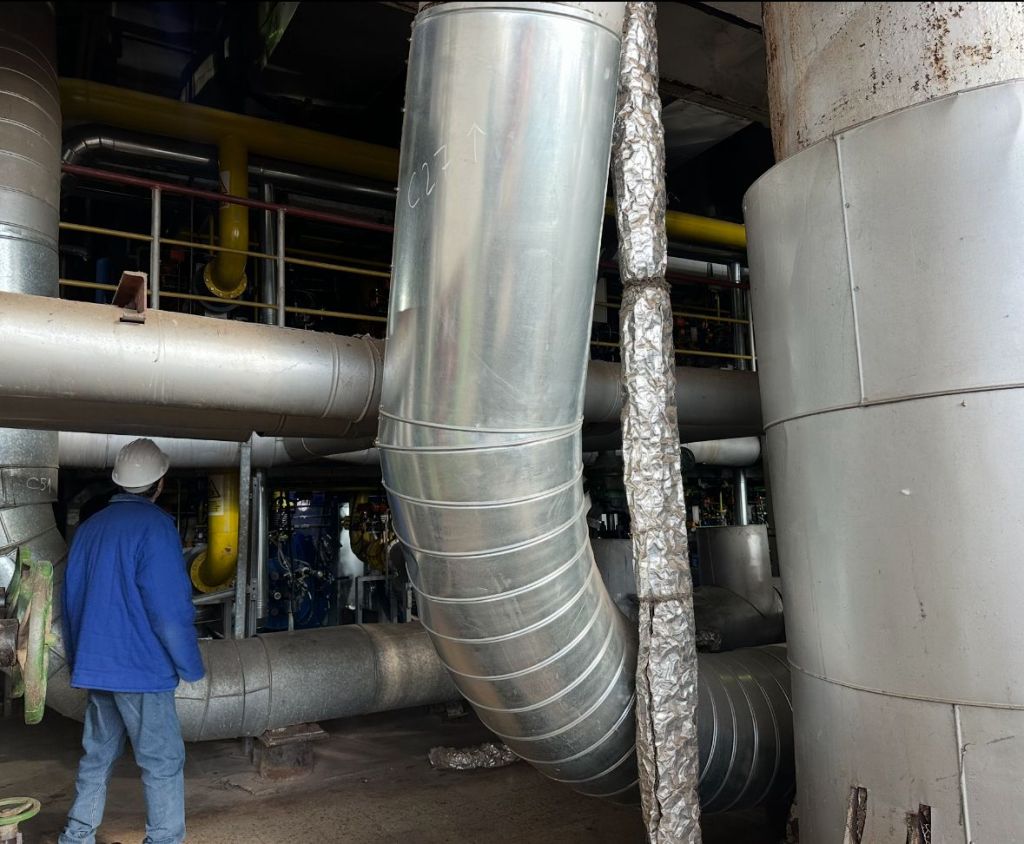
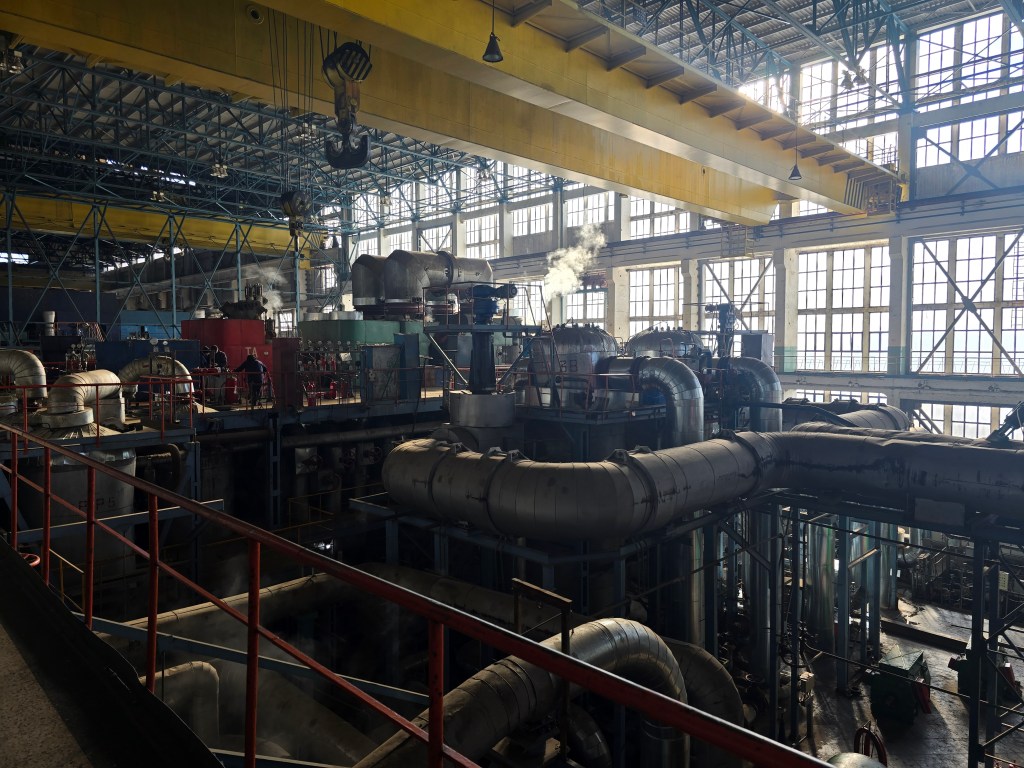
Access to CET Sud is granted with a hard hat. The tour takes place on a metal walkway, at height, among boilers spread over several levels, thick pipes, and operating fans.
The Hum of Things That Work
The feeling is like being on the upper floor of an old market hall, like the one at Obor, but instead of stalls, you see the installations. The noise is constant and loud enough that conversations are difficult. The size of the equipment and the continuous rhythm of the installations immediately give the impression of a system that works without pause – until something breaks.
Engineer Coman: Inertia is part of how a plant like this functions
The steam boilers at CET București Sud are large-scale industrial installations, identical in type and function. This inertia is essential to the operation of the plant, explains Dumitru Coman, the second engineer we spoke with.
“The boilers heat up and cool down slowly, and shutting them down or restarting them cannot be done quickly,” the engineer said. “For this reason, even a minor intervention requires a complete shutdown of the installation and an inevitable waiting time.”
A Small Crack, A Big Effect
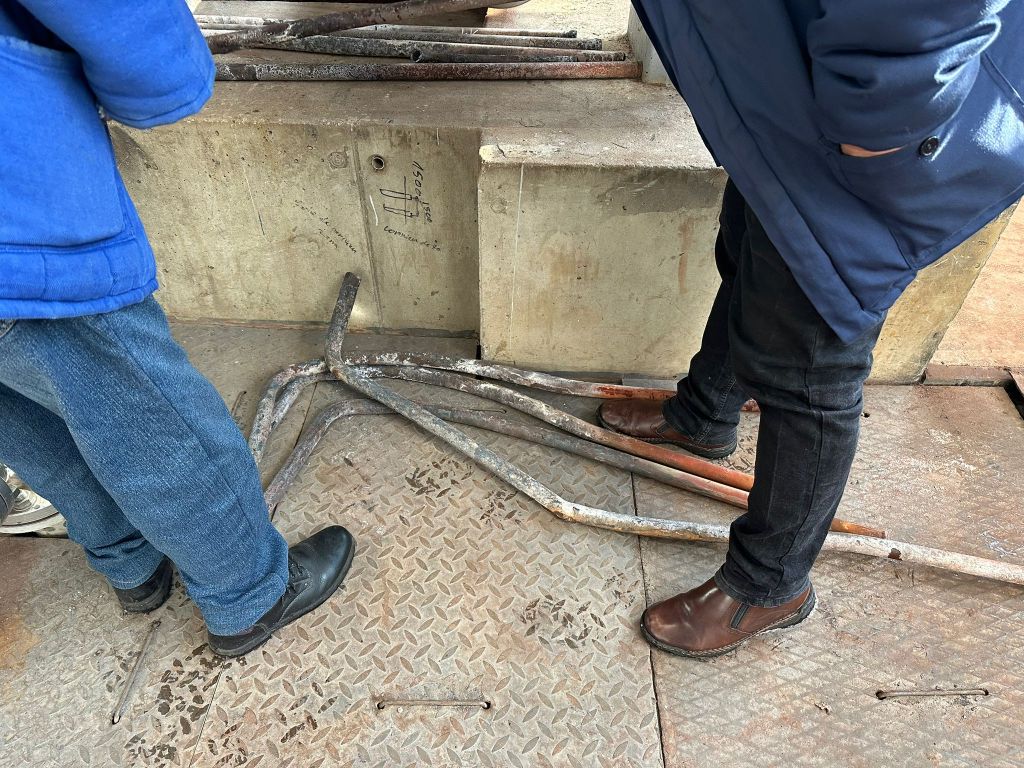
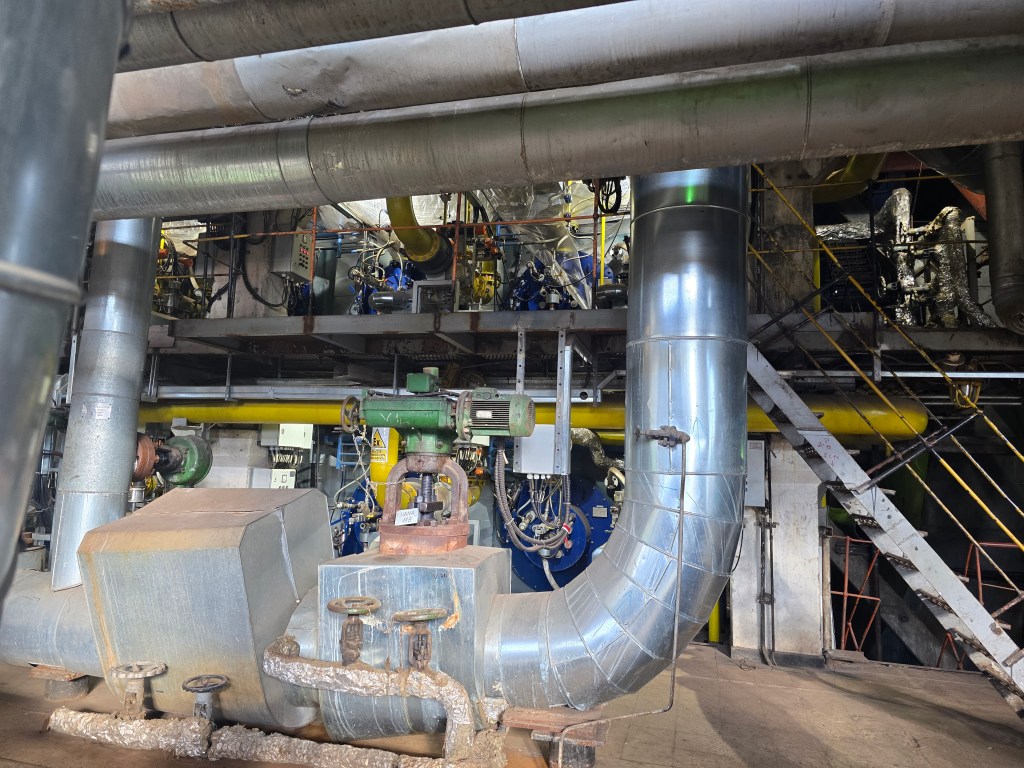
The malfunction that led to the reduced production capacity was a crack that appeared in one of the pipes inside a steam boiler. While explaining the intervention, the engineers showed images from inside the installation, showing the bundles of pipes and the replaced section.
“Look, a pipe like this broke and you have to shut down the whole boiler,” he said. “To intervene, you have to isolate it, cool it down completely, and only then can you enter. You change the pipe and then you start it up again.”
The boiler operates at high temperatures and pressures and is a completely closed unit. For this reason, shutdown is not immediately followed by repair.
Cooling the installation takes dozens of hours until safe conditions can be ensured for the teams working inside. “You can’t go in there while the installation is hot. It has to be safe for people,” Coman and Bucur explained.
Chain Reaction: Boiler Stops, Turbine Stops
Shutting down the boiler automatically shut down the associated turbine, because the production chain is continuous. “When the steam boiler number 4 stopped, the associated turbine stopped automatically, because we no longer had steam,” explained Marius Bucur. “If you don’t have steam, you can’t produce either electricity or thermal energy on that circuit.”
CET Sud did not shut down completely. Other boilers and turbines remained in operation, but the loss of one boiler significantly reduced the total capacity. “A single boiler shutdown does not mean the plant is shut down, but it severely limits you,” said the engineer.
Is There a Plan B?
CET București Sud does not have a reserve in the classic sense – an identical boiler ready to be started immediately if one fails. The emergency solution is to operate with the other aggregates available, within the technical limits of the installation and the network.
Some boilers have been permanently decommissioned and can no longer be used even temporarily. “Boilers 5 and 6 are withdrawn from operation. Once withdrawn, they are no longer declared capacities, they no longer appear even on the national energy dispatcher. Basically, they no longer exist as a reserve option,” explains Dumitru Coman, an engineer at the plant.
Engineer Bucur says equipment is old and has exceeded its lifespan
The lack of reserves is directly linked to the age of the equipment. “Any energy equipment has a lifespan calculated at 20–25 years, maximum 30,” says Marius Bucur. “After that, either you do a major overhaul, or you decommission it.”
A major overhaul involves investments of approximately 40–50% of the cost of new equipment and can extend operation for another life cycle. “Boilers that are decommissioned no longer work at all. They are no longer authorized to operate,” the engineer explains.