
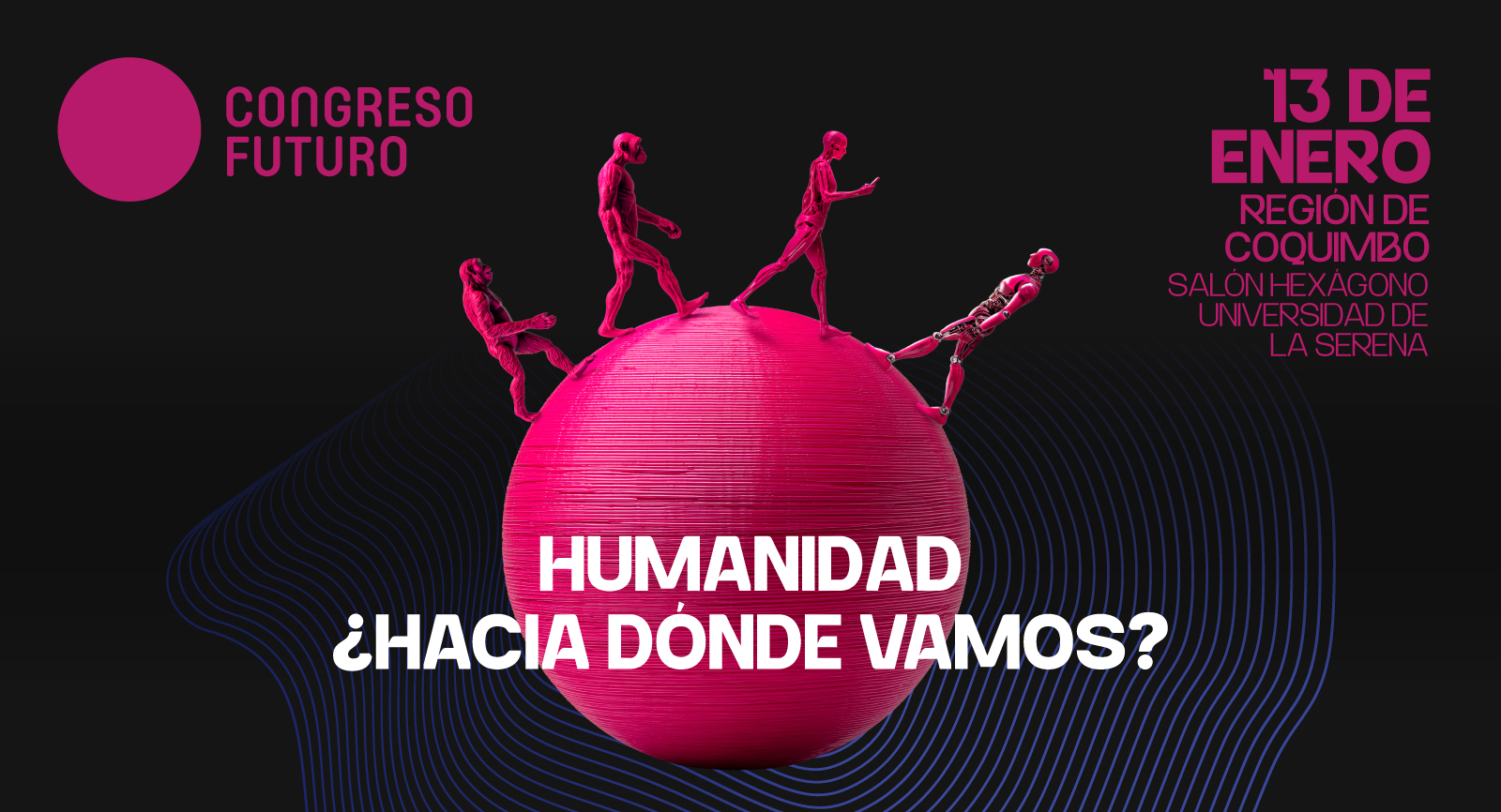
Teh Coquimbo Region of Chile will host a regional edition of Congreso Futuro 2026,Latin America’s leading science outreach event,on january 13th. The free, public event at the University of La Serena will explore the theme “Humanity, Where Are We Going?” through presentations from international experts and local researchers. Organized by the Senate of the republic and the Encuentros del Futuro (FEF) Foundation, this installment marks an expansion of the annual Congreso Futuro-now in it’s 15th year-to foster localized dialogue on critical global challenges.
The leading science outreach event in Latin America will hold a regional edition on January 13, offering free admission and featuring international speakers and prominent local researchers.
The Coquimbo Region of Chile will host a regional installment of Congreso Futuro 2026 on Tuesday, January 13, starting at 10:00 a.m. The event, open to the public, will take place in the Hexágono hall of the Andrés Bello Campus at the University of La Serena and is free to attend.
Under the theme “Humanity, Where Are We Going?”, the event aims to foster public reflection on the major challenges of the present and future, integrating science, innovation, critical thinking, and public policy. The initiative is organized by the Senate of the Republic, through the Commission for Future Challenges, alongside the Encuentros del Futuro (FEF) Foundation and key knowledge-generating institutions in the Coquimbo Region: University of La Serena, Catholic University of the North, the Advanced Studies Center in Arid Zones Ceaza, and the Agricultural Research Institute INIA.
The event will feature presentations from international experts, including Sebastián Kraves (United States), an Argentinian-American scientist and entrepreneur with a PhD in Neurobiology and co-founder of miniPCR bio, who will discuss the connection between science, technology, and civic engagement. Also speaking will be Will Stronge (England), a PhD in Politics and Philosophy and director of Autonomy, known for leading the global debate on the four-day workweek and the future of work.
A regional forum on biodiversity will also be held, featuring Dr. Marcelo Rivadeneira Valenzuela (CEAZA), a researcher in ecology and biodiversity at the University of La Serena; Dr. Britt Wallberg (INIA Intihuasi), a specialist in the conservation of plant genetic resources and territorial resilience; María de los Ángeles Gallardo (UCN), an expert in marine biogeography and ecophysiology; and Jaime Pizarro-Araya (USerena), a leading researcher in ecological entomology and arthropod biodiversity in Chile.
Attendees will also have the opportunity to explore interactive science outreach exhibits, including the Entomology Mobile, the Seed Bank, and the CEAZA Mobile. These exhibits aim to make scientific knowledge more accessible to the community.
“Congreso Futuro is a key opportunity to open informed conversations about the challenges facing our region and the country,” said Dr. Luperfina Rojas Escobar, Rector of the University of La Serena. “As a state university, we believe it is essential to make these discussions accessible to the community and actively contribute to building a future with greater social cohesion and a scientific foundation.”
The Vice-Rector of the Catholic University of the North Coquimbo Campus highlighted that the event “allows us to bring together the institutions that generate knowledge in the region around a shared reflection on the challenges of the territory. This meeting strengthens collaboration between universities, research centers, and the public sector, contributing to ensuring that regional development decisions are based on evidence, dialogue, and a long-term perspective.”
Dr. Carlos Olavarría, executive director of CEAZA, stated that “this event helps us position science and its importance for people’s well-being, prompting us to think about the various challenges we face as a society and as humanity, and how we can adapt to these situations.” Claudio Balbontín, Regional Director of INIA, added that “this year’s Congreso Futuro, focused on biodiversity, is very timely. Science increasingly provides evidence of the importance and beneficial functions of diversity in the resilience of ecosystems. INIA and its contribution to seed conservation play a fundamental role in this objective.”
Registration is available at https://forms.gle/EaiCnH8bAtCZS8Xk7.
Congreso Futuro, created in 2011, is considered the most relevant platform for exchanging ideas in Latin America, with the goal of democratizing knowledge and promoting dialogue between science, politics, academia, and the public. Its XV edition will be held between January 12 and 17, 2026, with activities in Santiago and throughout the country. The event’s expansion to regional hubs reflects a growing emphasis on localized discussions about global challenges.
