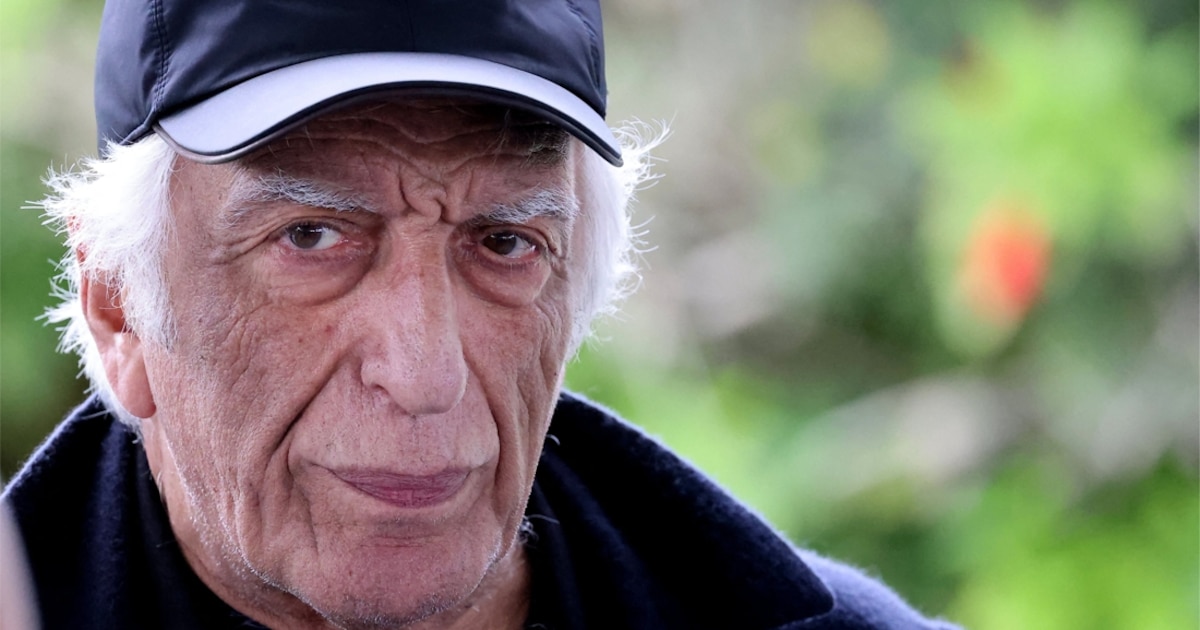
Gérard Darmon, a 78-year-old French actor best known for films like La Cité de la Peur (1994) and the Astérix series—including Astérix & Obélix: Mission Cléopâtre (2002) and Astérix: The Mansion of the Gods (2014)—has withdrawn from his role as president of the jury at the Festival du Premier Film in La Ciotat, France, amid growing allegations of sexual misconduct. The decision follows a public outcry from feminist collectives and comes just days before the festival’s scheduled opening on June 10, 2026, at the Eden-Théâtre venue, a historic cinema landmark in the “cradle of cinema” where Marcel Pagnol once worked. Darmon’s withdrawal was announced on May 21, 2026, after festival organizers received a formal petition from the Collective Féministe de La Ciotat, supported by regional groups in Aubagne, Paris, and Rouen.
Why Darmon Stepped Down: A Timeline of the Controversy
The controversy surrounding Darmon escalated after nine women—including technicians, costume designers, and production assistants—accused him of sexual harassment and assault between 2018 and 2024. The allegations, first reported by the investigative outlet Politis on May 18, 2026, include inappropriate touching, verbal abuse, and propositions. According to Politis, one woman described being greeted with a hand placed between her thighs during a professional meeting in 2020, while another recalled Darmon asking her to visit his home in Marseille for “intimacy” in 2022. A third accuser, a costume designer who worked on his 2023 film Le Dernier Voyage de Robert Baldwin, reported feeling pressured to comply with his advances to maintain her job.
Despite the accusations, no formal charges have been filed against Darmon. However, one technician did file a complaint against his production company, Les Films du Losange, for failing to provide a safe working environment, a detail confirmed by multiple sources, including La Provence. The complaint, filed in March 2026, remains under investigation by the Direction Départementale de la Protection des Populations (DDPPS) in Bouches-du-Rhône. Darmon’s legal team has denied all allegations, stating in a May 20, 2026 press release that the accusations are “baseless and politically motivated.”
cluster (priority): Marsactu
Darmon’s withdrawal was not forced—he announced it himself in a brief statement issued through his representative, Agence VU’, citing the “poisoned” atmosphere surrounding the festival. The announcement came hours after festival director Yves Alion confirmed receiving the collective’s petition. In a statement to La Provence, Alion acknowledged that Darmon was not his first choice for the role but had agreed to participate after other actors, including Isabelle Huppert and Jean Dujardin, declined due to scheduling conflicts. Alion admitted he had not been aware of the accusations when Darmon was initially selected in February 2026, stating, “If there had been a complaint, I would have questioned the decision.”
“Gérard Darmon, on the substance, feels attacked. On the form, he recognizes the situation has become toxic. To avoid harming the festival, to avoid harming La Ciotat—the cradle of cinema—he is withdrawing with great sadness.”
Yves Alion, Festival du Premier Film director, via La Provence
The Feminist Backlash: How Activists Forced the Issue
The pressure to remove Darmon came from the Collective Féministe de La Ciotat, a local advocacy group formed in 2020 after the #MeToo movement gained traction in France. The collective, which includes survivors from the film industry and allies, launched a petition on May 19, 2026, demanding Darmon’s removal. Their statement, shared widely on social media, declared, “The voices of women are finally being heard”—a phrase that has become a rallying cry in France’s #MeToo movement. The petition garnered over 12,000 signatures within 24 hours, prompting the festival’s adjoint to culture, Jean-Louis Tixier, to call the decision “one of wisdom.”
Alion’s initial defense of Darmon—grounded in the absence of legal complaints—now appears outdated. While he insisted in a May 20, 2026 interview with Télérama, “I assume responsibility for my choices,” his stance clashed with the festival’s broader mission to celebrate independent cinema while upholding ethical standards. The collective’s intervention exposed a growing divide: between institutional inertia and the demands of survivors. Céline Sciamma, the acclaimed filmmaker and jury member for the festival, publicly supported the collective’s demands, stating, “Artistic freedom must be balanced with respect for all those who contribute to the creation of films.”
Darmon’s Past and the Festival’s Future
Darmon’s withdrawal is not an isolated incident. The actor has a history of controversial statements, including his 2023 signature on a tribune supporting Gérard Depardieu, who was later convicted of sexual assault in a separate case. The tribune, published in Le Figaro, criticized what it called “a witch hunt” against Depardieu, further tarnishing Darmon’s reputation. This connection has drawn parallels to the 2017 Weinstein scandal, where Hollywood’s failure to act on misconduct allegations led to widespread industry reforms. In France, however, such cases have often been met with denial or delay.
Cannes 2025: After long love affair with the festival, Juliette Binoche is jury president
The festival, set to run from June 10–14, 2026 at La Ciotat’s Eden-Théâtre, risks reputational damage. While Alion framed Darmon’s departure as a “sage” move to avoid controversy, the incident raises questions about how festivals balance artistic legacy with accountability. The festival’s program, which includes screenings of films by Céline Sciamma, Leos Carax, and Rithy Panh, had already faced criticism for its lack of gender parity in jury selections. The Syndicat Français de la Critique de Cinéma had previously urged the festival to prioritize diversity, a call that now takes on added weight.
Organizers have not yet announced a replacement for Darmon. Potential candidates include Isabelle Carré, who declined the role earlier this year, or Vincent Lindon, who has expressed interest in participating. The festival’s artistic director, Clément Cogitore, confirmed in a May 21, 2026 statement that a replacement would be named by June 5, 2026, ahead of the festival’s opening. The selection process will reportedly include consultations with feminist groups to ensure transparency.
What Happens Next? The Uncertain Road Ahead
For Darmon, the immediate fallout is clear: his career in France may now face renewed scrutiny. While he has not been criminally charged, the allegations—coupled with his association with Depardieu—could deter future collaborations. His most recent film, Le Dernier Voyage de Robert Baldwin (2023), directed by Nicolas Boukhrief, has already seen its distribution in France delayed by Wild Bunch, the distributor, citing “market conditions.” Darmon’s legal team has threatened legal action against Politis for defamation, but industry insiders suggest such a move could backfire given the growing public support for the accusers.
The festival’s organizers, meanwhile, must now navigate the aftermath. The Festival du Premier Film has a history of controversy; in 2021, it faced backlash for inviting Roman Polanski as a guest of honor, though he did not attend due to legal issues. This time, the response has been swift and decisive. Alion’s comment—echoed in interviews with Politis—reveals a defensive posture, but the ground has shifted. The collective’s victory is not just about Darmon; it’s about redefining what institutions owe to survivors.
cluster (priority): La Provence
“It bothers me that people feel the need to scrutinize the CVs of everyone with a slight reputation.”
Alion’s comment has drawn criticism from feminist groups, who argue that the festival’s initial decision to include Darmon reflected a broader industry trend of prioritizing legacy over accountability. The Collectif 50/50, a French organization advocating for gender parity in cinema, released a statement calling for “structural changes” in festival selection processes. They noted that Darmon’s case is part of a larger pattern where men accused of misconduct in France are often given the benefit of the doubt until legal action is taken.
A Pattern of Silence: Why This Case Matters
Darmon’s case is part of a larger pattern in France, where sexual misconduct allegations often face institutional pushback. Unlike in the U.S., where #MeToo led to swift industry-wide reforms—such as the 2017 Time’s Up initiative—French cinema has struggled with denial and delay. A 2025 study by the CNRS on workplace harassment in the arts found that 42% of women in the film industry reported experiencing sexual harassment, yet only 8% of cases resulted in formal complaints. The lack of formal complaints against Darmon—despite nine accusers—highlights a systemic issue: Without legal action, survivors’ voices are easily dismissed.
Yet the tide may be turning. The collective’s campaign, coupled with Darmon’s withdrawal, signals a shift. Even without charges, the stigma of association with sexual misconduct is now enough to derail a career. For survivors, this is progress—but it’s fragile. The challenge ahead is ensuring that such moments of accountability lead to lasting change, not just temporary PR fixes. Édith Bouvier, a former assistant director who spoke to Le Monde, noted that Darmon’s case is the first in France where a high-profile figure has been removed from a major cultural role without legal proceedings, marking a potential turning point.
As La Ciotat’s festival prepares to open without Darmon, one thing is certain: The conversation has changed. The question is whether the industry will listen. The CSA (Centre National du Cinéma et de l’Image Animée) has already announced it will review its funding criteria for festivals and production companies, with a focus on ethical conduct. A spokesperson confirmed that “supporting a safe and inclusive environment is now a non-negotiable condition for public funding.”
The festival’s future hinges on its response. If organizers replace Darmon with a figure whose past is similarly unchecked, the message will be lost. But if they use this moment to rethink their selection process—prioritizing ethical conduct over star power—they may yet turn a crisis into an opportunity. The Festival de Cannes, which has faced its own scandals, has already signaled support for the Festival du Premier Film, offering to share its newly implemented ethics review board model.
Daniel Lee is the Entertainment Editor at Headlinez.News, covering the ever-changing world of film, television, music, and celebrity culture. With over a decade of experience reporting from Hollywood and major international festivals, Daniel brings a sharp eye for stories that define pop culture. His background in digital media and entertainment journalism allows him to blend exclusive insights with SEO-driven storytelling that keeps readers informed and engaged.
Expertise: Film and television, celebrity news, pop culture analysis, entertainment trends, digital storytelling.
Location: Los Angeles, California, USA