
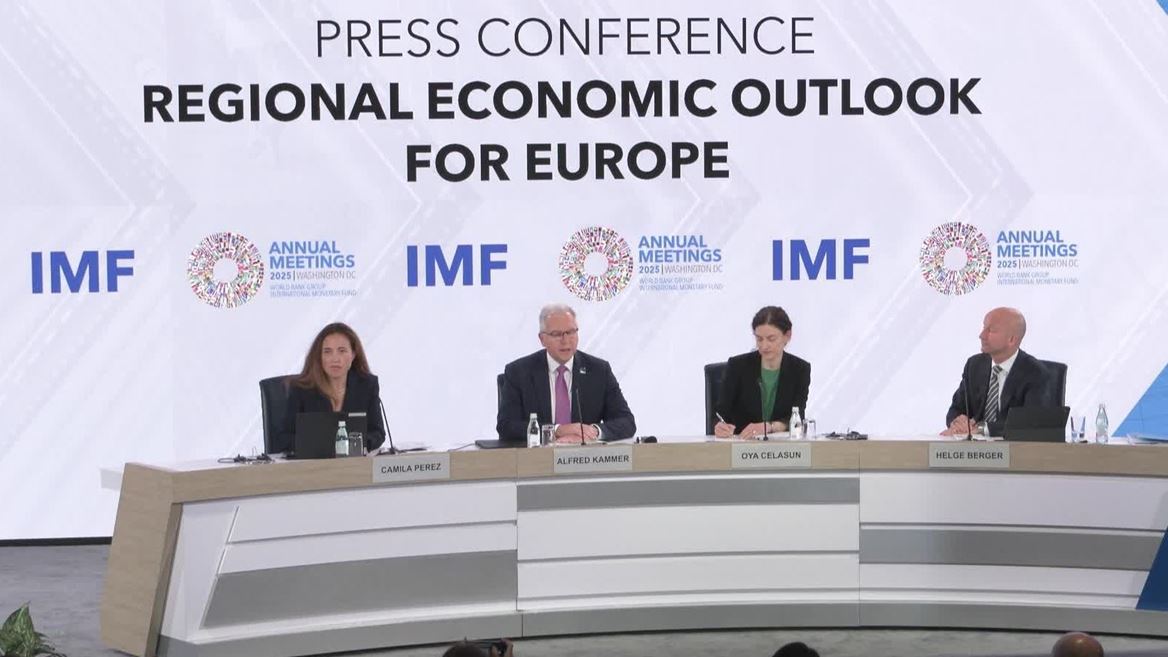
IMF Warns of ‘Mediocre Growth’ for Europe Amidst Trade Tensions
Europe is transitioning into a period of weaker medium-term growth following a strong post-pandemic rebound, according to cautions issued today by the International Monetary Fund (IMF). This slowdown could impact global economic stability, given Europe’s significant role in international trade.
Speaking at the IMF’s 2025 Annual Meeting, Alfred Kammer, Director of the IMF’s European Department, stated that while the initial recovery was driven by higher real wages, lower interest rates, and successful inflation control – with the European Central Bank reaching its 2% target – new headwinds are emerging. “The pandemic and the energy crisis were huge shocks…and what we see is now the end of that recovery,” Kammer said. He warned that trade and geopolitical tensions are expected to shave off 0.5% of growth cumulatively between 2025 and 2026, despite increased infrastructure and defense spending, particularly in Germany. You can find more information about the IMF’s work on their official website.
The IMF is advising European policymakers to shift focus from managing short-term momentum to consolidating policy gains and enacting deeper structural reforms. These include reducing intra-European trade barriers, advancing a Capital Markets Union, improving labor mobility, and developing an energy union. Kammer predicted that implementing these reforms could boost Europe’s GDP by 9% over 10 to 15 years. He also emphasized the need for fiscal consolidation, noting that without it, public debt could double over the next 15 years, reaching around 130% of GDP.
Kammer concluded by stressing the urgency of action, stating, “Europe can act, Europe must act, and Europe must do so now,” while acknowledging the political challenges of implementing necessary reforms. The IMF is offering support to European policymakers in building a narrative to gain public support for these measures.
