
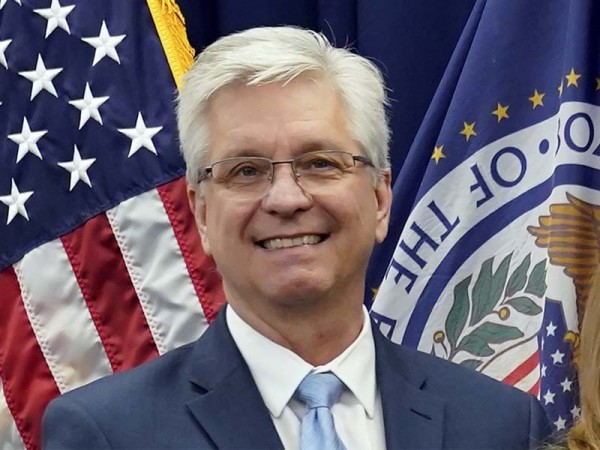
Washington – A growing divide within the Federal Reserve over the health of the U.S. economy is intensifying as the December policy meeting approaches. Federal Reserve governor Christopher Waller publicly advocated Monday for a third consecutive quarter-point interest rate cut, citing concerns about underlying economic weakness and a potential slowdown in consumer spending [[1]], [[2]]. His stance contrasts with that of other officials, including Vice Chair Philip Jefferson, who are urging a more cautious approach amid lingering inflation concerns and recent disruptions to economic data collection due to the recent government shutdown [[3]].
A key Federal Reserve official believes the U.S. economy is performing more weakly than current indicators suggest, advocating for another interest rate cut.
Federal Reserve Governor Christopher Waller on Monday signaled his support for a third consecutive interest rate reduction, stating the economy is likely weaker than it appears. His comments come as the central bank weighs further monetary policy adjustments.
Speaking in London, Waller indicated he is “unlikely” to alter his stance “in the coming weeks.”
“Another rate cut is needed,” he asserted.
Waller has been a vocal proponent of monetary easing this year, anticipating a deterioration in the labor market – a prediction that has since been borne out by economic data. He is also frequently mentioned as a potential candidate to succeed Jerome Powell as Fed chair when Powell’s term expires in May.
The Fed has already lowered rates twice this year, in September and November. Chairman Powell recently cautioned investors that another rate cut at the December meeting was “not a given,” citing divisions among policymakers. The debate centers on whether to prioritize controlling inflation or supporting economic growth.
Some officials favor pausing rate cuts to allow inflation to moderate, while others, like Waller, believe easing monetary policy is crucial to bolster the economy and the labor market by reducing borrowing costs.
“I fear that the restrictive monetary policy is weighing on the economy, particularly on consumers with moderate or low incomes,” Waller explained, noting their increasing difficulty in affording major purchases like homes and cars, which impacts overall demand.
He anticipates a “significant” slowdown in economic growth in the second half of the year compared to the same period last year.
“While rising financial markets are supporting spending by a small segment of affluent consumers, this does not reflect the financial situation of most Americans, which represents a vulnerability for the economy,” he added.
During a question-and-answer session, Waller revealed that companies are beginning to shift their hiring strategies. “Four or six weeks ago, they were still in a ‘no hire, no fire’ mode. They are now starting to talk about layoffs, and to plan them.”
Earlier Monday, Federal Reserve Vice Chair Philip Jefferson offered a more cautious outlook. Speaking at an event hosted by the Federal Reserve Bank of Kansas City, he argued the Fed should proceed “slowly” and “prudently,” particularly given the recent government shutdown – which lasted over 40 days – and the resulting suspension of official macroeconomic data releases.
That data is expected to resume publication this week. The Fed’s next policy meeting is scheduled for December, and economists are closely watching for signals about the future path of interest rates as economic data continues to evolve.
