
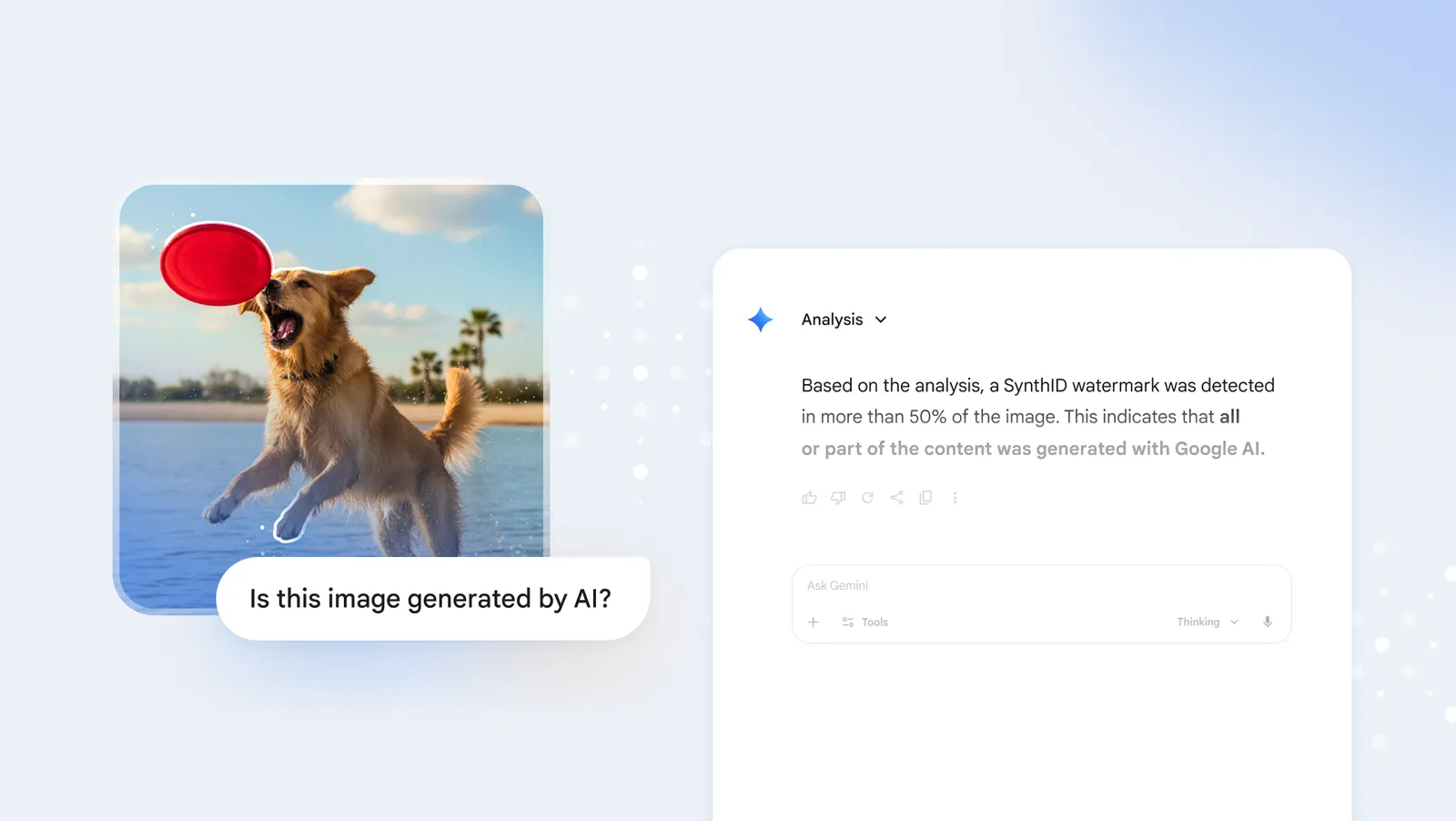
As AI-generated images become increasingly prevalent and sophisticated, verifying the authenticity of visual content is a growing concern. Google is responding to this challenge with a new feature integrated directly into its Gemini app: an “About this image” tool that provides users with contextual information about an image’s origin. The globally available tool, now available for personal accounts on both Android and iOS, aims to empower users to assess the credibility of images and identify those created or edited using Google’s AI technologies.
Google is now integrating its “About this image” verification tool directly into the Gemini app for both Android and iOS. The feature empowers users to check the origin and authenticity of visual content presented by the AI, including the ability to detect if an image was generated by Google’s own AI tools.
The rollout, available globally for personal accounts, aims to combat the spread of visual misinformation by providing immediate context about images appearing in Gemini’s responses. This move reflects a broader industry trend toward greater transparency in AI-generated content.
Users can access contextual information without leaving the application. By tapping the three-dot menu below any image in Gemini’s responses, the “About this image” option appears. The integration underscores Google’s commitment to responsible AI development.
According to Google, the tool reveals crucial data for assessing content credibility, including:
- The approximate date the image was first indexed by Google Search.
- Other web pages where the image appears, including news sites or fact-checking platforms.
Leveraging C2PA and SynthID to Combat Deepfakes
A key component of this integration is transparency regarding AI usage. The tool indicates whether an image was created or edited using Google’s generative AI tools. This feature is particularly relevant as AI-generated imagery becomes increasingly sophisticated and difficult to distinguish from authentic content.
This detection relies on two core technologies:
- SynthID: A digital watermark developed by Google DeepMind, which embeds invisible identifiers directly into the pixels of AI-generated images.
- C2PA: The tool utilizes metadata from the Coalition for Content Provenance and Authenticity (C2PA) to track the creation and modification history of the file, establishing a standard for digital provenance.
Google states its goal is to “give people easy-to-use tools” to understand what they see online, at a time when the line between reality and synthetic content is becoming increasingly blurred.
Looking Ahead
The introduction of image verification within the Gemini app’s interface represents a significant step forward in digital media literacy. By placing these analytical tools directly in the hands of consumers, Google is shifting some of the responsibility for verification to the user, equipping them with resources to navigate the visual information ecosystem with greater skepticism and safety.
For more information, read this article on Google’s official blog.
Other articles of interest:
