
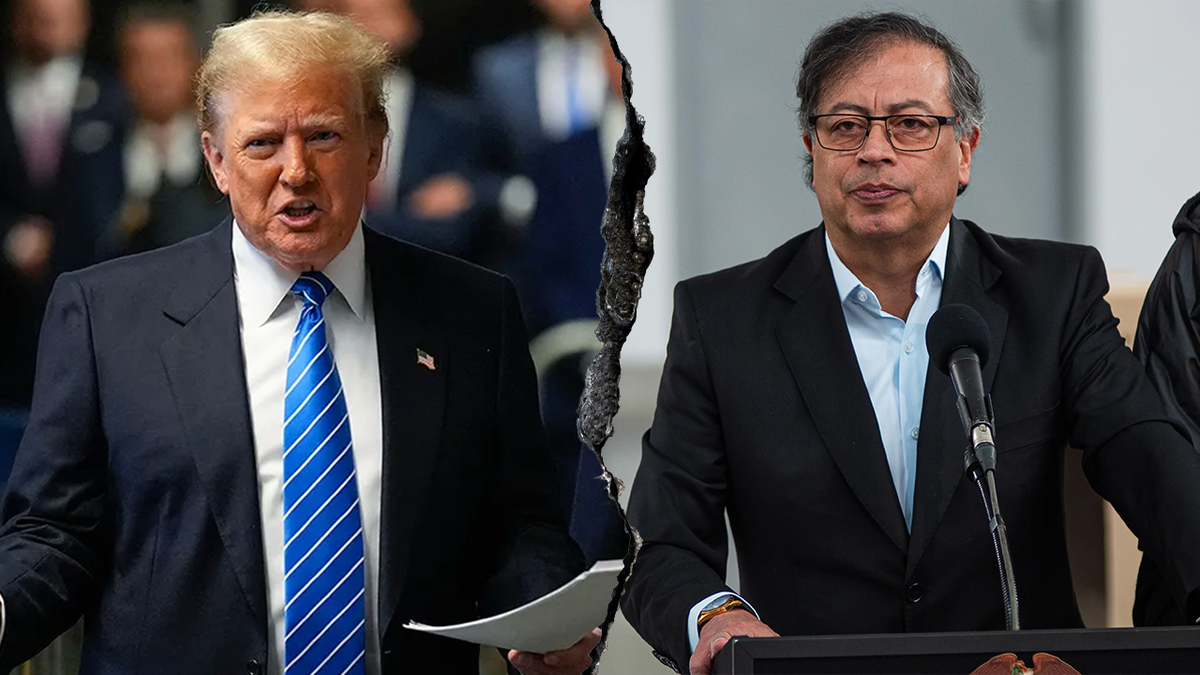
Colombia’s former President Gustavo Petro revealed Friday why his name appeared on a U.S. government watchlist under the Trump administration, citing a 2023 speech in which he criticized U.S. foreign policy. The disclosure comes as Petro, now a senator, faces renewed scrutiny over his diplomatic rhetoric amid shifting U.S.-Latin America relations.
Gustavo Petro, Colombia’s first leftist president and now a senator, has publicly explained why the Trump administration included him on a restricted travel list in 2023—a move he attributes to a single speech criticizing U.S. interventionism in Latin America. The revelation, made during a press conference in Bogotá on May 15, 2026, sheds light on a diplomatic friction point that persists as Petro’s political influence grows in a region increasingly wary of U.S. influence.
The watchlist, part of the so-called “Clinton List” (officially the Special Watch List
under Section 7031(c) of the Department of State, Foreign Operations, and Related Programs Appropriations Act), was expanded under former President Donald Trump to target individuals deemed threats to U.S. national security or foreign policy interests. Petro’s inclusion was confirmed by a 2023 State Department filing, though the specific reasons were not disclosed at the time. His recent admission provides the first public clarification from his perspective.
Petro’s Speech: The Trigger for the Watchlist
According to Petro, his name was added to the list after he delivered a speech in Havana, Cuba, in November 2023, where he accused the U.S. of neocolonialism
in the region and called for an end to military aid to Colombia. The remarks align with Petro’s long-standing criticism of U.S. drug war policies, which he argues have fueled violence rather than reduced it.
We cannot allow the United States to dictate the terms of our sovereignty. The war on drugs has failed, and the resources spent on it could have been used to build schools and hospitals.Gustavo Petro, Colombian Senator and former President
While Petro’s comments were not unprecedented—many Latin American leaders have voiced similar critiques—the timing coincided with heightened U.S. scrutiny of leftist governments in the region. The Trump administration, which had already designated Petro’s government as a threat to U.S. interests
in earlier filings, may have seen the Havana speech as a direct challenge to Washington’s hemispheric strategy.
Diplomatic Fallout: A Watchlist with Unclear Consequences
The State Department’s watchlist is not a formal ban but carries practical risks, including travel restrictions and potential financial penalties for associated entities. For Petro, a frequent international traveler, the listing could have complicated his diplomatic engagements. However, the Biden administration later reviewed the list and removed several names, including Petro’s, in early 2025—a decision framed as part of a broader effort to reset relations with Latin America.
Petro’s disclosure comes as he prepares to lead a congressional delegation to Mexico and Argentina next month, where he is expected to push for regional cooperation on trade and climate policy. His watchlist inclusion, though now lifted, remains a point of contention in U.S.-Colombia relations, particularly among conservative lawmakers who view Petro’s government as hostile to American interests.
Broader Context: Petro’s Role in Shifting U.S.-Latin America Dynamics
Petro’s political career has been defined by his opposition to U.S. influence in Colombia, a stance that resonates with a growing segment of Latin American leaders. His election in 2022 marked a turning point, as Colombia—long a U.S. ally in the drug war—shifted toward partnerships with China, Russia, and regional blocs like CELAC (Community of Latin American and Caribbean States).
Analysts note that Petro’s watchlist inclusion was symptomatic of a broader U.S. strategy under Trump to contain leftist movements
in the region. The move was part of a pattern that included sanctions on Venezuelan officials and restrictions on Cuban diplomats. However, the Biden administration’s reversal in 2025 signaled a pivot, with officials emphasizing diplomatic engagement over confrontation.
For Petro, the episode underscores the vulnerabilities of small nations in great-power rivalries. While his name was removed from the list, the incident has fueled debates in Colombia about sovereignty and the limits of U.S. influence. Petro’s allies argue the watchlist was politically motivated, while critics question his alignment with governments like Venezuela’s, which the U.S. considers a threat.
What’s Next: Petro’s Influence and the U.S. Response
As Petro consolidates his role in Colombia’s political landscape, his recent transparency about the watchlist may signal an effort to depoliticize the issue. However, the episode highlights ongoing tensions between Colombia’s leftist government and Washington, particularly over drug policy, military cooperation, and economic ties.
In the near term, Petro’s congressional delegation to Mexico and Argentina will test his ability to advance his agenda without provoking U.S. backlash. Meanwhile, U.S. officials are likely monitoring his interactions with regional leaders, particularly those with close ties to Russia or China.
One unanswered question is whether the Trump administration will revisit the watchlist if he returns to the White House in 2028. Given his hardline stance on Latin America, such a move would likely reignite diplomatic tensions—a scenario Petro’s government is already preparing for.
For now, the Havana speech and its aftermath serve as a case study in how rhetoric can shape geopolitical realities. Petro’s disclosure, while late, offers a rare glimpse into the personal stakes of regional diplomacy in an era of shifting alliances.
