
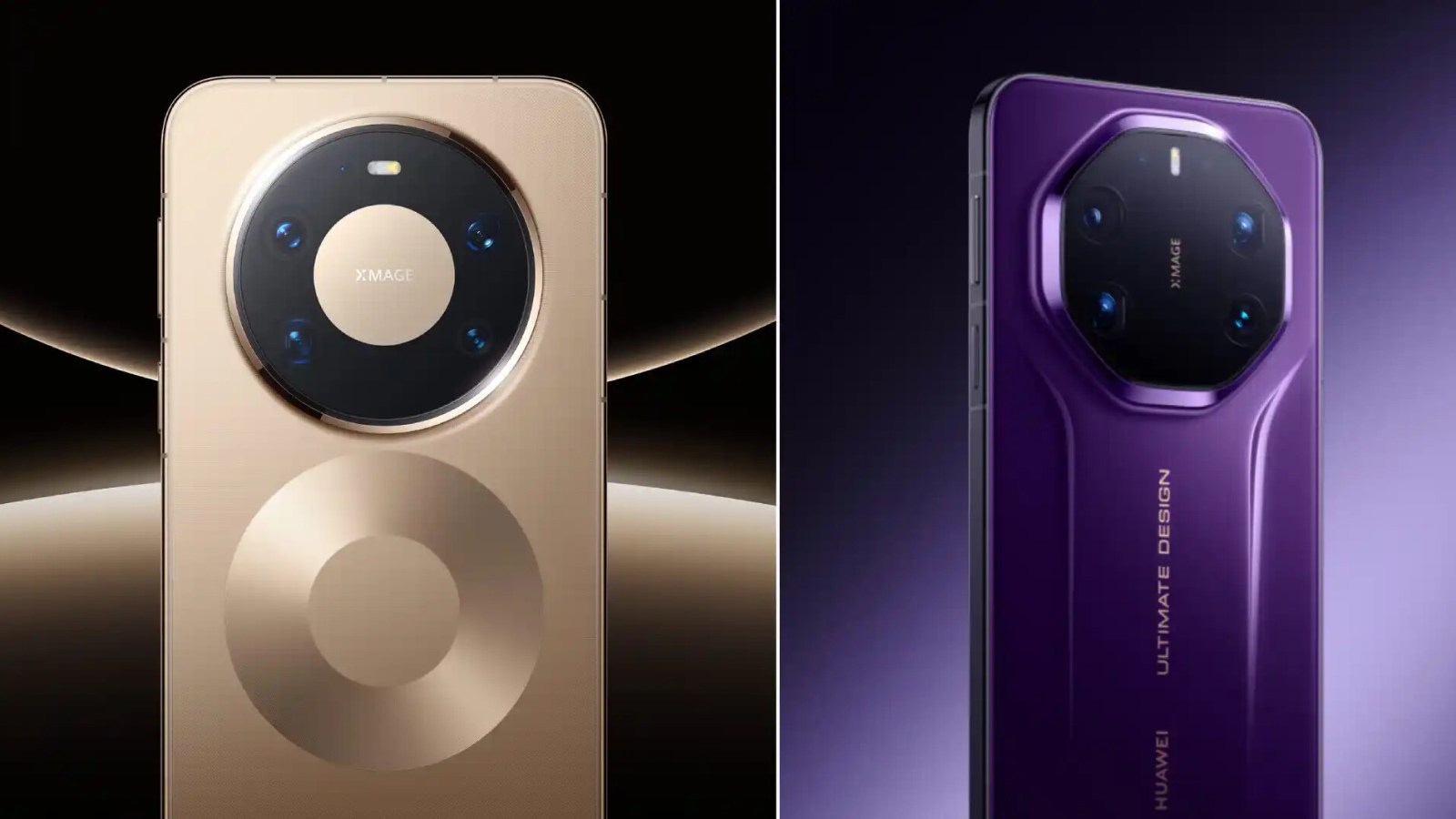
Huawei is challenging smartphone industry leaders once again with its new Mate 80 series, unveiled in China this week. Teh lineup, headlined by the Mate 80 Pro Max boasting an extraordinary 20GB of RAM and groundbreaking display technology, demonstrates the company’s continued innovation despite ongoing geopolitical challenges [[2]].While specific details remain limited due to trade restrictions,the Mate 80 series showcases meaningful advancements in camera capabilities and processing power,hinting at a potential shift in the high-end smartphone market [[1]].
Huawei is once again pushing the boundaries of smartphone technology with its latest flagship series. The Mate 80 Pro Max boasts a staggering 20 GB of RAM, dual periscope telephoto lenses, and a display that rivals the brightness of a television.
Despite facing ongoing challenges, Huawei has unveiled its new Mate 80 series in China, demonstrating the company’s continued commitment to innovation. The launch showcases a significant technical leap forward, particularly in display and camera technology.

The Mate 80 series includes four models: the Mate 80, Pro, Pro Max, and the premium RS Ultimate Design. Huawei has addressed previous shortcomings while maximizing screen and camera capabilities across the lineup. This move underscores the company’s dedication to delivering high-end smartphone experiences.

For further reading
Huawei dared to do what Apple refuses to do with the iPad Pro and it’s brilliant, here’s the MatePad Edge
A Stunning Display and a Shift in Design
The headline feature is the display’s peak brightness: 8000 nits. This is the HDR peak brightness announced for the Mate 80 Pro Max’s screen. For context, the iPhone 16 Pro is expected to peak at 2000 nits outdoors. Huawei achieves this with an OLED Tandem (double-layer) technology, similar to that found in the iPad Pro M4.

Essentially, it’s two OLED panels stacked on top of each other, resulting in exceptional brightness and improved durability. The impact on battery life remains to be seen, though Huawei promises improved power efficiency. This technology represents a significant advancement in mobile display capabilities.

A power bank for all your devices
It’s Black Friday! Anker is offering a discount on its 25,000 mAh power bank. With its two integrated cables and a total power output of 165 watts, it can charge almost all of your devices, wherever you are.

The design has also been refined. The screen is now flat. Huawei has abandoned the curved edges that made previous models slippery and difficult to protect with screen protectors. The chassis features straight lines, inspired by current design trends, but offering a clean, streamlined look. The devices are also IP68 and IP69 certified for water and dust resistance.
Advanced Camera System with Dual Periscope Lenses
The camera system remains a key focus for Huawei. The rear camera module, with its unique design, houses a powerful configuration. The Pro Max model features a quad-camera setup:
- A 50 MP main sensor with a variable aperture.
- A 40 MP ultrawide lens.
- And notably, two telephoto lenses.
Yes, two. A 50 MP macro telephoto lens for portraits and close-up shots, and a 50 MP periscope super-telephoto lens with an optical zoom range of 6.2x to 12.4x. This architecture is found in other premium smartphones, but Huawei enhances it with its XMAGE software and a new “Red Maple” image processing chip.
Under the hood, details are limited. Huawei mentions Kirin 9030 and 9030 Pro chips. Specific technical details are scarce due to the ongoing US embargo, but the company claims a 35% to 42% performance increase compared to the Mate 70. While unlikely to surpass a Snapdragon 8 Elite Gen 5 in raw benchmarks, the chips should provide ample power for everyday use and image processing.
Battery capacities follow the trend of larger capacities, with 6000 mAh on the Pro Max models, and 100W wired charging.
The Persistent Challenge
The key issue remains the software. These smartphones run on HarmonyOS 6 (likely based on HarmonyOS Next). It’s fluid and AI-powered, but lacks Google Mobile Services.

In China, this is not a barrier to entry. The smartphone is expected to sell extremely well (the RS Ultimate model is priced around $1700). However, for European consumers, importing remains a challenge for experienced users. This is frustrating, given the potential of the hardware.
To learn more
Surviving without Google on a Huawei smartphone: we tested it with the Pura 70 Ultra
The Mate 80 Pro Max showcases hardware that could rival Samsung and Apple, particularly in display technology and camera innovation, but it will likely remain a niche product for the vast majority of French users.
Huawei continues to innovate rapidly, driven by a desire to prove its capabilities independent of Western markets. The Mate 80 Pro Max’s specifications demonstrate that commitment.
