
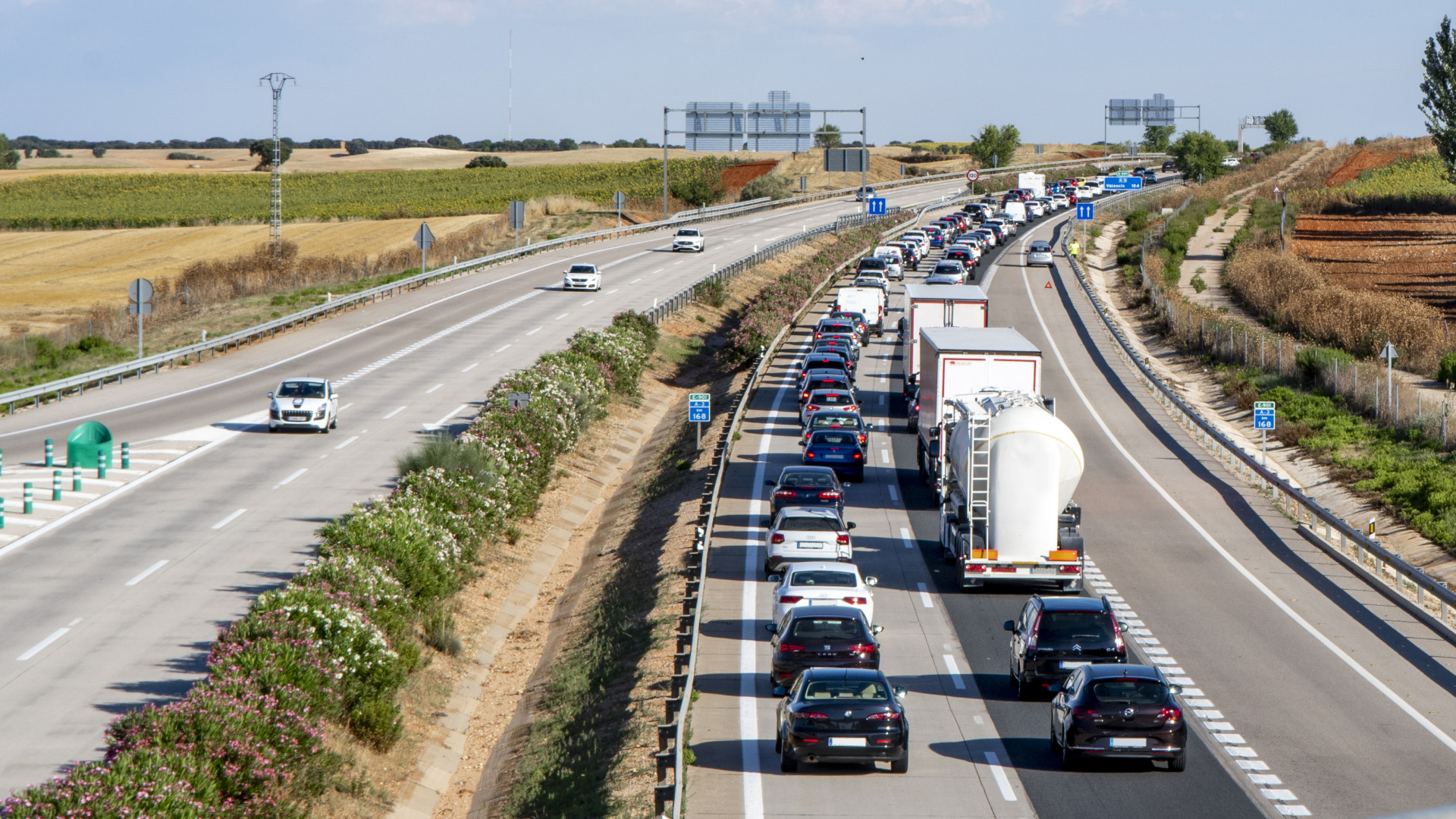
A series of fatal traffic accidents occurred across Hungary on Friday, June 12, 2026, claiming multiple lives and causing significant gridlock on major motorways. The M1 and M3 highways experienced severe disruptions due to collisions involving trucks and passenger vehicles, prompting the prime minister to request an immediate report on road safety and traffic management.
Fatalities and Multi-Vehicle Collisions on the M1 and M3
The deadliest incidents of the day occurred on the M1 motorway near Győr, where two separate crashes during the morning hours resulted in eight deaths, according to reporting by 24.hu. In the first instance, a truck collided with stationary maintenance machinery; a subsequent collision involved a minibus striking a truck that had slowed due to the initial accident.

Separately, tragedy struck the M3 motorway near Mezőszemere. A truck carrying plastic granules crashed into a bridge pillar, killing the driver, as detailed by 24.hu. The accident forced authorities to close the motorway toward Budapest, while traffic heading toward Miskolc was restricted to the emergency lane. The Borsod-Abaúj-Zemplén County Disaster Management Directorate confirmed the fatality and noted that structural experts were dispatched to assess the bridge’s stability following the impact with the truck. The recovery operation was complicated by the cargo spill, which required specialized cleanup crews to prevent environmental contamination and ensure the surface remained safe for heavy vehicle traffic.
Government Response and Traffic Management Concerns
Following the surge in accidents, Prime Minister Péter Magyar issued a public statement via social media expressing condolences to the families of the eight foreign nationals killed in the M1 crashes. As reported by Femina.hu, the prime minister demanded an immediate investigation into the traffic safety conditions surrounding current motorway diversions managed by the highway concessionaire. The request for a formal report signals a high-level scrutiny of current infrastructure maintenance protocols, particularly regarding how traffic is funneled through construction zones and narrowed lanes.
The disaster management authorities and the traffic information service, Útinform, have been managing a complex series of closures throughout the day. In addition to the M3 bridge collision, other segments of the M3 experienced significant congestion. According to Index.hu, a food-transporting truck overturned near Bag, causing an 8-kilometer traffic jam, while a three-car collision near Gödöllő further restricted the M3 to a single lane. These incidents forced thousands of commuters into stationary traffic, creating a ripple effect of delays across the regional transport network.
Regional Incidents Across the Road Network
The day’s disruptions extended beyond the major motorways, affecting secondary roads and urban centers. A head-on collision occurred on the 23-road between Ivád and Mátraterenye, where three people were trapped in their vehicle and required rescue by professional firefighters from Pétervására and Eger, Index.hu reports. The rescue operation necessitated the temporary closure of the roadway to allow for the use of hydraulic extrication tools, further complicating traffic flow in the Northern Hungarian region.
Additional incidents recorded on Friday include:
- Helvécia: A driver died after their vehicle struck a tree on the Kiskőrösi road in Bács-Kiskun County, according to information provided to MTI. Local police have initiated an investigation into the circumstances of the single-vehicle collision.
- Szeged: A two-car collision on Vásárhelyi Pál street resulted in one vehicle crashing into a commercial storefront, causing extensive property damage. Emergency services cordoned off the area to secure the structural integrity of the affected building.
- M1 Motorway: Despite ongoing traffic management efforts near Győr, congestion persisted throughout the day, with officials advising motorists to favor the diverted inner lane when traveling toward the capital, as noted by Portfolio.hu.
Ongoing Operational Challenges and Safety Context
The operational strain on emergency services has been substantial. In the case of the M3 bridge collision, the Aszód professional firefighters were tasked with containing a fuel leak from the damaged truck, while coordinated efforts between the Disaster Management Directorate and other emergency agencies continue at the site. The sheer volume of incidents—ranging from the high-speed motorway crashes to localized urban accidents—has highlighted the precarious state of traffic flow on the nation’s primary arteries as maintenance and road construction projects continue in parallel with high traffic density.

In Hungary, the management of motorway traffic during peak maintenance seasons often involves the use of concrete barriers and lane shifts to accommodate construction. Transport experts and authorities frequently emphasize that these zones require heightened driver vigilance, as the reduction in shoulder space limits the ability of vehicles to maneuver in the event of a mechanical failure or sudden braking by lead traffic. The events of June 12 underscore the challenges of maintaining high-speed throughput while performing necessary road repairs, as the combination of heavy freight transit and narrow lane configurations creates a higher risk profile for multi-vehicle incidents.
As the investigation into the M1 and M3 collisions proceeds, authorities are expected to review whether current signposting and warning systems provided by Útinform and the concessionaire were sufficient to alert drivers to the sudden slowdowns that preceded the fatal pile-ups. For now, cleanup crews and structural engineers remain the primary focus of the recovery efforts, working to clear the wreckage and ensure that the nation’s critical transport infrastructure can be safely reopened for full capacity usage.
Find more reporting in our News section.
