

Iran’s Escalation in the Strait of Hormuz: A Direct Strike on U.S. Forces or a False Flag?
The Strait of Hormuz became the flashpoint of a new Middle East crisis on June 2, 2026, as Iran claimed to have attacked a U.S. warship in international waters—only for Washington to dismiss the allegation as disinformation. While Tehran accused the U.S. of violating maritime rules and targeting Iranian commercial vessels, American officials rejected the claim outright, calling it a deliberate provocation. The exchange follows weeks of escalating tensions between Iran and Israel, with Israel’s prime minister warning that Tehran’s regime is on the brink of collapse. Meanwhile, Iran’s military has launched retaliatory strikes against U.S. assets in the region, including drone command centers and a Kuwaiti airport, raising fears of a broader conflict.
Iran’s Alleged Attack on a U.S. Warship: A False Flag or Real Escalation?
Iran’s official news agency, Tasnim, reported that the Islamic Revolutionary Guard Corps (IRGC) had successfully targeted a U.S. Navy command-and-control ship operating near the Strait of Hormuz. The attack, according to Iranian officials, was in response to what they described as repeated U.S. aggression against Iranian commercial vessels and violations of international maritime laws in the critical waterway. The U.S. Central Command (CENTCOM) swiftly rejected the claim, stating that no such attack occurred and that Iran’s accusation was part of a broader disinformation campaign.
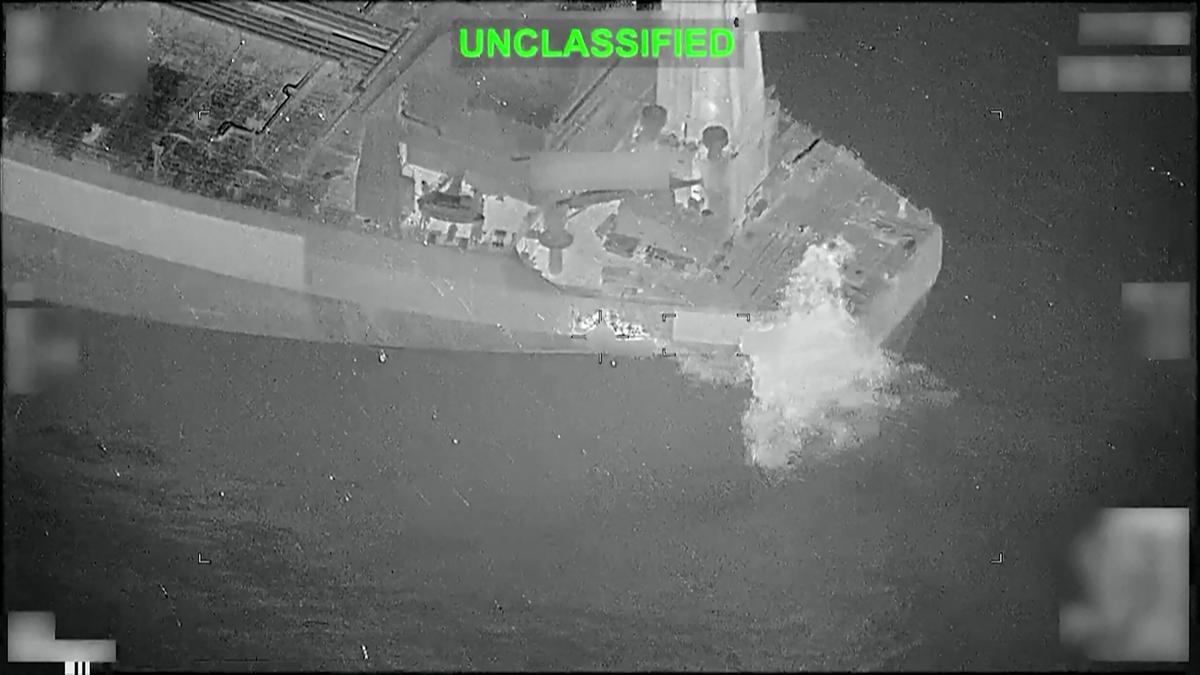
This isn’t the first time Iran has made such allegations. In recent weeks, Iranian forces have accused the U.S. of targeting Iranian oil tankers and military installations, including a missile strike on an Iranian radar site in southern Iran. The U.S. has denied these claims, but the back-and-forth has intensified concerns about a potential clash in one of the world’s most strategically vital chokepoints.
What makes this latest claim particularly volatile is the timing. Just days earlier, Iran’s Central Military Command issued an ultimatum to civilians in northern Israel, warning them to evacuate if Israel launches airstrikes on Lebanon—a direct escalation that could drag the U.S. into the conflict. The message, delivered as Israel and Hezbollah remain in a fragile ceasefire, suggests Iran is preparing for broader regional warfare.
U.S. Strikes Inside Iran: Retaliation or Self-Defense?
The U.S. has not remained passive. Over the past 48 hours, American forces conducted airstrikes on Iranian drone command centers and radar facilities in southern Iran, including on Qeshm Island and the Hormuz region. According to Samayam Malayalam, the strikes were in response to Iran’s alleged downing of a U.S. MQ-1 drone near the Strait of Hormuz—a claim Iran has not yet confirmed. The U.S. Central Command described the actions as “self-defense” measures, though Iran’s military has not publicly acknowledged any losses.
What complicates matters is that these strikes occurred while a fragile ceasefire between Israel and Hezbollah was reportedly holding. The timing suggests a deliberate escalation by Iran to test U.S. resolve—or possibly to provoke a response that could be framed as aggression. Meanwhile, Iran’s military has also targeted U.S. assets in the Gulf, including an attack on the U.S. Fifth Fleet’s headquarters in Bahrain and a Kuwaiti airport, according to Mathrubhumi. The U.S. claims all these attacks were intercepted or failed.
For more on this story, see Iran Warns U.S. Strikes Could Spark Wider Middle East War.
The question now is whether these strikes are part of a calculated escalation or a series of miscalculations. If Iran’s goal was to draw the U.S. into a direct confrontation, it may have succeeded—but the risk of unintended escalation remains high. The Strait of Hormuz is a global flashpoint, and any disruption to oil flows could send shockwaves through global markets.
Israel’s Prime Minister: Iran’s Regime Is on the Brink
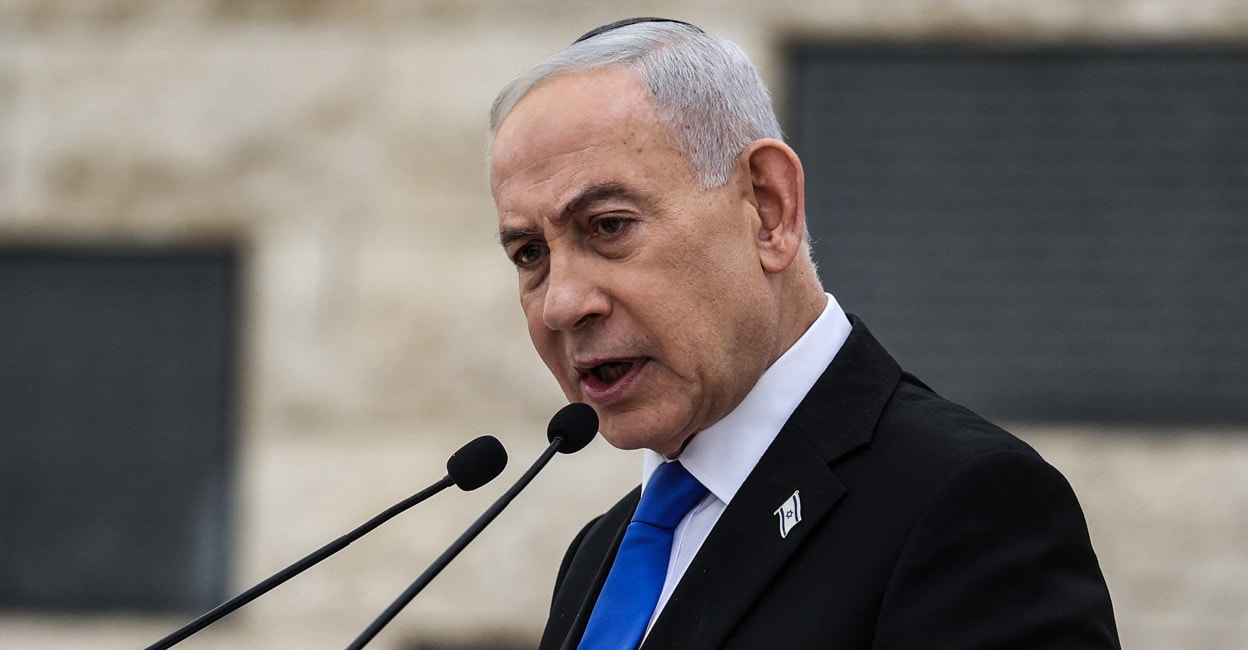
While the U.S. and Iran exchange accusations, Israel’s prime minister, Benjamin Netanyahu, has taken a hardline stance, declaring that Iran’s regime is “crumbling” and that its past dominance is over.
“Let all enemies of Israel know: Your plans will fail. Iran has already paid a heavy price. This regime’s foundation is collapsing. It will never return to its former glory.”
Netanyahu’s remarks came as tensions between Israel and Hezbollah remain high, despite reports that the U.S. had brokered a temporary ceasefire. His refusal to acknowledge any truce suggests Israel is preparing for prolonged conflict—one that could easily spill over into Iran’s sphere of influence.
The timing of Netanyahu’s statement is significant. Just days earlier, Iran’s Central Military Command issued an ultimatum to civilians in northern Israel, warning them to evacuate if Israel attacks Lebanon. This move, according to Webdunia Malayalam, appears to be a direct response to Israel’s recent strikes on Hezbollah positions in Beirut. The message is clear: Iran is positioning itself as the protector of Lebanon and its allies, even as it engages in a shadow war with the U.S.
The Strait of Hormuz: A Powder Keg Waiting to Explode
The Strait of Hormuz is more than just a shipping lane—it’s the lifeline of global oil markets. Any disruption here could trigger economic chaos. Iran’s repeated accusations of U.S. aggression in the region are not new, but the recent escalation—including alleged attacks on U.S. warships and drone strikes inside Iran—suggests a deliberate strategy to provoke a response.

This follows our earlier report, Iran: US-Armee beschießt zwei Tanker in Hormus-Straße – ORF.
What’s different this time is the involvement of Israel. While the U.S. and Iran have been locked in a cold war for years, Israel’s direct confrontation with Hezbollah—and now Iran’s threats to northern Israel—could drag the U.S. into a regional conflict by proxy. The U.S. has already deployed additional naval assets to the region, and reports suggest that private military contractors may be involved in supporting Saudi and Israeli operations against Iranian-backed groups.
If Iran’s claims of attacking a U.S. warship are true, it would mark a significant escalation. But if they’re false—as the U.S. insists—they could still serve Iran’s purposes by forcing the U.S. into a reactive position. The real danger is that miscommunication or a single misfired missile could trigger a full-blown war.
What Happens Next: Three Possible Scenarios
The next 72 hours will be critical.
- De-escalation: If Iran backs down from its threats and the U.S. avoids further strikes inside Iranian territory, tensions could ease—at least temporarily. However, the underlying issues (Israel-Hezbollah, U.S.-Iran proxy wars) remain unresolved.
- Limited Retaliation: The U.S. could launch targeted strikes on Iranian military sites in response to the alleged warship attack, but avoid direct confrontation with Iran’s Revolutionary Guard. This would be a dangerous game of brinkmanship.
- Full-Scale Conflict: If Iran’s threats to northern Israel are carried out—or if a U.S. warship is indeed attacked—the risk of a broader war increases. The Strait of Hormuz could become a battleground, with global oil prices skyrocketing.
The most likely outcome in the short term is a cycle of retaliatory strikes—each side testing the other’s red lines. But without clear communication channels, even a minor incident could spiral into something far worse.
One thing is certain: The region is on the brink. The U.S., Israel, and Iran are all playing a high-stakes game, and the stakes couldn’t be higher. For now, the world watches—and waits to see if diplomacy can pull back from the edge.
