The Microsoft Build conference in San Francisco kicked off Tuesday with a sweeping announcement: the tech giant is unveiling its own AI ecosystem, designed to break free from OpenAI dependence and redefine how users interact with technology. At the heart of the push is the MAI-Thinking-1 model, a “reasoning” AI that Microsoft claims outperforms OpenAI’s GPT-5.5 while operating at 10 times the cost-efficiency. The unveiling also included a new Android-based wearable device, the Project Solara, and a mini PC capable of running large AI models offline—a direct challenge to Apple and OpenAI’s upcoming AI-powered hardware.
The AI Arms Race: Microsoft’s Bid to Replace OpenAI
Microsoft’s move marks the most aggressive step yet in its campaign to reduce reliance on OpenAI, a partner since 2019. The company has spent billions investing in OpenAI, but its latest announcements signal a pivot toward self-sufficiency. The MAI-Thinking-1 model, Microsoft’s first “reasoning” AI, was developed from scratch using proprietary datasets—no fine-tuning from competitors like Anthropic or Google. According to Euronews, the model outperformed Anthropic’s Claude Sonnet 4.6 in blind tests conducted by Surge, an independent AI evaluation firm. Satya Nadella, Microsoft’s CEO, framed the shift as inevitable: “We believe the time has come for every company to move beyond just using top-tier models and become full participants in the AI race.”
cluster (priority): Euronews
The stakes are clear. Microsoft’s 2019 partnership with OpenAI gave it exclusive access to GPT-3 and GPT-4 models until 2032, but the new AI ecosystem—dubbed “chip-to-cloud”—aims to create an alternative stack where AI agents, not apps, drive user interactions. The MAI-Thinking-1 model, with 35 billion parameters and a 256,000-token context window, is designed for complex, multi-step tasks—something current models struggle with. Meanwhile, Microsoft’s MAI-Code-1-Flash, a code-generating AI, is rolling out to GitHub Copilot and Visual Studio Code, further embedding its tools into developers’ workflows.
Project Solara: The Wearable That Could Kill the Smartphone
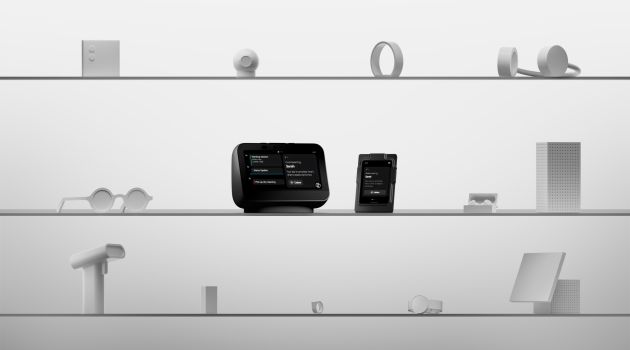
If Microsoft’s AI models are the brains, then Project Solara is the body—a wearable device that blurs the line between smartphone and AI assistant. The device, unveiled at Computex 2026, runs on an Android-based OS (Microsoft’s Device Ecosystem Platform) and features a Qualcomm SoC, front-facing cameras, and 5G connectivity. Unlike today’s app-heavy phones, Project Solara is designed for “agent-first” interactions, where users summon AI helpers via voice or gesture rather than tapping through menus.
cluster (priority): Notebookcheck Magyarország
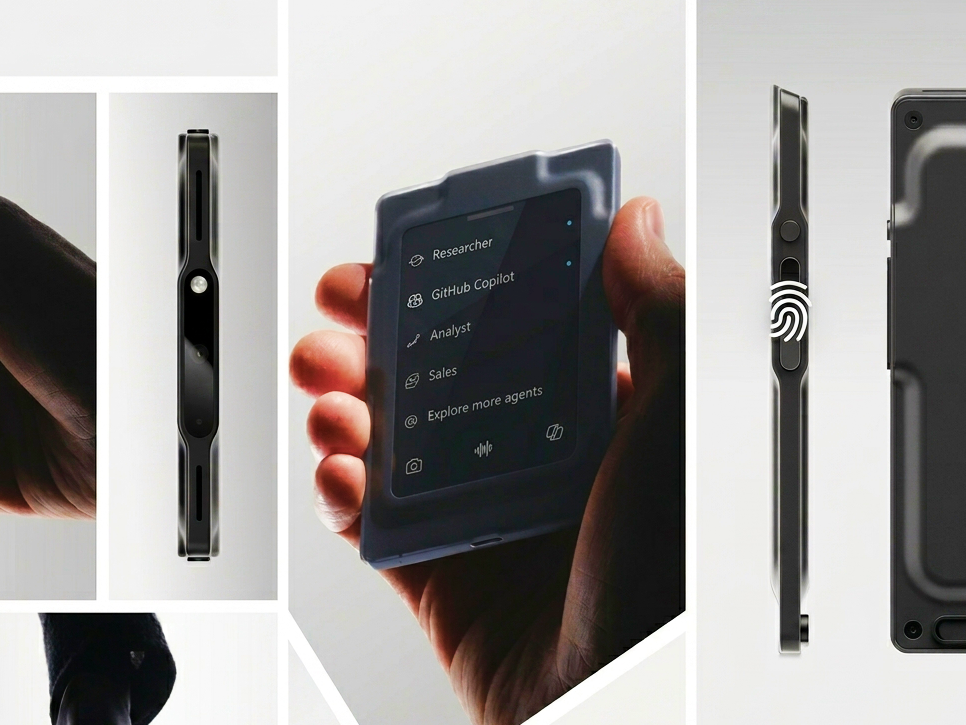
The device comes in two forms: a badge-sized wearable with fingerprint and camera sensors, and a larger “smart display” resembling a cross between an Amazon Echo and a tablet. Both are optimized for hands-free AI interactions. According to Notebookcheck Hungary, Microsoft is positioning Solara as a tool for frontline workers—healthcare, retail, logistics—where traditional smartphones are cumbersome. The device’s “always-on” AI agents could, for example, transcribe a doctor’s notes in real time or guide a warehouse worker through inventory tasks without requiring them to open an app.
The timing is deliberate. Rumors have swirled for months about OpenAI’s own AI-powered phone, expected in 2027. Microsoft’s Project Solara isn’t a phone—but it could make the iPhone obsolete by shifting the focus from apps to AI-driven workflows. “The current ‘app-launching’ paradigm is too slow for the AI era,” Microsoft’s internal documentation states. The company is already testing Solara in pilot programs across healthcare, finance, and industrial sectors.
Hardware That Runs AI Locally: The RTX Spark Dev Box
Microsoft isn’t just building software—it’s also pushing hardware that can run AI models on-device. The Surface RTX Spark Dev Box, powered by Nvidia’s new RTX Spark PC chip, is a mini PC capable of hosting a 120-billion-parameter AI model—a feat most consumer laptops can’t match. Satya Nadella, who pre-ordered the device himself, called it a “game-changer for developers.” The box runs Windows 11 Pro and is optimized for AI training and inference, allowing companies to keep sensitive data offline while still leveraging large language models.
Inside Microsoft’s Game-Changing 1,800-Model AI Agents Ecosystem Taking on OpenAI
This move directly counters Apple’s M-series chips, which have dominated the AI-on-device space. By partnering with Nvidia, Microsoft is ensuring its hardware can handle the most demanding AI workloads—something critical for enterprises wary of cloud-based AI due to latency or privacy concerns. The RTX Spark chip is also a nod to Microsoft’s broader strategy: building an end-to-end AI stack where hardware, software, and cloud services work seamlessly together.
Microsoft Scout: The AI Assistant That Never Sleeps
Complementing its hardware and models, Microsoft introduced Microsoft Scout—a “always-on” AI assistant designed to handle meeting prep, email drafting, and scheduling autonomously. Built on OpenClaw, an open-source framework gaining traction in 2025, Scout represents Microsoft’s bet on “autonomous agents” that act on behalf of users without constant prompting. While still in limited testing, Scout is part of Microsoft’s broader push to replace manual workflows with AI-driven automation.
cluster (priority): Vietnam.vn
The implications are massive. If Scout succeeds, it could redefine productivity tools—think of it as a cross between a virtual assistant and a project manager. The tool’s ability to “reason” through complex tasks (like parsing legal documents or drafting reports) sets it apart from chatbots like Copilot, which are still largely reactive. According to Vietnam.vn, Microsoft is positioning Scout as a bridge between today’s AI tools and tomorrow’s autonomous agents—software that doesn’t just answer questions but takes action.
What’s Next? The Race for AI Dominance Heats Up
Microsoft’s announcements are a clear signal: the AI war is no longer about who has the best model—it’s about who controls the entire stack. By 2032, when Microsoft’s OpenAI exclusivity deal expires, the company will have built its own ecosystem, from chips to cloud to consumer devices. The question now is whether developers, enterprises, and consumers will trust Microsoft’s AI stack—or if OpenAI, Google, and others will respond with their own hardware and agent-first platforms.
One thing is certain: the era of “app-launching” is ending. Microsoft’s vision is one where AI agents—running on devices like Project Solara or the RTX Spark Box—handle most tasks automatically. For users, this could mean fewer apps, more seamless interactions, and AI that understands context better than ever. For businesses, it’s a shift from buying AI services to building AI-powered workflows. And for competitors? The race to dominate this new paradigm has just gotten a lot more intense.
The biggest unknown remains adoption. Will enterprises migrate from OpenAI to Microsoft’s models? Will consumers embrace Project Solara over their iPhones? And can Microsoft’s AI agents truly replace the flexibility of today’s apps? The answers will unfold over the next 18 months—but one thing is clear: the tech industry’s future is being written in real time, and Microsoft just dropped a major chapter.
ail: emily.johnson@headlinez.news
Bio:
Emily Johnson serves as News Editor at Headlinez.News, overseeing the publication’s coverage of national and breaking stories. She has worked in journalism for more than 12 years, building a reputation for precision, credibility, and rapid-response reporting. Emily’s editorial philosophy focuses on clear, fact-based writing that helps readers understand the full context behind the day’s most important events. Her expertise bridges traditional reporting and modern digital news strategies.
Expertise: Breaking news, political reporting, fact-checking, newsroom coordination, public affairs.
Location: Washington, D.C., USA