
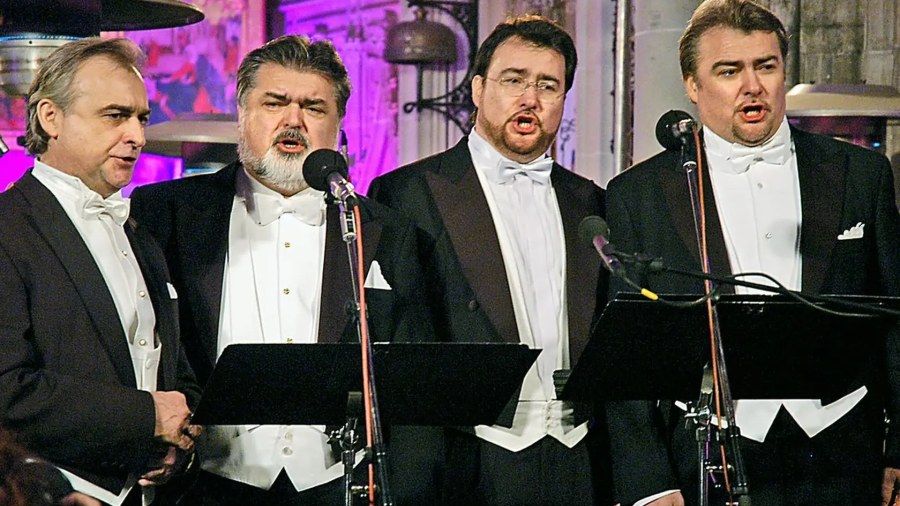
Slovak opera singer Pavol Dvorský, a former soloist at the State Opera in Banská Bystrica and member of the Slovak National Theatre, died on May 6, 2026, at the age of 71. His passing marks a significant loss for the Slovak musical community and a storied family of prominent performers.
A Legacy of Song and Family Tradition
Pavol Dvorský, born on December 23, 1954, in Horná Ves, was deeply embedded in a family defined by its musical contributions. He was the brother of the world-renowned opera star Peter Dvorský, as well as singers Miroslav and Jaroslav Dvorský, and economist Vendelín Dvorský. His career path was marked by a commitment to the craft that saw him move through the ranks of Slovak operatic institutions during the 1980s.
According to CNN Prima NEWS, the news of his death was confirmed by the State Opera on Sunday, though the institution clarified that he had passed away earlier, on May 6. The announcement prompted an outpouring of remembrance for a performer whose presence left a lasting mark on the history of the Banská Bystrica stage. His death in Bratislava concludes a life long dedicated to the vocal arts, a path he shared alongside his brothers who collectively elevated the profile of Slovak opera on the international stage.
Professional Trajectory and Artistic Impact
Dvorský’s formal training took place at the Bratislava Conservatory, where he graduated in 1981. His professional life in the opera world began in earnest shortly thereafter. In 1983, he joined the opera ensemble of the Jozef Gregor Tajovský Theatre in Banská Bystrica—now known as the State Opera—alongside his wife, the soprano Alena Gallová. The couple notably stepped into the roles vacated by Jaroslav Kosec and Ľuba Orgonášová, beginning a two-year tenure as soloists.

In 1986, Dvorský transitioned to the opera ensemble of the Slovak National Theatre in Bratislava. His transition to the national stage allowed him to work within a larger ensemble, performing in a variety of classic operatic productions that demanded both technical precision and acting range. Beyond his regular duties, he was a frequent collaborator with his brothers, appearing alongside them in various prestigious galas and concerts. This professional synergy often highlighted the family’s collective talent, solidifying their reputation within the Slovak arts scene. His career was characterized by a consistent presence in the baritone repertoire, which required him to navigate the complex musical demands of both traditional and modern operatic scores throughout the late 20th century.
Memories from the Banská Bystrica Stage
The State Opera issued a formal tribute to its former soloist, acknowledging his contributions to the theater’s history. The institution noted that they had received the news of his passing just days prior to their public statement.
“We learned with sadness a few days ago the news of the death of the former soloist of the State Opera, who during his artistic career was one of the personalities of our theater and left his mark on its history.” — State Opera, via CNN Prima NEWS
Beyond the institutional record, those who worked with Dvorský remember his audition process as a defining moment. Former State Opera dramaturg Mária Glocková recounted a specific interaction that highlighted his vocal quality and the professional dynamic he shared with his wife.
“I remember that Pavol sang a romantic and Verdi repertoire at the audition, and when asked by the artistic director—’something in Slovak’—he just nodded, and his wife, who was present, readily added: ‘We only sing in the original.’ He didn’t have to sing any more. His soft and ardent lyrical baritone shone through and convinced the artistic council. A new stage, roles, and a collective awaited him, which perceived him intensively as the brother of the ‘great’ and famous Peter.” — Mária Glocková, former dramaturg of the State Opera, via CNN Prima NEWS

Glocková’s recollection highlights the high standards Dvorský maintained, even early in his career. The decision to prioritize singing in the original language—a standard practice for serious opera performers—demonstrated his commitment to authenticity in his craft. His tenure at the State Opera was viewed by his peers as a period of significant growth, where he successfully established his own artistic identity despite the inevitable comparisons to his brother Peter, who had already gained international acclaim.
As the Slovak arts community reflects on his passing, the legacy of the Dvorský brothers remains a pillar of the nation’s operatic history. Pavol Dvorský’s career, spanning from the early 1980s through his long tenure at the national theater, serves as a testament to a life dedicated to the rigorous demands and artistic rewards of the operatic stage. His contribution to the Banská Bystrica ensemble, in particular, remains a frequently cited chapter in the theater’s history, representing an era where the institution flourished through the work of dedicated soloists like Dvorský and Gallová.
