
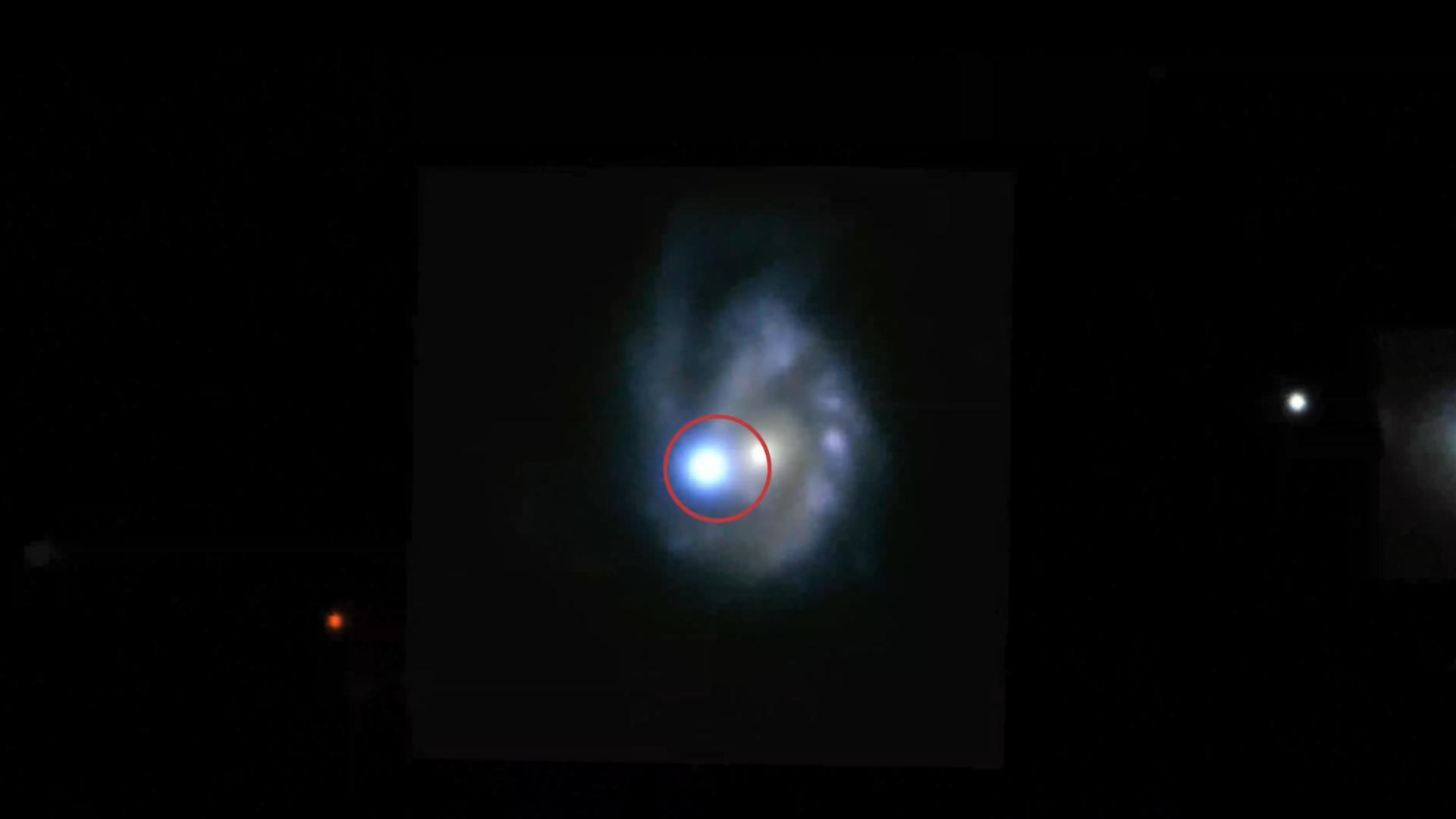
A team of astronomers using NASA’s Fermi Gamma-ray Space Telescope has made a breakthrough in understanding the most violent explosions in the universe: superluminous supernovae. After 16 years of searching, researchers have detected definitive gamma-ray emissions from one such event—SN 2017egm—confirming that its extreme brightness is powered by a magnetar, a highly magnetized neutron star born in the supernova’s collapse. The discovery, published in Astronomy & Astrophysics, reshapes our understanding of how these cosmic powerhouses generate their staggering energy.
Why This Supernova Was Different
Superluminous supernovae (SLSNe) are rare cosmic events that outshine ordinary stellar explosions by a factor of 100. For decades, astronomers debated two leading theories to explain their extreme brightness: the magnetar central engine model, where a rapidly spinning neutron star with an ultra-strong magnetic field injects energy into the explosion, and the circumstellar material (CSM) interaction model, where gas shells shed by the dying star are illuminated as the supernova shockwave plows through them.
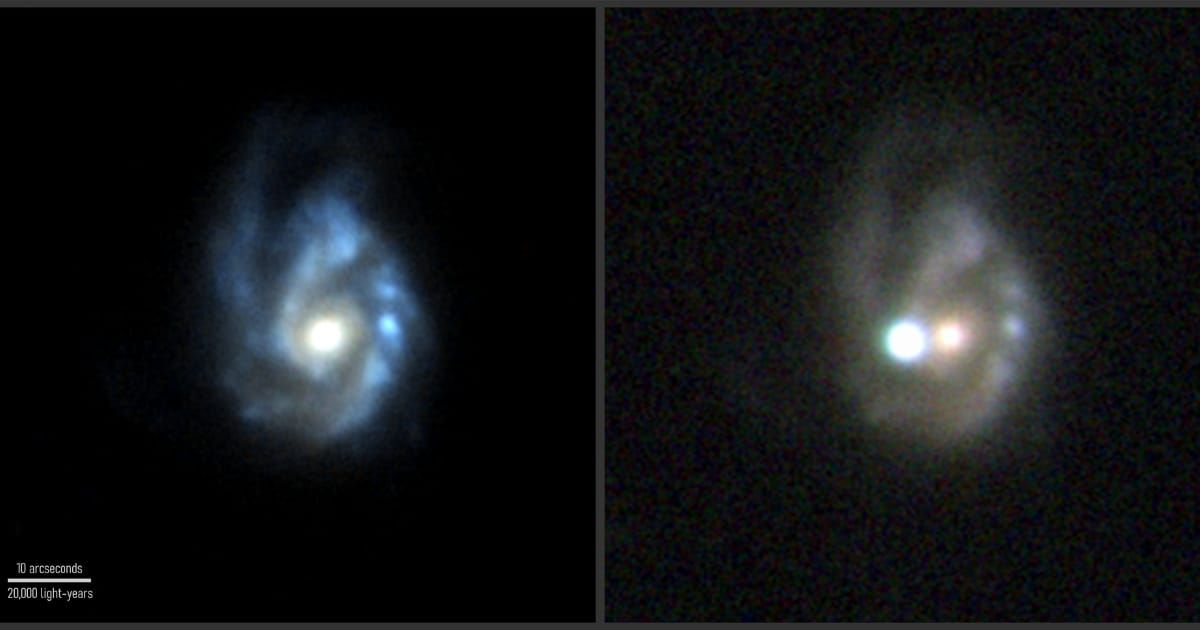
SN 2017egm, discovered on May 23, 2017, in the galaxy NGC 3191 roughly 440 million light-years away, became the first SLSN to show definitive gamma-ray emissions. Unlike the other five SLSNe studied in Fermi’s 16-year dataset, SN 2017egm emitted gamma rays—high-energy light that can only be produced under extreme conditions. The signal appeared roughly two months after the explosion and persisted for months, matching the magnetar model’s predictions precisely.
“For nearly 20 years, astronomers have searched Fermi data for gamma-ray signals from thousands of supernovae, and while a few intriguing hints have been reported, none were definitive until now.”
This wasn’t just a detection—it was a smoking gun. The gamma rays, which couldn’t escape the magnetar’s wind nebula immediately after the explosion, were absorbed and re-emitted as visible light, explaining the supernova’s unnatural brightness. Only after the expanding debris thinned out did the gamma rays leak into space, confirming the magnetar’s role as the hidden engine driving the explosion.
The Magnetar Mystery: How a Dead Star Powers a Supernova
When a massive star collapses, its core can compress into a neutron star—an object so dense that a teaspoon of its material would weigh 10 million tons. In the case of a magnetar, the collapse also amplifies the star’s magnetic field to 1,000 times stronger than a typical neutron star. These objects spin hundreds of times per second, flinging out winds of electrons and positrons that create a magnetar wind nebula—a high-energy cocoon around the newborn star.
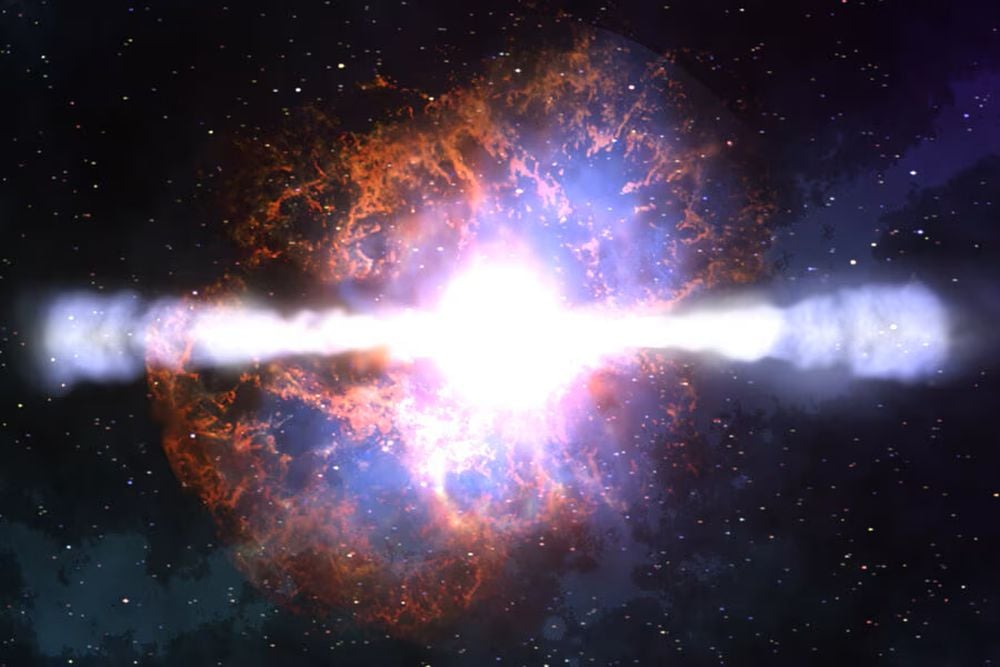
Inside this nebula, gamma rays are produced continuously but trapped by the supernova’s debris. Over time, as the debris expands and thins, the gamma rays escape, revealing their presence. This process explains why SN 2017egm’s gamma-ray signal appeared two months after the explosion—a delay that aligns perfectly with the magnetar model. The CSM interaction model, by contrast, predicts no such delay, as it relies on pre-existing gas shells rather than a central engine.
Guillem Martí-Devesa, a researcher at the Institute of Space Sciences in Barcelona, put it bluntly: “Only SN 2017egm shows evidence for gamma rays, confirming earlier hints that some supernovae can be as luminous in gamma rays as they are in visible light. This opens up a new window for studying these fascinating events.”
A New Era for Supernova Research
The detection of gamma rays from SN 2017egm isn’t just a victory for the magnetar model—it’s a paradigm shift in how astronomers study superluminous supernovae. For the first time, scientists have a direct observational link between gamma rays and the central engine powering these explosions. This means future studies can use gamma-ray observations to distinguish between magnetar-driven and CSM-driven supernovae, potentially solving a decades-old debate.
NASA’s Fermi Gamma-ray Space Telescope, launched in June 2008, has spent 16 years scanning the cosmos for such signals. While previous hints of gamma rays from supernovae existed, none were as clear or as well-timed as SN 2017egm’s emission. The telescope’s Large Area Telescope (LAT) detected gamma rays from July 5, 2017, to October 25, 2017—roughly 43 to 155 days after the supernova’s discovery. This timeline was critical in ruling out alternative explanations.
What’s next? Researchers plan to search Fermi’s archives for more gamma-ray signatures from other supernovae, particularly those with similar luminosity profiles. If more magnetar-driven SLSNe are found, it could mean these objects are more common than previously thought—and that our understanding of stellar death is far more dynamic than we realized.
What This Means for Astronomy—and Beyond
Superluminous supernovae aren’t just cosmic curiosities—they’re laboratories for extreme physics. By studying SN 2017egm, astronomers can now probe the conditions inside magnetars, where matter is crushed to densities beyond anything achievable on Earth. The discovery also has implications for gravitational wave astronomy: if magnetars are common in supernovae, their spin and magnetic fields could produce detectable ripples in spacetime.

Beyond pure science, this finding could refine models of stellar evolution. If magnetars are the primary drivers of SLSNe, it suggests that the most massive stars don’t just explode—they leave behind cosmic engines that continue shaping their surroundings for millennia. For the first time, we’re seeing the birth of a magnetar in real time, and its immediate impact on the universe.
As Fabio Acero noted, this discovery isn’t just about one supernova—it’s about opening a new window on the most violent events in the cosmos. With Fermi still operational and new telescopes like the European Space Agency’s Gaia mission scanning the skies, the hunt for more magnetar-powered explosions is just beginning.
The Big Question: Are Magnetars the Rule—or the Exception?
The real mystery now is whether SN 2017egm is an anomaly or the tip of the iceberg. Out of six superluminous supernovae studied in Fermi’s dataset, only one showed clear gamma-ray emissions. Does this mean magnetars are rare, or that we’ve only now developed the tools to detect them?
One possibility is that not all SLSNe are created equal. Some may rely on CSM interactions, while others—like SN 2017egm—get their energy from magnetars. If future observations reveal a mix of both mechanisms, it could mean that supernovae are even more diverse than we thought. Alternatively, if more magnetar-driven SLSNe are found, it might suggest that these objects are far more common than previously believed.
What’s certain is that this discovery changes the game. For the first time, astronomers have a direct observational link between gamma rays and the central engine of a supernova. The implications stretch from stellar physics to cosmology—and perhaps even to the origins of black holes, which some theories suggest could form from the collapse of magnetars.
The universe has just gotten a little more mysterious—and a lot more exciting.
