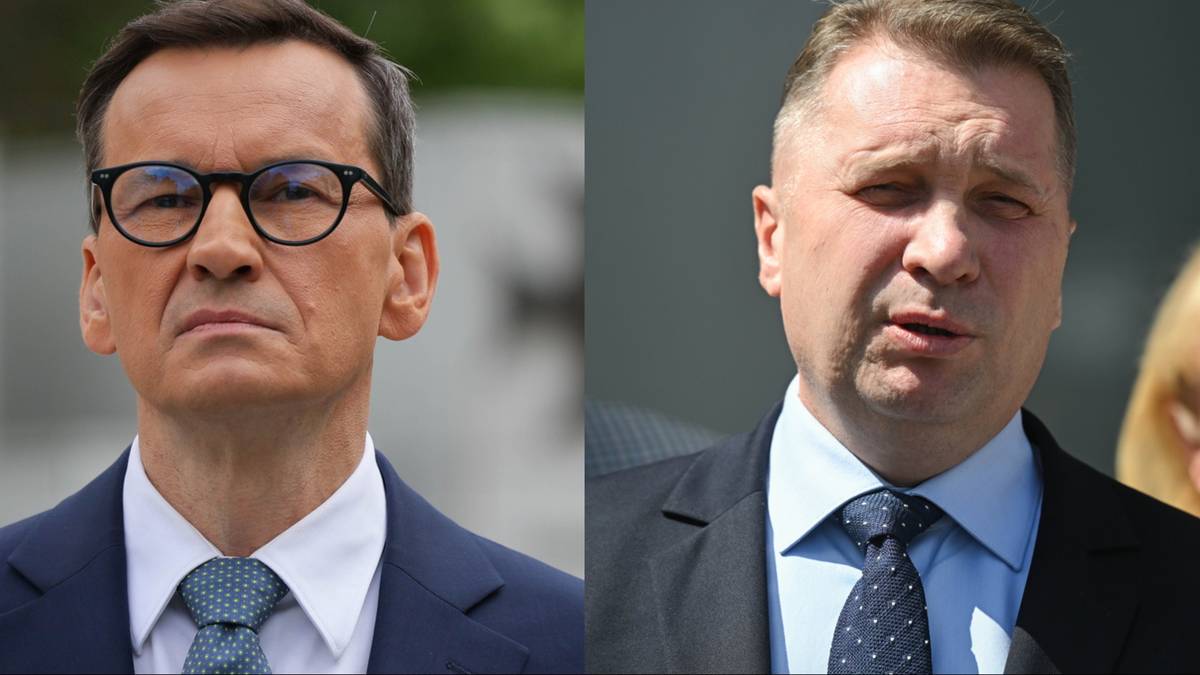
Former Prime Minister Mateusz Morawiecki publicly rejected a proposal from fellow Law and Justice (PiS) candidate Przemysław Czarnek to halt military aid to Ukraine. The disagreement, voiced during a recent radio appearance, underscores growing internal tensions within the party regarding Poland’s long-term geopolitical strategy and its cooling relationship with Kyiv.
Morawiecki’s Strategic Rejection of Aid Suspension
The rift centers on how Poland should leverage its support for Ukraine to address historical disputes, particularly regarding the Ukrainian Insurgent Army (UPA). While Przemysław Czarnek has advocated for strict conditions on continued assistance, Mateusz Morawiecki argued against using military aid as a bargaining chip. As Polsat News reported, Morawiecki emphasized that the security of Poland is intrinsically linked to the conflict, stating that he prefers Ukrainian soldiers to fight with Ukrainian equipment rather than seeing Polish soldiers enter the conflict directly.
Photo: Wiadomości – Gazeta.pl
“No, I do not agree with blocking military aid. Because I prefer Ukrainian soldiers to die in Ukrainian tanks, rather than Polish soldiers to die in Polish tanks.”
Photo: Wiadomości Onet
Mateusz Morawiecki, former Prime Minister, via RMF FM
Morawiecki’s stance contrasts sharply with Czarnek, who has explicitly called for a halt to aid unless Ukraine reverses its decision to name a military unit after UPA “heroes” and allows for the exhumation of Polish victims from the Volhynia massacres. According to RMF24, Czarnek has framed this as a non-negotiable set of conditions for the future of Polish-Ukrainian relations. This internal debate within PiS highlights a broader struggle within the Polish right-wing over how to reconcile historical memory—specifically the legacy of the Volhynia massacres during World War II—with the modern reality of the Russian invasion of Ukraine.
Historical Context and the Volhynia Dispute
The historical grievances cited by figures like Czarnek refer to the massacres of ethnic Poles by the Ukrainian Insurgent Army (UPA) in the Volhynia and Eastern Galicia regions between 1943 and 1945. These events remain a sensitive issue in Polish-Ukrainian relations, often resurfacing in political discourse. While diplomatic efforts have been made periodically to address these events through joint commemorations, disputes regarding the exhumation of victims and the interpretation of UPA’s role in history have persisted. For many Polish conservatives, the issue is one of national identity and justice; for others, the current security threat posed by Russia necessitates a pragmatic approach that prioritizes present-day defense over unresolved historical tensions.
Public Opinion and the Order of the White Eagle
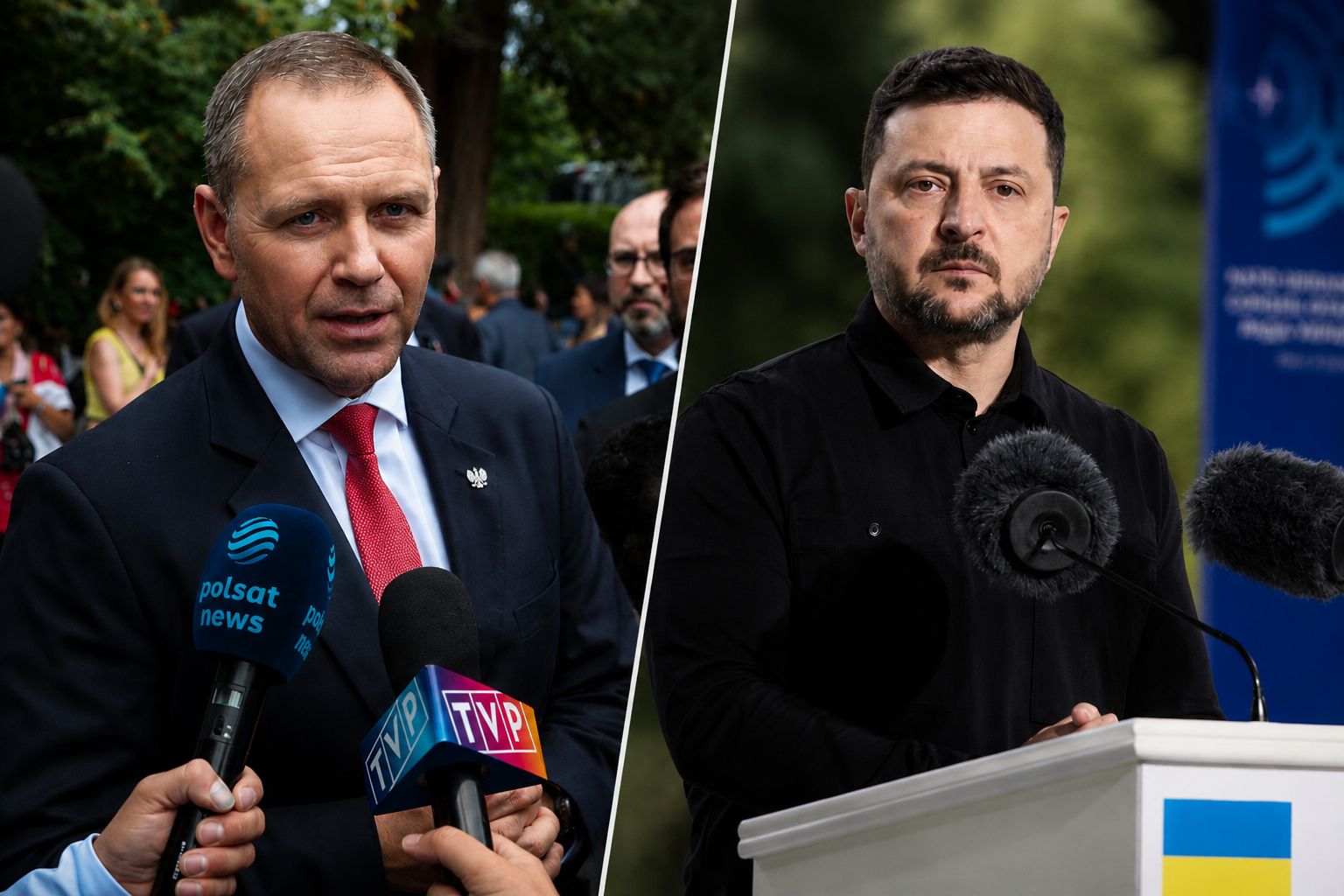
The political debate has spilled over into public sentiment regarding the Order of the White Eagle awarded to Ukrainian President Volodymyr Zelenskyy. A recent United Surveys poll for Wirtualna Polska found that 51.2% of respondents support stripping the Ukrainian leader of the state honor. The divide is starkly partisan: while 80% of opposition voters favor revocation, a majority of current government supporters oppose such a move.
Poland could send Ukraine Leopard tanks, Prime Minister Mateusz Morawiecki says
Opinion
Percentage of Respondents
Support revocation (“Definitely yes” + “Rather yes”)
51.2%
Oppose revocation (“Definitely no” + “Rather no”)
35.5%
No opinion
13.3%
The Order of the White Eagle is Poland’s highest state distinction, awarded for outstanding service to the state. The debate over whether to strip a foreign leader of such an honor is unprecedented in recent Polish history, reflecting the depth of the current diplomatic friction. The decision to potentially revoke the order rests with President Karol Nawrocki, who has faced pressure from both sides of the political aisle. While some opposition figures push for immediate action, others, such as PSL politician Krzysztof Zgorzelski, have suggested that the current delay may indicate a preference for diplomatic maneuvering over a symbolic break in relations, as noted by Gazeta.pl.
Diplomatic Fallout and Future Outlook
The controversy is exacerbated by broader concerns regarding the state of Polish diplomacy. Prof. Jacek Czaputowicz, former Minister of Foreign Affairs, has criticized the current administration for what he describes as “reckless policy” and a lack of coordination with the United States. In an interview with Onet, he warned that the public threats to revoke the Order of the White Eagle, if not followed through, risk projecting weakness rather than strength. Czaputowicz’s assessment emphasizes the risks inherent in using high-level state symbols as tools for domestic political messaging, particularly when those actions are monitored closely by international allies, including the U.S. government.
Photo: WP Wiadomości
The tension reflects a deeper shift in regional dynamics. As Zgorzelski observed, Ukraine is increasingly positioning itself as a regional leader, a strategy that may involve distancing itself from the specific historical narratives favored by Warsaw. For Polish policymakers, the challenge remains balancing the immediate security imperatives of the war against the domestic political pressure to address long-standing historical grievances. This balancing act is complicated by the evolving nature of the war in Ukraine and the changing political landscape within the European Union, where Poland’s influence is tied to its role as a key supporter of Kyiv.
With President Nawrocki expected to make a final determination on the order following his return from the United States, the coming weeks will likely define whether this diplomatic friction results in a permanent policy shift or remains a localized political firestorm. The outcome will likely influence not only the bilateral relationship between Warsaw and Kyiv but also the internal cohesion of the Law and Justice party as it navigates the conflicting demands of its base and the requirements of its national security interests.
ail: emily.johnson@headlinez.news
Bio:
Emily Johnson serves as News Editor at Headlinez.News, overseeing the publication’s coverage of national and breaking stories. She has worked in journalism for more than 12 years, building a reputation for precision, credibility, and rapid-response reporting. Emily’s editorial philosophy focuses on clear, fact-based writing that helps readers understand the full context behind the day’s most important events. Her expertise bridges traditional reporting and modern digital news strategies.
Expertise: Breaking news, political reporting, fact-checking, newsroom coordination, public affairs.
Location: Washington, D.C., USA