
NYC Subway Faces Growing Climate Resilience Challenges as Rainfall Intensifies
The Metropolitan Transportation Authority (MTA) today highlighted ongoing efforts to protect the subway system from increasingly frequent and severe flooding, while simultaneously urging New York City agencies to accelerate infrastructure improvements to mitigate stormwater runoff.
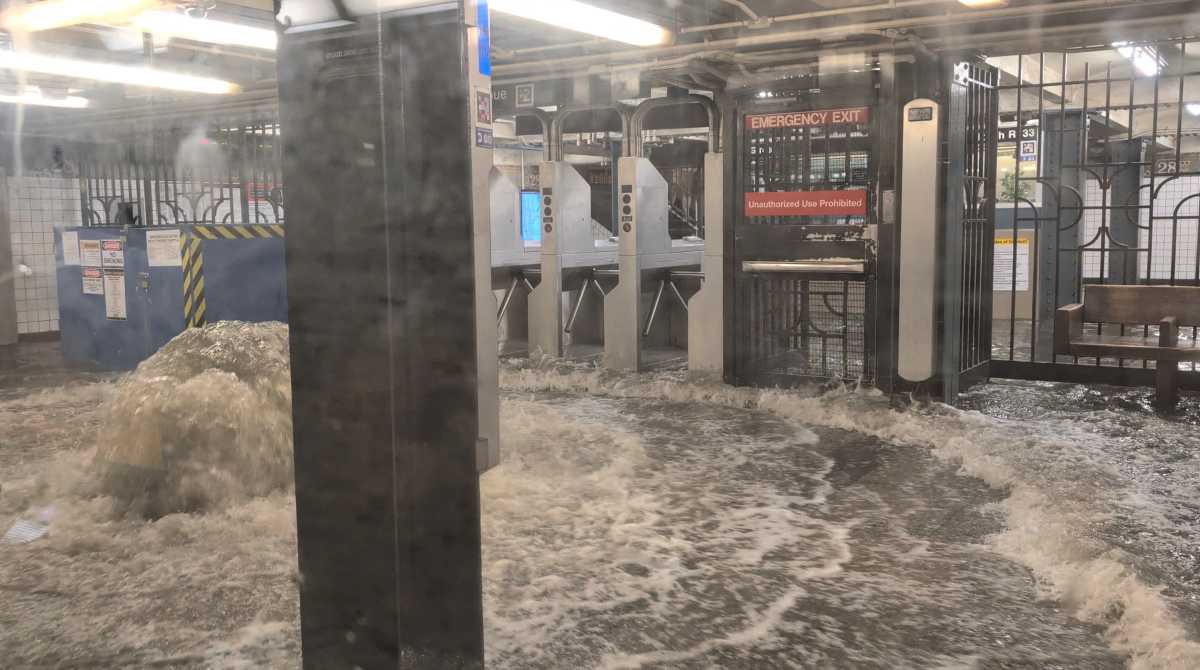
During an Oct. 29 board meeting – the 13th anniversary of Hurricane Sandy – MTA Chair and CEO Janno Lieber emphasized the need for increased investment in climate resilience, noting that while $700 million has been allocated for subway stormwater resilience within the current five-year capital plan, more is needed. Recent heavy rainfall events, including a July 14 downpour that impacted multiple stations in Manhattan and the Bronx and a July 31 storm affecting Long Island Rail Road service, underscored the system’s vulnerability. These disruptions highlight the growing risk to the city’s vital transportation network as climate change progresses.
MTA officials pointed to specific areas where city action is critical, such as 7th Avenue at 23rd Street, where a low curb height allows stormwater to easily enter subway vents. “Part of the reason we’re constantly seeing stormwater impacts on the 7th Avenue line in this location is because of these very low curb heights where it’s very easy for stormwater to runoff into subway vents and into stations,” said Eric Wilson, senior vice president of climate and land use for the MTA. The NYC Department of Environmental Protection (NYCDEP) has undertaken some improvements, like cleaning and inspecting low-lying sewers on Lexington Avenue and Northern Boulevard, but Commissioner Rohit Aggarwala stated, “We continue to work collaboratively with the MTA to address flooding, but they need to realize that additional funding requires water rates to go up for all New Yorkers.” You can find more information about NYC’s climate resilience initiatives on the city’s website.
The MTA is also implementing its own protective measures, including installing stormwater runoff protections at subway entrances and upgrading hydraulic systems. The agency has an interagency task force working with NYCDEP and the Department of Transportation to troubleshoot issues and identify solutions. Officials say they will continue to collaborate with the city, but stressed the urgency of addressing vulnerabilities to ensure the subway system can withstand future extreme weather events, as detailed in the MTA’s Climate Adaptation Plan.
The MTA expects continued collaboration with city agencies and further assessment of critical infrastructure points to prioritize improvements in the coming months.
