

As of Sunday, May 17, 2026, there is no verified evidence in current international records or official government disclosures to support the claim that Pakistan has recently welcomed a Court of Arbitration’s supplemental award regarding the Indus Waters Treaty. The treaty remains governed by the 1960 agreement between Pakistan and India.
Status of the Indus Waters Treaty
The Indus Waters Treaty, signed in 1960, remains the foundational framework for water-sharing between Pakistan and India. Under the terms of this international agreement, the World Bank plays a specific role in facilitating disputes. Despite recurring tensions between Islamabad and New Delhi regarding hydroelectric projects on shared river systems, there has been no public announcement or verified institutional filing this month confirming a new supplemental award from a Court of Arbitration.
Current data from international monitoring bodies does not reflect a change in the legal status of the treaty as of May 2026. The treaty continues to be recognized as a rare example of long-term cooperation between the two nations, even as both sides have historically sought third-party intervention or arbitration for various technical disputes concerning water flow and dam construction.
The treaty’s longevity is often attributed to the clear delineation of rights over the “eastern” and “western” rivers. While the agreement has survived multiple periods of regional volatility, the absence of any recent, verified documentation regarding a supplemental award highlights the stability of the current operational status quo. International observers and legal analysts monitoring transboundary water agreements have not identified any new rulings that would necessitate a revision of the 1960 mandate.
Institutional Framework and Legal Precedents
The administration of the treaty involves the Permanent Indus Commission, which meets regularly to discuss data exchange and project specifications. When technical disagreements arise, the treaty provides for a tiered dispute resolution mechanism. This process begins with the commission, moves to the World Bank for the appointment of a neutral expert, and can escalate to a Court of Arbitration if necessary.
While legal experts have documented past proceedings involving the Kishanganga and Ratle hydroelectric plants, the records for the first half of 2026 do not show the issuance of a new supplemental award. Any such legal development would typically be accompanied by formal communiqués from the Ministry of Foreign Affairs in Islamabad or the Ministry of External Affairs in New Delhi. As of Sunday, neither government has issued a statement confirming a new arbitration outcome.
The mechanism for dispute resolution is strictly codified within Article IX of the treaty. This article dictates that if the Permanent Indus Commission fails to resolve a difference, the matter may be referred to a Neutral Expert for technical issues or a Court of Arbitration for legal disputes. The lack of any recent notification from the World Bank’s office or the permanent commissioners of either nation confirms that no such escalation has occurred during the current calendar year. The absence of these formal steps serves as a technical indicator that the treaty’s existing implementation protocols remain the sole governing authority.
Regional Context and Diplomatic Channels
Pakistan, a federal parliamentary Islamic republic, continues to prioritize water security as a central pillar of its national policy. The Indus River system serves as the primary water source for the country’s agricultural sector and its large, growing population.
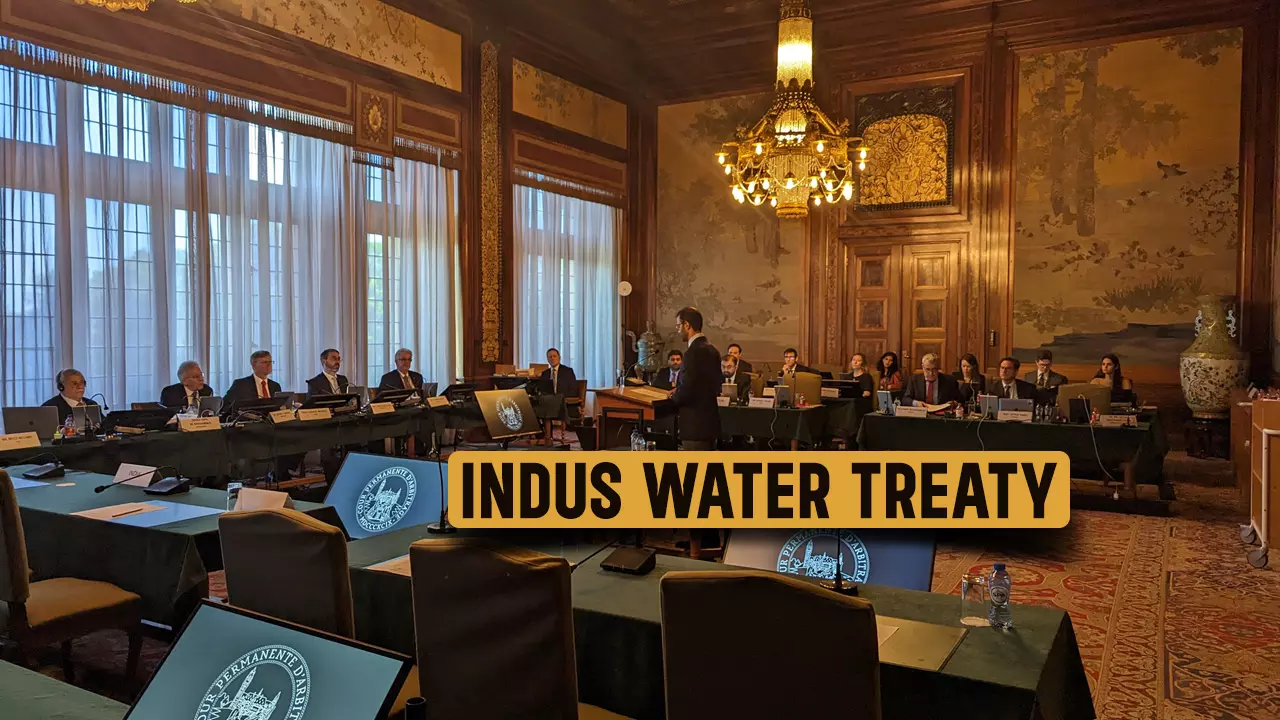
Given the sensitivity of water rights in South Asia, any modification to the interpretation of the 1960 treaty would be subject to extensive international scrutiny. Information regarding such an award would be documented in official registers maintained by the World Bank and the United Nations. At present, no such documentation exists to support the premise that a supplemental award has been accepted or welcomed by the Pakistani government.
The current landscape of Pakistan’s foreign policy remains focused on domestic economic stabilization. Diplomatic efforts continue to center on maintaining the existing treaty structure rather than pursuing new arbitration rulings that would alter the established water-sharing obligations. Any claims suggesting a recent shift in this legal arrangement remain unsubstantiated by official records.
Furthermore, the Ministry of Foreign Affairs in Islamabad maintains a consistent public stance regarding the necessity of adhering to the Indus Waters Treaty as a means of ensuring regional water security. Communication channels between the two countries, while often constrained, remain open via the Permanent Indus Commission to address routine technical data exchanges. Neither the Ministry of Foreign Affairs nor the relevant water resource departments have released any information that would suggest a departure from the established legal framework. Consequently, the reliance on the 1960 text remains the absolute standard for all hydrological project evaluations and cross-border water management strategies throughout the present year.
