
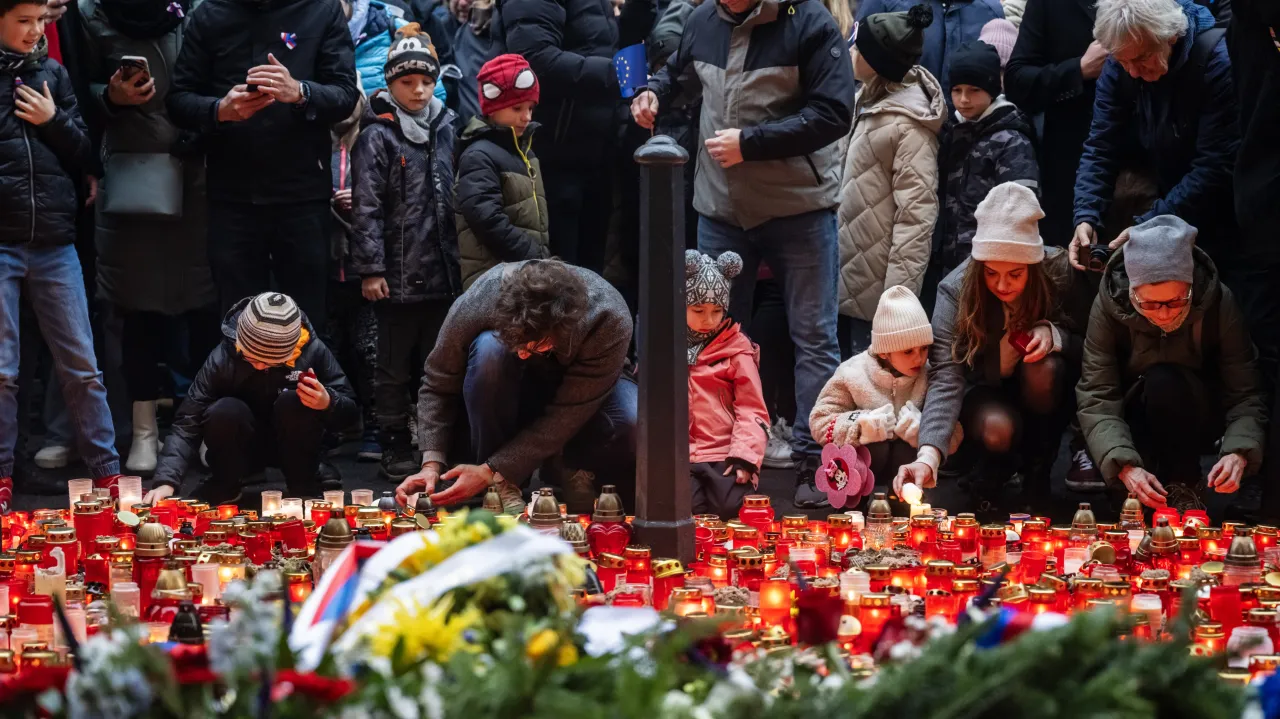
Commemorations are underway across the Czech Republic marking 36 years as the Velvet Revolution,a pivotal moment in the nation’s history that peacefully ended more then four decades of Communist rule. The anniversary, observed November 17th, recalls the events of 1989 wich began with the brutal suppression of a student presentation in Prague and ultimately led to democratic reforms. Throughout the country, events range from memorial ceremonies and concerts to political rallies, honoring those who fought for freedom and remembering the sacrifices made during the transition.
Czech Republic Marks 36 Years Since Velvet Revolution
Commemorations are underway across the Czech Republic marking 36 years since the Velvet Revolution, a peaceful uprising that ended four decades of communist rule and ushered in a new era of democracy. The events began on November 17, 1989, with the brutal suppression of a commemorative procession honoring Jan Opletal, a student killed by Nazis in 1939.
In Prague, actor and singer Jan Cina performed the song “Modlitba pro Martu” – a symbol of the revolution – at 5:11 p.m. local time on Národní třída (National Street). The song resonated in cities and towns throughout the country as numerous organizations hosted memorial events, debates, lectures, parades, and concerts.
Traditional commemorative events, cultural performances, and demonstrations took place throughout the day. These were supplemented by debates, audiovisual installations, and film screenings. The main commemorations centered on National Street in Prague, where small groups had gathered before 7 a.m. Members of the Sokol physical fitness organization traditionally stood guard at the memorial. Police maintained order at the site without any major incidents reported.
Hundreds of candles burned not only at the memorial plaque at the intersection of Mikulandská Street but also at the glowing heart of Václav Havel on the piazza of the National Theatre, where groups of people discussed. A stand selling candles and tricolor flags, as well as lectures in trams with symbolic numbers 89, 17, and 11, proved popular. Before the rain began, people could also take shelter in the Church of St. Voršila, where they could view an installation about secret gatherings of believers during times of oppression. Until 1 p.m., visitors could enjoy a “Velvet Brunch” at a table stretching ten meters long.
GALLERY
People across the country commemorate November 17th
The events of November 17th, 1989, began with a student demonstration in Prague, brutally suppressed by police, and sparked a wave of protests that led to the fall of the communist regime. The day also commemorates the 1939 Nazi suppression of student protests.
At 12:30 p.m., the traditional “Korzo Národní” (National Street Promenade) began, with the theme “We Have Something to Say.” Organizers aimed to honor both the Velvet Revolution and the 75th anniversary of the judicial murder of Milada Horáková and the death of Josef Toufar, a priest tortured by communists.
Charles University Rector Milena Králíčková emphasized that freedom requires constant vigilance. “The events of 1939 and 1989, which are linked to the courage of young people and the determination to stand up to injustice, continue to teach us that freedom is not a given and that democracy requires every generation to reaffirm its meaning,” she said.
Tomáš Kašparovský, Chairman of the Conference of Rectors of Czech Universities, called for awareness and sensitivity among students, who he believes can be a driving force not only in universities but throughout society.
