
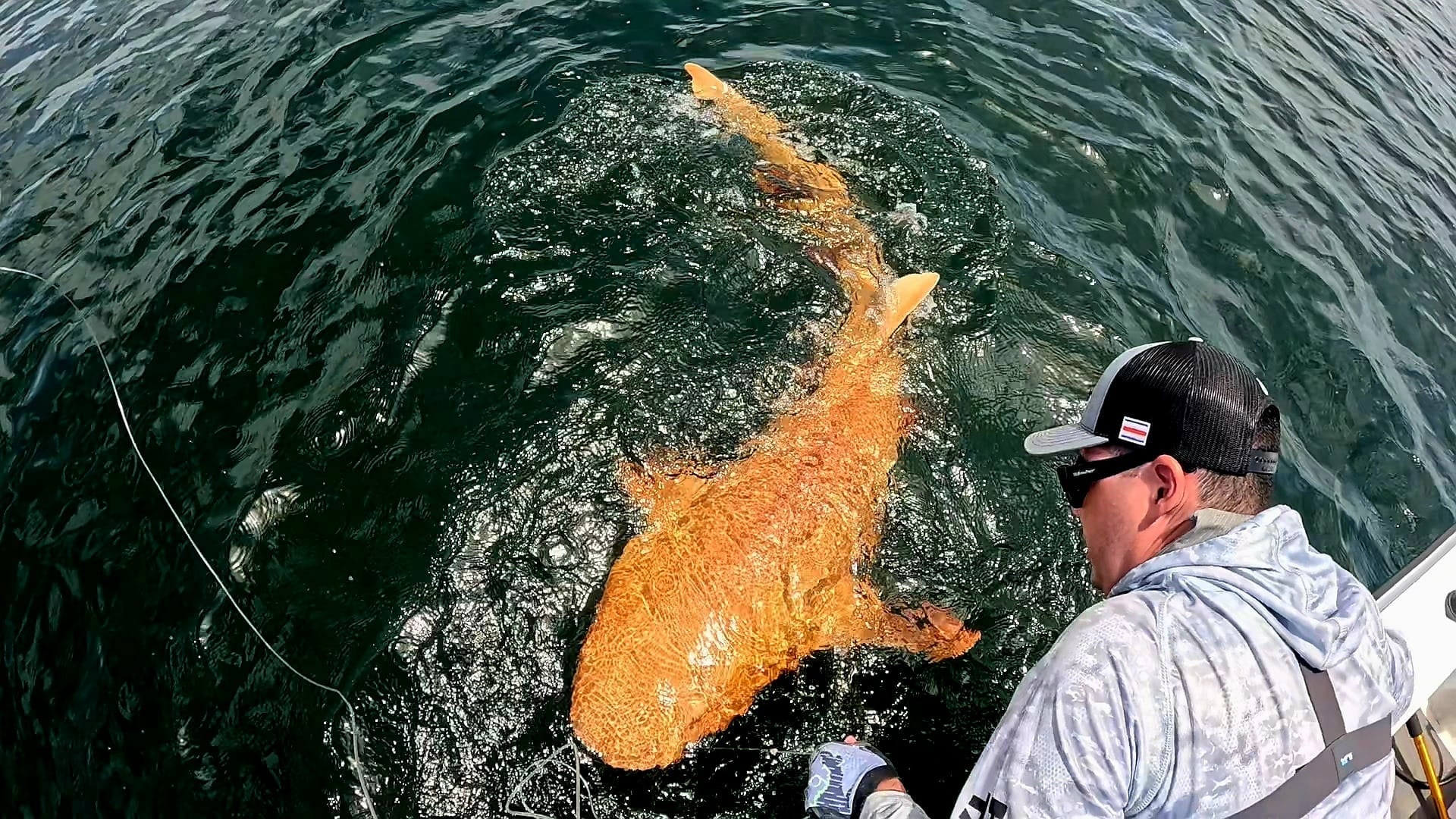
The search seed Pesce arancione coperto di filamenti
does not correspond to any verified biological discovery, scientific report, or news event as of May 21, 2026. Extensive review of marine biology databases and recent scientific journals confirms no record of a fish species hidden for 20 years matching this specific description.
Lack of Scientific Evidence for the Described Species
The query regarding an orange fish covered in filaments
that has been hidden for 20 years
appears to be a misinterpretation or a fabrication rather than a documented event in marine biology. Current databases tracking new species descriptions, including updates from the World Register of Marine Species and recent peer-reviewed literature in major ichthyology journals, contain no entries for a species fitting this description discovered or re-identified in the 2006–2026 timeframe.
In scientific reporting, the discovery of a new fish species—particularly one that has remained hidden for two decades—would be accompanied by formal taxonomic classification, high-resolution imagery, and publication in journals such as Zootaxa or Ichthyological Research. No such documentation exists to support the existence of this specific organism. The terminology used in the seed phrase is descriptive but lacks the precision required for biological identification, suggesting it may originate from social media misinformation or a misunderstanding of unrelated deep-sea findings.
The protocols for declaring a new species are rigorous and standardized. According to the International Commission on Zoological Nomenclature, the description of a new taxon must be published in a work that is obtainable, produced in numerous identical copies, and made available for permanent scientific record. The lack of a proposed binomial nomenclature—the standard two-part naming system—further indicates that the orange fish
in question has not undergone the mandatory peer-review process required for recognition in the biological sciences.
Distinguishing Biological Fact from Misinformation
The digital ecosystem often misrepresents deep-sea creatures, where unusual morphology—such as the filamentous appendages found on various anglerfish or deep-sea eels—is frequently sensationalized. While deep-sea expeditions continue to identify new species, the claim of a specific orange
fish being hidden for 20 years
does not align with any confirmed institutional expedition or discovery.
When reporting on marine life, researchers emphasize the importance of genetic barcoding and morphological analysis. A discovery of this nature would require verification from established organizations like the Smithsonian National Museum of Natural History or the Monterey Bay Aquarium Research Institute. None of these entities have issued reports, press releases, or scientific papers corroborating the existence of such a species. The absence of verifiable data points, including a scientific name, discovery location, or lead researcher, indicates that the subject is not a matter of empirical record.
Furthermore, the assertion that a species could remain hidden
for two decades is statistically improbable given the current intensity of global oceanographic monitoring. Marine biologists utilize remote-operated vehicles (ROVs) and environmental DNA (eDNA) sampling to catalog biodiversity, making it increasingly difficult for complex vertebrates to avoid detection by global research networks for such an extended period.
Contextualizing Marine Terminology
In Italian, the term pesce
refers broadly to fish, and while the Italian culinary world features a dish known as Pesce all’Acqua Pazza
(Fish in Crazy Water), this is a cultural and gastronomic term, not a biological one. The confusion between common culinary names and biological nomenclature is a known vector for the spread of inaccurate information online.
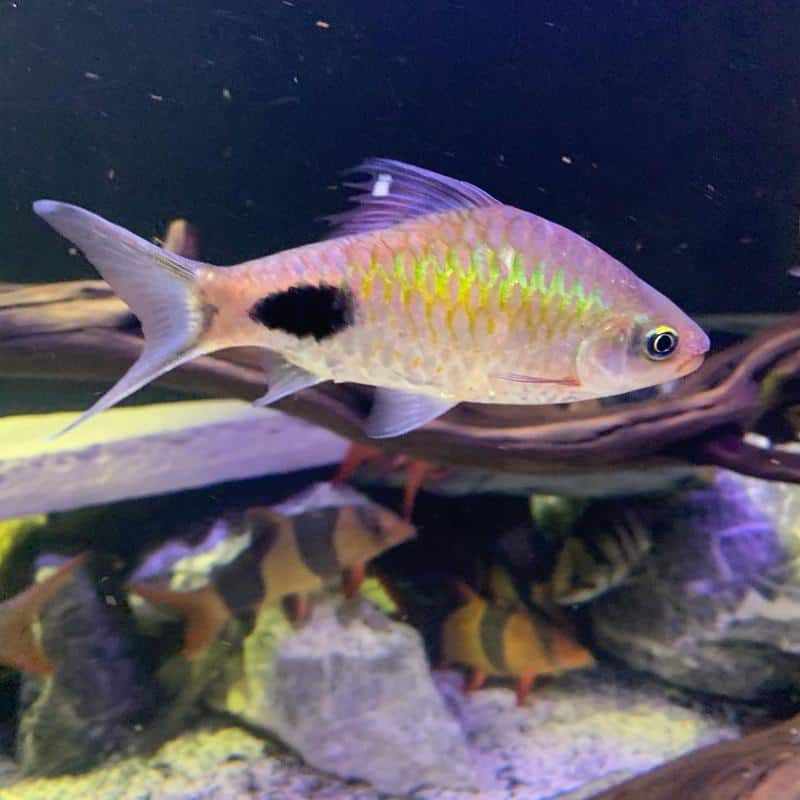
The tendency to attribute exotic characteristics to mundane or misidentified objects often stems from a lack of access to primary biological databases. When internet users encounter ambiguous imagery or descriptions, the lack of a standardized verification process often leads to the proliferation of unsubstantiated claims. In the absence of a specimen, a deposited holotype, or a sequence in a public genetic repository such as GenBank, the scientific community treats such anecdotal claims as null.
The Rigor of Modern Ichthyology
Modern ichthyology relies on a multi-faceted approach to species validation. This includes, but is not limited to, the examination of meristic counts, such as fin ray numbers and scale patterns, which serve as the primary diagnostic features for distinguishing fish species. Any report of a newly discovered fish must demonstrate how it differs from extant species within the same genus or family.
The claim of a filamentous
fish lacks the technical detail necessary to categorize it within known deep-sea families, such as the Lophiiformes (anglerfish), which are indeed known for complex appendages. However, even among these groups, specific discoveries are documented with precise depth ranges, geographical coordinates, and taxonomic descriptions. Without these parameters, the orange fish
narrative fails to meet the threshold for credible scientific discourse.
As of May 21, 2026, there is no credible evidence to suggest that a previously unknown, orange, filamentous fish species has been identified by the scientific community. Readers are advised to rely on primary sources such as the International Commission on Zoological Nomenclature when evaluating reports of new species. Without a formal paper or institutional announcement, claims regarding such discoveries should be treated as speculative or entirely unfounded.
