
Amidst global economic uncertainty and a surge in investor interest in safe-haven assets, the price of gold has reached a historic high, recently surpassing $4,600 per ounce. This dramatic increase is prompting a reevaluation of the Central Reserve Bank of Peru’s (BCRP) strategy regarding its international reserves – currently valued at a record $89.321 billion – as economists debate the optimal balance between liquidity, safety, and potential profits within the nation’s financial safeguards.
The price of gold has surged in international markets, recently breaking the $4,600 per ounce barrier for the first time, prompting scrutiny of the Central Reserve Bank of Peru’s (BCRP) strategy regarding its international reserves. These reserves, a crucial emergency fund held in gold and foreign currencies, reached a record $89.321 billion at the close of 2025. The rising gold prices are particularly relevant as investors increasingly seek safe-haven assets amid global economic uncertainty.
Escucha la noticiaTexto convertido en audio
Inteligencia Artificial
The BCRP, led by Julio Velarde, has dismissed increasing its gold holdings and has defended its conservative approach. However, economists consulted by this publication warn that the country may be missing an opportunity to diversify risks and strengthen the real backing of its external assets in a global landscape of increasing uncertainty.
TE RECOMENDAMOS
PETRÓLEO Y VENEZUELA TRAS LA INTERVENCIÓN: QUÉ PUEDE PASAR CON LOS PRECIOS DEL CRUDO | #ECONOW
Since March 2024, the price of gold has more than doubled, rising from around $2,300 per ounce to average above $4,000, and is estimated by various international consultancies to potentially reach $6,000 by the end of 2026. This performance contrasts with the dollar, which has shown a weakening trend against other currencies and real assets.
BCRP Maintains Low Gold Reserves
Despite this, the BCRP has reiterated that it does not plan to increase its gold holdings, which currently represent around 5% of international reserves, equivalent to approximately 34.6 tons – a proportion that has remained largely unchanged for more than 15 years.
Precio del oro rompió por primera vez la barrera de US$4.600 la onza. Fuente: Inversoro.es
According to BCRP General Manager Paul Castillo, the role of reserves is not to maximize profits, but to act as insurance against crises. “International reserves are means of payment to be used in emergencies in global financial markets. Therefore, they must use assets that are highly acceptable,” he recently explained. He added that assets should first be safe, second, liquid, and only then, profitable.
“It is much more costly to dispose of an asset that is less liquid. For example, the dollar trades 22 times more in a day than gold. That is, it is a much more liquid asset,” Castillo stated. In his opinion, gold may increase in value in certain contexts, but it is not the most appropriate instrument to respond to an immediate financial emergency. “It’s like if we had bought a house and there is a real estate bubble. We will gain value, but it won’t help in an emergency,” he remarked.
Economists Question BCRP’s Strategy Amid Gold Surge
However, Armando Mendoza, an economist and researcher, argues that this does not mean the current composition of reserves should not be reviewed. “Given the evolution of gold in recent years and what is expected going forward, there is a lost opportunity, which continues to be lost,” he noted. He explained that if the BCRP had gradually increased its gold holdings in previous years, “that reserve would automatically be worth much more in terms of international currency today.”
He emphasized that his concern isn’t purely financial. “I don’t buy the argument that it’s because we are losing money or profitability. That is the mindset of a private investor or a stockbroker,” he said. In his view, the discussion should focus on the security and stability of reserves, not maximizing profits.
In a more critical assessment, economist and researcher at the National University of San Marcos (UNMSM), Jorge Manco Zaconetti, believes the BCRP’s approach is more ideological than a realistic assessment of the international context. “The BCR is aligned with the policies of the United States. We have 95% of our reserves in assets referenced to the dollar,” he said. He argues this exposes the country to unnecessary risk in a scenario of dollar weakening and increasing U.S. government debt.
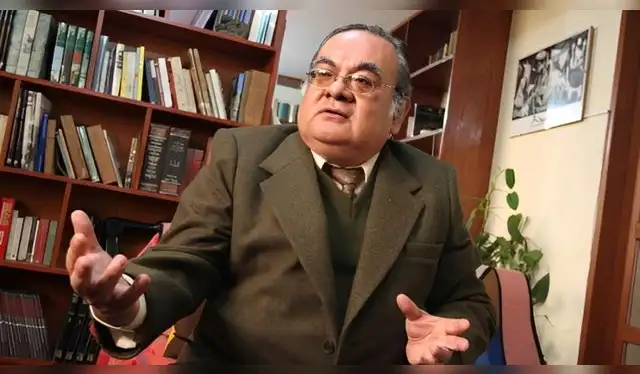
Economista e investigador de la UNMSM Jorge Manco Zaconetti señala que hay un costo de oportunidad perdido enorme entre el 2022 y la fecha al no diversificar reservas de oro.
Zaconetti maintains that Peru faces a clear “opportunity cost” for not increasing its gold reserves between 2022 and 2025. “Instead of having 34 tons, we could have 50 or 60,” he said.
The economist recalls that the country is a significant gold producer, with exports reaching approximately 6.8 million ounces annually. However, officially reported production by the Ministry of Energy and Mines does not exceed 3.8 million ounces, a gap that, according to Manco Zaconetti, has persisted since 2004. “That imbalance is growing,” he warned.
Armando Mendoza agrees that the high concentration in U.S. Treasury bonds is no longer as unquestionable as it once was. “All financial assets are based on the principle of trust. If you remove that, they are worthless,” he explained. While acknowledging that U.S. bonds have historically been considered the safest asset in the world, he warned that “recently there is growing uncertainty regarding U.S. debt,” influenced by factors including the economic and fiscal policies of the Donald Trump administration.
“What is being observed is that countries like China and Japan are beginning to reduce their exposure to Treasury bonds,” Mendoza noted, adding that this process does not imply the collapse of the dollar, but rather a gradual shift in asset diversification globally. “The scenario is no longer the same as it was 10 or 20 years ago,” he remarked.
From this perspective, he believes gold plays a special role within reserves. “Gold is the ultimate reserve asset. If you remove trust in paper, the last thing that retains value is gold,” he said. Therefore, he argues that maintaining only 5% of reserves in this metal “should be reviewed,” although he clarified that this does not imply abandoning the dollar or bonds, but diversifying prudently.
The BCRP maintains that Peru is already among the countries in the region with the highest proportion of gold in its reserves within the inflation-targeting scheme. According to the issuing authority, Chile, Mexico, Brazil, and Colombia maintain gold holdings ranging from 0% to 5.1% of their international reserves.
Gold Reserves for an “Agricultural Reactivation” Program
For Manco Zaconetti, the increase in the value of gold would not only have strengthened the country’s external backing, but could also have expanded the fiscal space for the implementation of countercyclical or productive support policies. He explained that having a stronger external backing would allow for the design of stimulus mechanisms similar to an “agricultural reactivation” program, aimed at small domestic market producers who today face sharp price declines and are selling at a loss, without compromising macroeconomic stability or resorting to irresponsible use of reserves.
“Just as we financed Reactiva Peru with more than S/60 billion in 2020, an absolutely Keynesian measure, those resources could now be used for a Reactiva 2 focused on family agriculture,” he proposed.
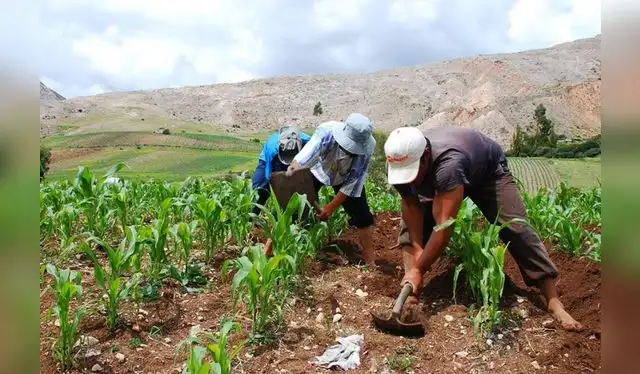
Zaconetti warned that small farmers producing potatoes, onions, or corn for the domestic market lack state support, unlike exporters or producers in the United States and Europe, where there are subsidy schemes. In this regard, he argued that strengthening reserves in real assets like gold could contribute to greater economic and food autonomy for the country.
“Just as we fight for energy independence, we must also fight for food independence,” he said.
The economist insisted that a more robust external position would provide greater leeway for countercyclical policies, similar to Reactiva Peru, but this time focused on the domestic market and family agriculture. “Traditional agriculture is the ugly duckling of the model. Millions of small farmers producing potatoes, onions or corn do not receive any support from the State, unlike what happens in the United States or Europe,” he remarked.
Finally, he recalled that the Organic Law of the Central Reserve Bank authorizes the entity to buy and sell foreign exchange, gold and silver without the need for a law from Congress, as it is a strictly technical decision. “The stability of the BCR has been a strength, but it can also become a weakness if it continues to operate with the same scheme as 30 years ago, ignoring that the international scenario has changed,” he concluded.
