
A recent study reveals a concerning trend in swine production: iron deficiency anemia is increasingly prevalent in piglets, even those receiving standard preventative iron supplementation. The findings, stemming from a national survey, point to a potential mismatch between traditional supplementation practices and the higher iron requirements of modern, faster-growing pig breeds.Researchers found nearly 70% of piglets assessed exhibited suboptimal hemoglobin levels, wiht larger piglets demonstrating the greatest susceptibility.the study underscores a growing need to re-evaluate iron supplementation strategies to address this regional health challenge impacting pre-weaning piglet health and performance.
A significant percentage of piglets – over 70% – show signs of iron deficiency despite receiving standard preventative supplementation, a new study reveals. The findings highlight a growing challenge in swine production, as modern piglets may have higher iron needs than previously understood.
Researchers evaluated hemoglobin levels in piglets using a portable HemoCue® system, a widely validated tool for rapid and reliable measurements in field studies. All piglets included in the assessment had received a standard dose of iron dextran – 1 cm³ administered intramuscularly between 24 and 96 hours of life.
The average hemoglobin concentration observed was 9.99 g/dL, a level considered suboptimal for the pre-weaning period. A breakdown of the piglets’ hematological status showed that 28.1% were classified as anemic, 42.2% as subanemic, and only 29.8% had optimal hemoglobin values.
Further analysis revealed a consistent pattern based on the piglets’ weight categories. Larger piglets exhibited the lowest average hemoglobin values and the highest proportion of animals classified as anemic. Medium-sized piglets showed intermediate values, close to the overall study average. Conversely, smaller piglets recorded the highest hemoglobin levels and the lowest proportion of anemia.
Researchers confirmed an inverse relationship between body weight and hemoglobin concentration, indicating that faster-growing animals were more susceptible to anemia or subanemia.
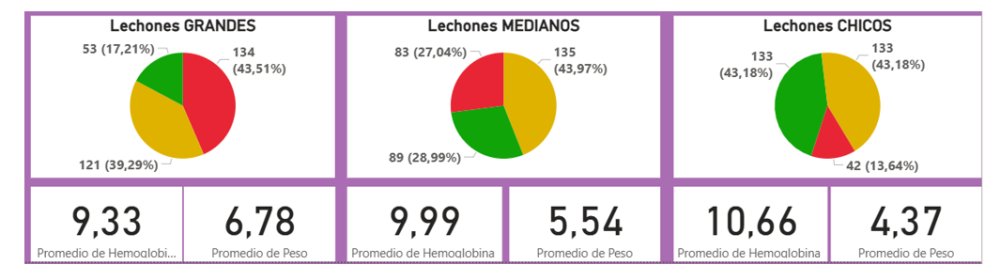
The study’s findings confirm that iron deficiency anemia remains a common health problem in piglets, even with widely used preventative measures. The higher prevalence observed in rapidly growing piglets aligns with the concept of the “iron gap,” which describes the difficulty of meeting the mineral demand in animals with a high growth rate when using traditional supplementation methods
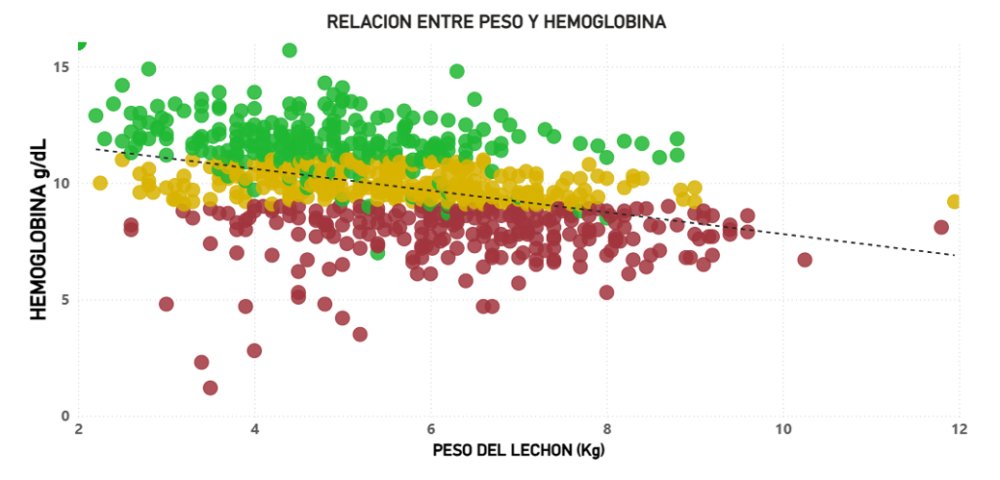
Discussion
This pattern isn’t unique to Argentina. Studies conducted in other countries across Latin America have reported similar rates of anemia in pre-weaning piglets and a greater susceptibility in larger animals, reinforcing the idea that this is a regional health challenge.
Conclusions and practical implications
The national survey indicates that traditional iron dextran supplementation doesn’t always meet the iron demands of modern piglets, particularly those with high production performance. The high proportion of anemic and subanemic piglets observed suggests a need to re-evaluate and update iron supplementation strategies for pre-weaning piglets.
Comparative studies have shown that gleptoferron, found in Forceris®, offers greater bioavailability and a more sustained iron supply over time, helping to maintain better hemoglobin levels towards the end of lactation and reducing the proportion of anemic piglets.
Forceris® combines highly bioavailable iron (gleptoferron) with toltrazuril in an injectable formulation for early administration, integrating the prevention of iron deficiency anemia and neonatal coccidiosis into a single intervention. This makes it a health tool aligned with current production demands, simplifying management and improving health and production performance from the earliest days of life.
In summary, preventing iron deficiency anemia today requires adapting iron supplementation to the piglet’s actual growth rate, and Forceris® positions itself as a solid alternative to meet this challenge in modern swine production.
References
¹ Svoboda M, Drabek J. Iron deficiency in suckling piglets. Folia Vet. 2005.
² Furugouri K. Iron metabolism in piglets. JARQ. 1975.
³ Zimmerman DR et al. Injectable iron-dextran for prevention of anemia. J Anim Sci. 1959.
⁴ Bhattarai S, Nielsen JP. Early indicators of iron deficiency in piglets. J Swine Health Prod. 2015.
⁵ Perri AM et al. Iron deficiency and performance in piglets. J Swine Health Prod. 2016.
⁶ Van Gorp S et al. Preventing the iron gap in modern pig production. AASV Proceedings. 2012.
⁷ Estudio multicéntrico Latinoamérica – prevalencia de anemia ferropénica en lechones predestete.
⁸ Sperling D et al. Comparative efficacy of iron gleptoferron and iron dextran. Vet Record Open. 2018.
