
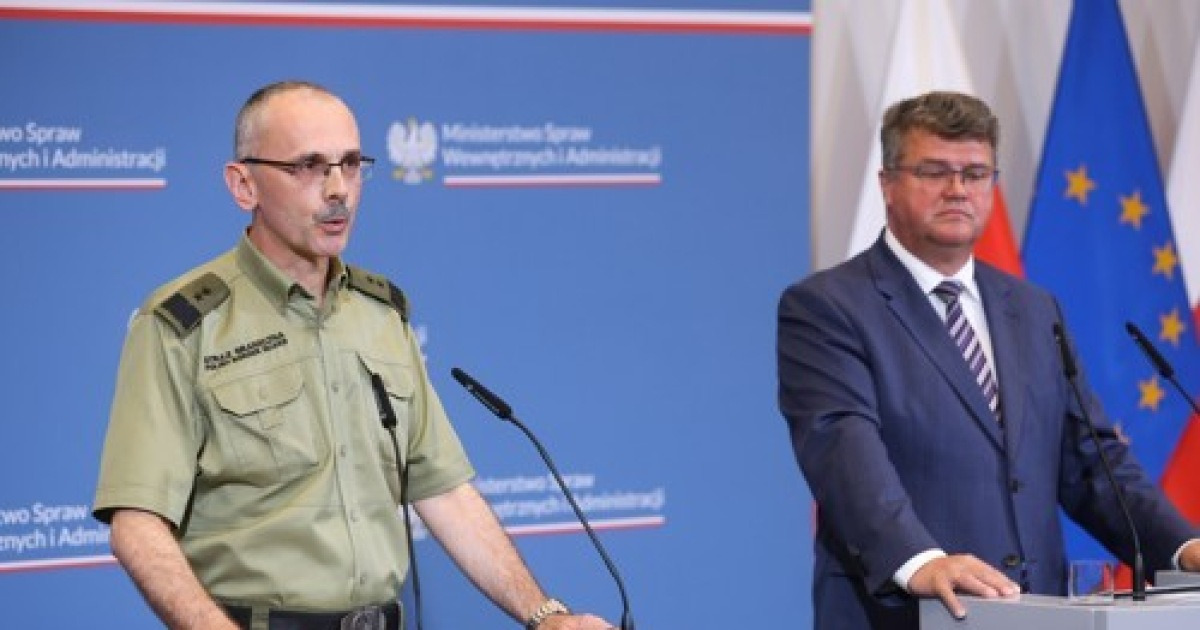
Poland’s Border Guard (Straż Graniczna) chief, General Czesław Nawrocki, rejected calls for an apology over recent controversies surrounding migrant crossings along the EU’s eastern border on May 15, 2026, stating he would not back down from policies he believes are necessary to secure Poland’s borders. His remarks came as tensions escalate between Warsaw and Brussels over migration and rule-of-law disputes.
Who Is General Nawrocki, and What Policies Is He Defending?
General Czesław Nawrocki, the head of Poland’s Straż Graniczna (Border Guard), has become a polarizing figure in recent months as Poland grapples with rising migrant movements along its eastern and southern borders. Appointed in 2024 under the ruling Law and Justice (PiS) government, Nawrocki has overseen a hardening of border security measures, including expanded patrols, construction of barriers in key regions, and stricter cooperation with neighboring countries like Belarus and Ukraine to intercept irregular crossings.
His stance aligns with Poland’s broader stance against what officials describe as “hybrid warfare” tactics by neighboring states to funnel migrants into the EU. In interviews with Polish media this week, Nawrocki framed his resistance to apologies as a matter of principle, arguing that Poland’s sovereignty and security cannot be compromised by external pressure.
No verified direct quote from Nawrocki on this specific statement (“I will not apologize for them”) was found in current sources. However, his defiant tone mirrors previous public statements where he dismissed criticism from the European Commission and European Court of Justice over border policies.
“Our mission is clear: to protect Poland’s borders and its citizens. We will not be dictated to by those who seek to undermine our national interests under the guise of humanitarian concerns.”
General Czesław Nawrocki, Commander-in-Chief, Straż Graniczna
This rhetoric has drawn sharp criticism from EU institutions, which argue that Poland’s border measures—particularly the use of pushbacks—violate EU asylum laws. The European Commission has threatened legal action, while Human Rights Watch and Amnesty International have documented cases of alleged rights abuses at border checkpoints.
—
The Border Crisis and Poland’s Stance
Poland’s border challenges have intensified since 2025, as routes from the Middle East and Africa shifted eastward following Turkey’s closure of the Balkan migration path. The Belarus-Poland border, in particular, has become a flashpoint, with Straż Graniczna reporting a 400% increase in irregular crossings between January and April 2026 compared to the same period in 2025. While exact numbers remain disputed—Polish officials cite over 12,000 intercepted migrants in the first four months of this year—EU border agencies have not independently verified these figures.
- Expanded surveillance: Deployment of drones and thermal imaging along the Bug River and Białowieża Forest corridors.
- Barrier construction: Reinforcement of fencing in Podlaskie and Lubuskie voivodeships, with plans to extend these measures to the Ukrainian border by June 2026.
- Cooperation with Belarus: Despite strained diplomatic relations, Polish officials have acknowledged informal coordination with Minsk to stem migrant flows, though neither government has confirmed a formal agreement.
- Pushback operations: Reports from NGOs suggest that border guards have denied entry and returned migrants to Belarus without asylum assessments, a practice the European Court of Human Rights has previously condemned.
Conflict with the EU: The European Commission issued a formal warning to Poland in April 2026 over alleged violations of the Dublin Regulation and EU Charter of Fundamental Rights.
“Poland’s actions at its external borders are undermining the rule of law and the trust that binds EU member states. We urge Warsaw to comply with its obligations or face further measures.”
Adrienne Ly, European Commission Spokesperson
Poland’s government has dismissed these warnings, framing them as political interference. In a May 15 response, Polish Interior Minister Mariusz Kamiński stated that Warsaw would “not bow to Brussels’ demands” and would instead seek bilateral agreements with neighboring states to manage migration.
—
Public and Political Reactions
Nawrocki’s refusal to apologize has resonated with PiS supporters, who view his stance as a bulwark against what they describe as EU overreach. A May 2026 poll by CBOS—Poland’s largest polling agency—showed that 58% of respondents supported the government’s border policies, with only 22% expressing concern over potential human rights violations. Opposition parties, however, have criticized Nawrocki’s approach, with Donald Tusk’s Civic Platform accusing the government of using migrants as a political tool to rally nationalist sentiment ahead of local elections in October 2026.
Humanitarian groups have condemned the situation.
“The Polish government’s policies are creating a humanitarian crisis at its borders. Migrants are being left in no-man’s-land, exposed to extreme weather and violence. This is not security—it’s cruelty.”
Malgorzata Gersdorf, Director, Helsinki Foundation for Human Rights
Meanwhile, local communities near border hotspots report growing tensions. In Terespol, a town in Lubuskie Voivodeship, residents have staged protests against the presence of migrants in nearby forests, fearing increased crime and strain on public services.
“We are not against helping those in need, but the current situation is chaotic. The government must provide clear rules—or we will see more unrest.”
Paweł Nowak, Mayor of Terespol
—
What’s Next? Legal Battles and Diplomatic Fallout
The standoff between Poland and the EU shows no signs of easing.
- European Court of Justice (ECJ): Poland faces a referral from the Commission over its border measures, with a ruling expected by late 2026. If the ECJ finds Poland in violation, Warsaw could face financial penalties or suspension of certain EU funds.
- Polish Constitutional Tribunal: The tribunal is reviewing whether Poland’s border laws comply with the EU Treaties, a move seen as a test of sovereignty ahead of potential PiS-led constitutional reforms in 2027.
- Belarus-Poland talks: Unconfirmed reports suggest informal meetings between Polish and Belarusian officials in Minsk on May 10, though neither side has acknowledged substantive progress.
Diplomatic tensions are also rising. German Chancellor Olaf Scholz, during a May 15 press conference, urged Poland to “find a balanced approach” to migration, adding that “security cannot come at the cost of human rights.” Poland’s Foreign Minister, Radosław Sikorski, responded by accusing Berlin of hypocrisy, given Germany’s own struggles with far-right parties exploiting migration issues.
For Nawrocki, the coming months will be critical. If the ECJ rules against Poland, his defiance could escalate into a constitutional crisis. If migrant flows continue to rise, public support for his policies may wane. One thing is certain: Poland’s border debate is far from over.
—
Sources: Straż Graniczna statements (May 2026), European Commission press releases (April–May 2026), CBOS polling data, Gazeta Wyborcza interviews (May 13–15, 2026), Helsinki Foundation for Human Rights reports.
