
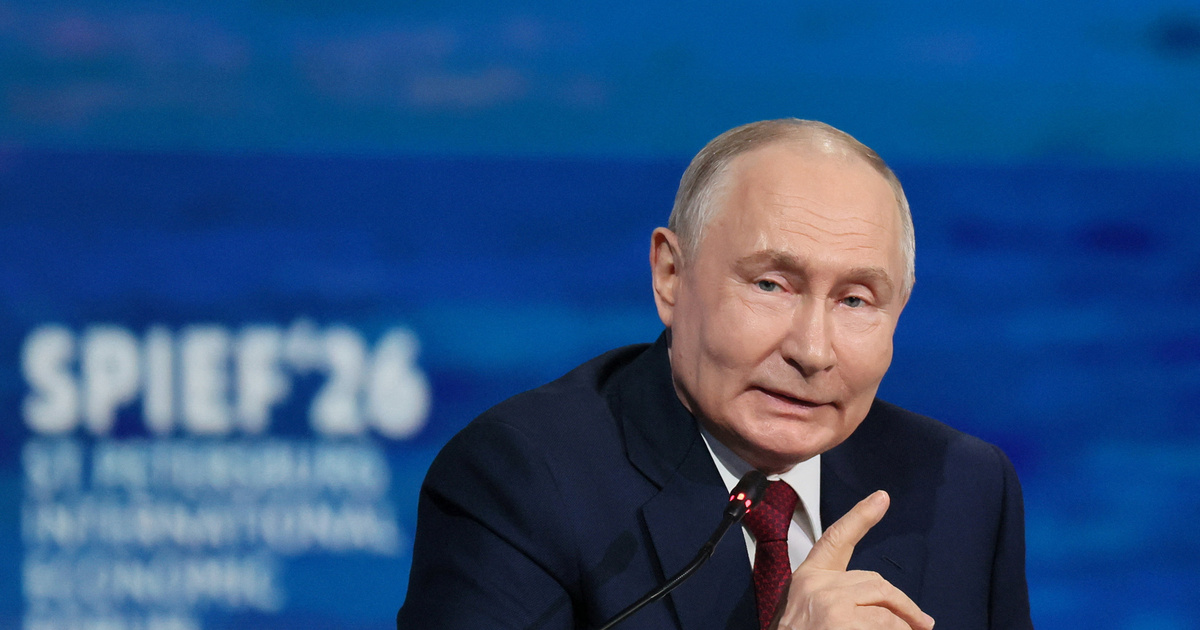
Russian President Vladimir Putin addressed the St. Petersburg International Economic Forum (SPIEF-2026) on June 10, 2026, positioning Russia as a central player in a shifting global order. The event, which drew a mix of international business leaders and political figures, underscored Moscow’s efforts to pivot toward Eastern markets amid ongoing Western sanctions and the protracted conflict in Ukraine.
Strategic Vision and the New Global Order
In his keynote address, Vladimir Putin framed the current transformation of the global order as an objective and inevitable process, according to analysis from Index. The Russian president argued that the era of Western hegemony is concluding, necessitating that all nations, particularly major powers, fight to secure their sovereignty and position in a more balanced international landscape. This rhetoric aligns with the Kremlin’s long-standing narrative regarding “multipolarity,” a concept frequently invoked in official Russian foreign policy doctrine to challenge the post-Cold War framework led by the United States and the European Union.


The speech served as both a status report and a blueprint for the next five to ten years. While the tone remained broadly optimistic regarding Russia’s potential, analysts noted that the Kremlin acknowledged specific technological limitations and domestic challenges. A key component of this vision is the strengthening of ties with China, which Putin described as an equal partnership—a message aimed at both Beijing and domestic skeptics concerned about potential technological dependency on China. This emphasis on “technological sovereignty” is a recurring theme in recent Russian economic planning, as the country seeks to replace prohibited Western imports with domestic alternatives or imports from “friendly” jurisdictions.
International Participation and the Saudi Partnership
The 2026 forum saw a distinct shift in the profile of international attendees. Vietnam.vn reported that Saudi Arabia served as the guest of honor, a development that highlights the deepening economic and energy-policy coordination between Moscow and Riyadh. Energy Minister Abdulaziz bin Salman Al Saud led the high-level Saudi delegation, signaling a commitment to the OPEC+ framework that remains a cornerstone of the two nations’ cooperation. The OPEC+ alliance, which coordinates production cuts to manage global oil price volatility, continues to function as a primary diplomatic bridge between the Middle East and the Kremlin.
Energy data reflects this strategic alignment. According to figures provided by Vietnam.vn, production levels are expected to shift through 2025:
| Nation | 2024 Production (million barrels/day) | 2025 Production (million barrels/day) |
|---|---|---|
| Russia | 9.197 | 9.129 |
| Saudi Arabia | 8.978 | 9.472 |
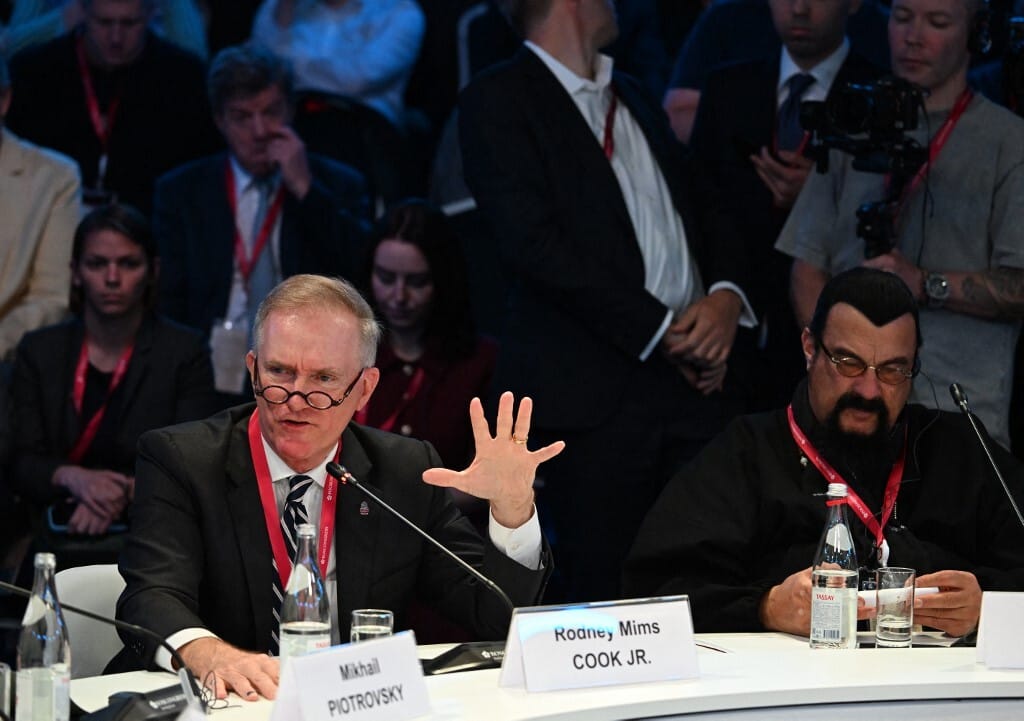
Beyond energy, the forum featured a diverse, if unconventional, list of participants. HVG.hu reported the presence of American conservative podcast host Candace Owens, actor Steven Seagal, and Rodney Mims Cook Jr., chair of the U.S. Commission of Fine Arts. Cook claimed he received authorization from Donald Trump and the U.S. State Department for his attendance, though Senator Marco Rubio stated during a hearing that he was unaware of any official U.S. delegation visiting the event. This discrepancy highlights the complexity of international optics surrounding the forum, where the presence of private American citizens is often used by state media to signal that Russia remains integrated with global influencers, despite the formal diplomatic boycott by G7 nations.
German Business Interests and Sanction Impacts
Despite the geopolitical climate, German business leaders continue to navigate the complexities of the Russian market. Matthias Schepp, president of the German-Russian Chamber of Commerce, told Infostart that German firms are eager to protect more than 100 billion euros in assets and maintain economic ties for the period following a potential ceasefire. This figure, representing the cumulative historical investment of German capital in the Russian federation, underscores the high stakes for the German industrial sector, which has traditionally relied on Russian energy and market access.
The economic toll of the conflict is evident in the trade data. The bilateral trade volume, which reached 80 billion euros in 2012 and 59.7 billion euros in 2021, dropped to under 10 billion euros last year. Nevertheless, a chamber survey of 750 members indicated that nearly all companies intend to remain in Russia, with 75% of responding firms expressing satisfaction with their current business operations despite the significant impact of sanctions. This resilience is often attributed to firms holding onto local subsidiaries in anticipation of a future normalization of trade relations, despite current export controls and financial prohibitions enacted by the European Union.
Looking Toward APEC 2027
As SPIEF-2026 concludes, the focus on regional economic forums intensifies. Preparations are already underway for the 2027 APEC conference in Vietnam. According to Vietnam.vn, the Vietnamese government and the Vietnam Chamber of Commerce and Industry (VCCI) are utilizing the upcoming summit as a test for national competitiveness. The objective is to attract a new generation of foreign direct investment by emphasizing clean energy, digital transformation, and resilient supply chains, rather than relying solely on low-cost labor.
The contrast between the Russian forum’s focus on maintaining legacy partnerships and the Vietnamese preparations for APEC 2027 highlights the divergent paths nations are taking to secure their standing in a fragmented global economy. For Russia, the path forward remains tied to its ability to retain its Eastern partners while managing the long-term economic consequences of its isolation from Western markets. Meanwhile, the APEC process continues to prioritize the integration of the Asia-Pacific region into global trade lanes, emphasizing the growing importance of the “Global South” as a primary destination for future capital allocation.
Find more reporting in our Business section.
