
The Conflict Between Ecological Preservation and Global Commodity Demand

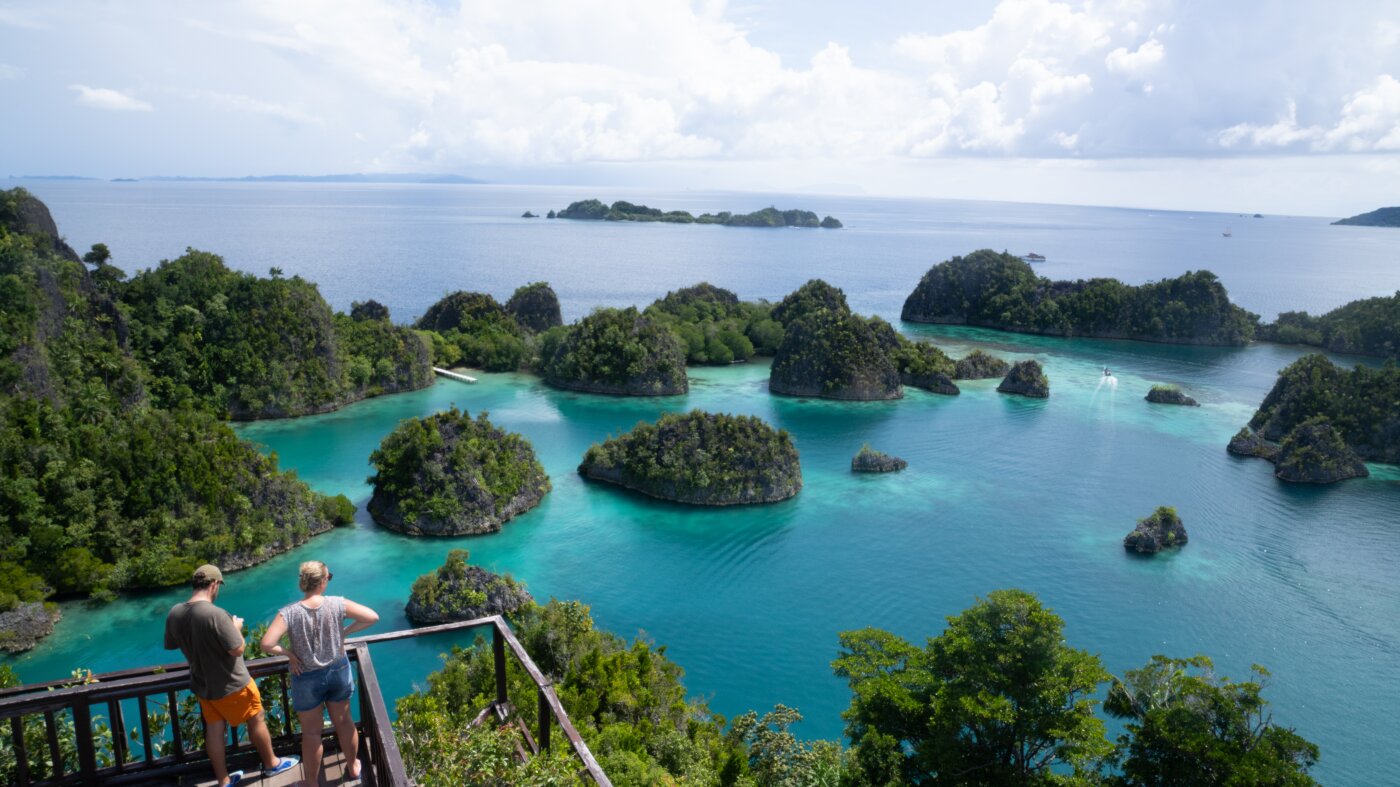
The tension in Raja Ampat—often called the last paradise on Earth—stems from its status as both an ecological treasure and a prime location for the global nickel trade. Indonesia currently stands as the world’s largest supplier of the mineral, which remains essential for stainless steel production and the batteries powering electric vehicles. However, the rapid growth of the industry over the past decade has put significant strain on the archipelago’s traditional ways of life.
For local residents, the impact of mining is not merely theoretical. Akwila Mambrasar, who fishes the traditional way using a hook, line, and weight, has witnessed firsthand how mining activity transforms the marine environment. According to reporting from UALR Public Radio, he recalls seeing the sea turn red from mining sediment during his time working near a previous project.
“Raja Ampat is a tourist area. It’s famous. We have to preserve the nature and the sea.”Akwila Mambrasar, local fisherman
This sentiment is echoed by many who rely on tourism and fishing for their livelihoods. As NPR reported, the region is mostly untouched by development, save for the recent, controversial encroachment of mining companies. The clash between preservation and industrialization reached a boiling point last summer, when the hashtag #SaveRajaAmpat went viral, prompting government intervention.
Regulatory Shifts and the Consequent Economic Instability

In response to widespread environmental concerns, the Indonesian government revoked the operating licenses of four out of five mining companies across the archipelago. While this move was celebrated by environmental advocates, it left many locals in a precarious economic position. For residents who had come to rely on the industry, the sudden closure of mines removed not only their primary source of income but also critical royalty payments.
One local resident, identified as Bob, explained that the loss of the mining projects has caused significant hardship for his village. He suggested that the debate is often framed incorrectly, noting that many residents view the mines as a vital engine for local economic stability.
“If the company reopens, everyone will benefit,”Bob, resident of Selpele village, via UALR Public Radio
The struggle in Raja Ampat mirrors broader shifts occurring across Indonesia’s mining regions. Climate Rights International has documented similar transformations in North Maluku, where the rapid influx of mining infrastructure has fundamentally altered village life. In areas like Lelilef, the shift from traditional farming and fishing to a capitalistic, wage-based economy has been absolute, with residents reporting that ancestral lands have been sold off entirely to make way for mining operations.
Cultural Erosion and the Marginalization of Traditional Communities
The transition away from traditional economies is complicated by the status of the communities affected. While some groups are formally recognized as Indigenous, others—like the Sawai people in North Maluku—have faced challenges in securing official registration despite their long-standing connection to the land.
According to research cited by Climate Rights International, these communities often display characteristics commonly attributed to indigenous populations under the IFC’s IP policy: self-identification, cultural distinctiveness, unique language, and collective attachment to traditional lands. Yet, as the nickel industry expands, these cultural markers are increasingly pressured by the demands of a globalized supply chain.
The contrast between the “last paradise” of Raja Ampat and the industrial hubs of the mainland highlights a central dilemma for modern Indonesia. With a population exceeding 287 million and a geography spanning 17,500 islands, the country is balancing its role as a global economic player against the preservation of its diverse ecosystems and cultures, as noted by Britannica.
Uncertain Future for the West Papua Province

As the situation in Raja Ampat continues to develop, the path forward remains uncertain. The government’s decision to revoke licenses suggests a willingness to prioritize environmental protection, yet the economic reality for those who lost their jobs creates ongoing pressure to reopen the sites.
For fishermen like Mambrasar, the priority remains clear. When asked about his catch, he remains focused on the immediate, tangible value of his home waters.
“It’s a trigger fish,” he says. “It’s delicious.”Akwila Mambrasar, local fisherman, via UALR Public Radio
Whether the Indonesian government can reconcile these competing visions—one of a tourism-based, protected archipelago and another of a mineral-rich industrial hub—will likely define the future of the West Papua province. For now, the islands remain in a state of uneasy transition, waiting to see if the current environmental protections will hold or if the demand for nickel will once again reshape their shores.
