

Ramiro Valdés Menéndez, a historic Cuban revolutionary commander and vice prime minister, died in Havana on Sunday, June 21, 2026, at age 94. A founding member of the 1956 Granma expedition, Valdés served for decades as a central architect of Cuba’s internal security apparatus and state-controlled economic planning.
A Legacy Defined by Rebellion and Security
Valdés rose to prominence in 1956 when he joined Fidel and Raúl Castro, along with Ernesto “Che” Guevara, aboard the Granma yacht to launch the revolution that eventually ousted Fulgencio Batista in 1959. According to reporting from RTVE.es, he is one of the last three surviving commanders of the revolution, alongside Guillermo García Frías and the late Juan Almeida.
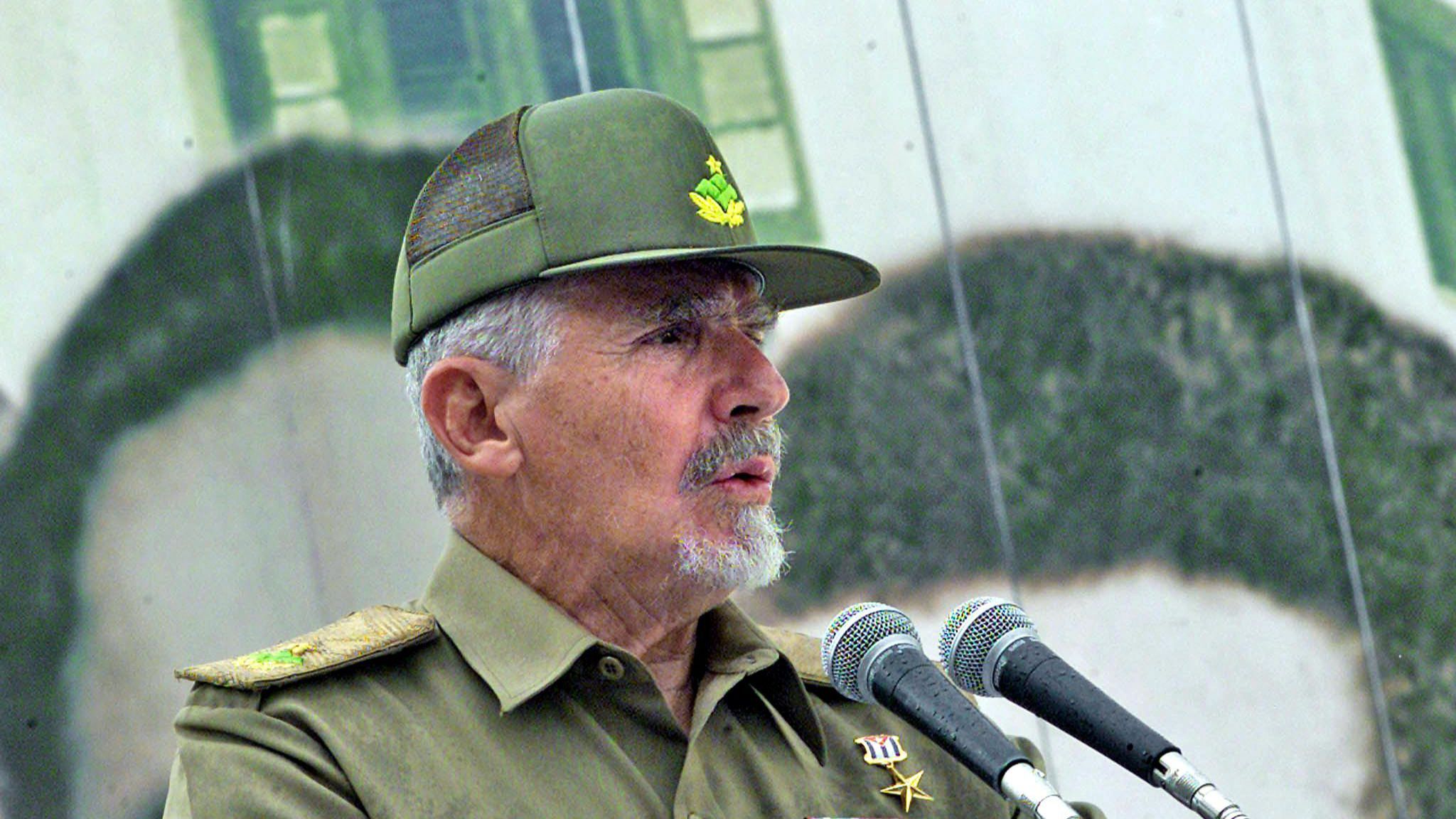
Born in Artemisa on April 28, 1932, Valdés spent six decades in the upper echelons of the Cuban state. His career was marked by a long tenure as Minister of the Interior, a position he held for 23 years, during which he was instrumental in shaping the island’s espionage and internal security systems. Biographical accounts characterize him as a staunchly pro-Soviet, orthodox Marxist who maintained a disciplined, if often intransigent, approach to governance. His role in the early years of the revolution included the establishment of the G-2 intelligence service, a foundational element in the consolidation of the revolutionary government’s power. By the 1960s, he became a symbol of the regime’s commitment to internal vigilance, a reputation that persisted throughout his long political career.
Official Recognition and the Passing of a Generation
The Cuban government confirmed the death through state media, and President Miguel Díaz-Canel utilized the platform X to express his condolences, framing Valdés’ passing as a deeply personal loss. As noted by ABC, the announcement of his death followed months of public knowledge regarding his declining health. His passing is widely interpreted by regional observers as a symbolic turning point, as it signals the final departure of the figures who directly participated in the armed uprising against the Batista dictatorship.

“La partida física del Comandante de la Revolución, Ramiro Valdés Menéndez, duele profundamente, como la de un padre. Así lo quise y respeté siempre. Así recordaré su apoyo y consejos, su discreta colaboración y ejemplar consagración al servicio de la Patria.” Miguel Díaz-Canel, President of Cuba, via RTVE.es
Economic Oversight and Final Years
Despite his advanced age and the broader generational shift occurring within the Cuban Communist Party, Valdés remained active in the government until his final days. In his capacity as vice prime minister, he oversaw critical socio-economic sectors. His portfolio included:
- Construction programs and the production of building materials.
- National electrical generation infrastructure.
- Industrial investment projects.
In recent years, his oversight of the national electrical grid placed him at the center of public frustration regarding persistent blackouts across the island. His responsibilities required him to navigate the complexities of an aging infrastructure suffering from a lack of spare parts and limited fuel imports. While he was frequently described as a figure who preferred to operate away from the public spotlight, his influence on the internal structure of the regime remained significant. His death marks the closing of a chapter for the “historical generation” that took power in 1959, leaving few original members of the inner circle surrounding the Castro brothers still active in the current administration.
The transition of power away from the “historical generation”—a term used to describe those who fought in the Sierra Maestra mountains—has been a central focus of Cuban political life since Fidel Castro stepped down in 2008. With the death of Valdés, the cohort of leaders who claim direct revolutionary legitimacy is increasingly limited. In the Cuban political system, the Council of Ministers and the Politburo have transitioned toward a younger generation of technocrats and party loyalists, yet the influence of the remaining revolutionary commanders has historically served as a stabilizing force for the party’s ideological orthodoxy. Analysts of the Cuban state note that the passing of such figures often necessitates a formal reorganization of ministerial responsibilities, as these veterans frequently held roles that combined administrative duties with deep-seated institutional authority.
Find more reporting in our News section.
