
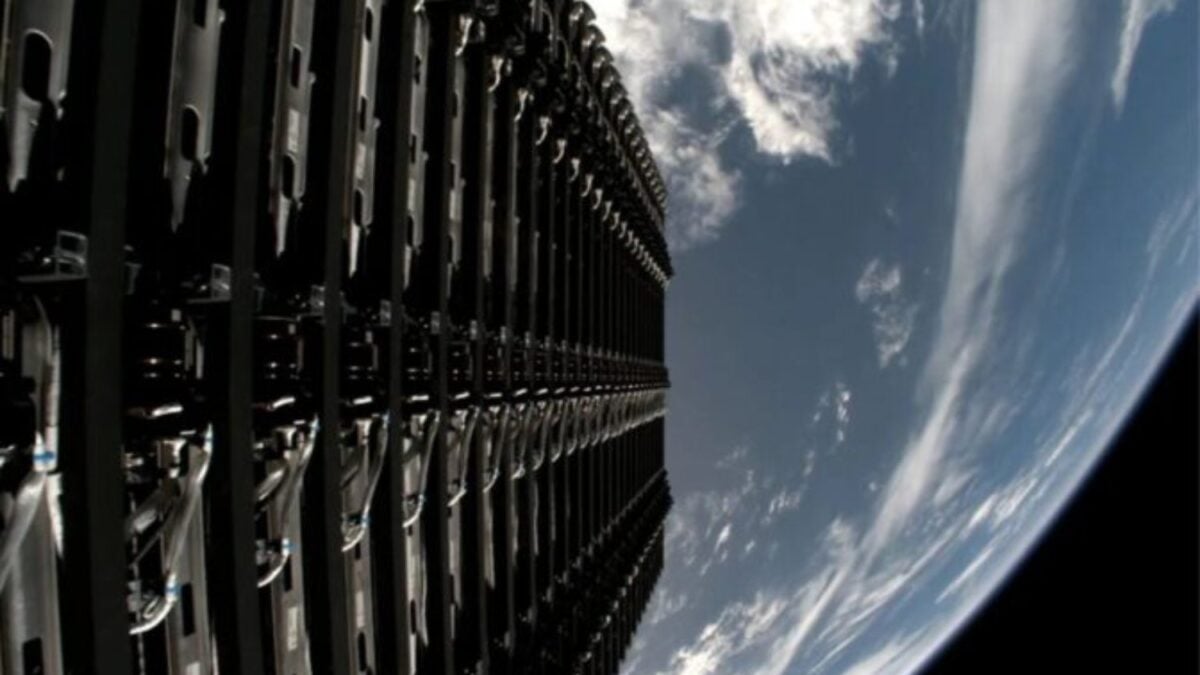
SpaceX has acknowledged that its ambitious plan to build orbital data centers for artificial intelligence faces significant technical and financial hurdles, potentially undermining its commercial viability.
In a document provided to investors ahead of a potential initial public offering, SpaceX stated that both orbital AI data centers and efforts to establish human settlements on the Moon and Mars depend on technologies that have not yet been developed or proven. These initiatives may not be commercially viable, the company warned.
The revelation comes despite earlier enthusiasm from Musk and other tech leaders. In October 2025, Jeff Bezos predicted that space-based data centers could become a reality within the next two decades, offering a solution to the growing energy demands of terrestrial AI infrastructure. Musk amplified the discussion shortly afterward, claiming on X that SpaceX only needed to upgrade its Starlink V3 satellites with high-speed laser links to make the vision feasible, declaring definitively that “SpaceX will do it.”
However, the company has since conceded that the physics of operating in space presents major obstacles. Unlike on Earth, where data centers rely on air, liquid, or convection-based cooling systems, the vacuum of space allows heat dissipation only through thermal radiation—a far less efficient process. This necessitates enormous radiator structures, comparable in scale to solar panels, which would significantly increase both the weight and vulnerability of orbital data centers.
A recent report from the European Parliament echoed these concerns, noting that the scale of required radiators would undermine the practicality of such systems. Experts caution that while the concept remains attractive—offering access to virtually unlimited solar power and freedom from terrestrial grid constraints—the engineering challenges may delay or prevent realization for decades.
Despite these setbacks, SpaceX continues to prepare for a potential public listing, with some analysts suggesting a valuation as high as $1.5 trillion according to Reuters. The company’s candid assessment of technological risks appears aimed at meeting legal disclosure obligations to protect future shareholders from claims related to overly optimistic projections.
The situation underscores the gap between visionary space-based concepts and the current limits of aerospace and thermal engineering, particularly as global demand for AI computing power continues to surge.
