
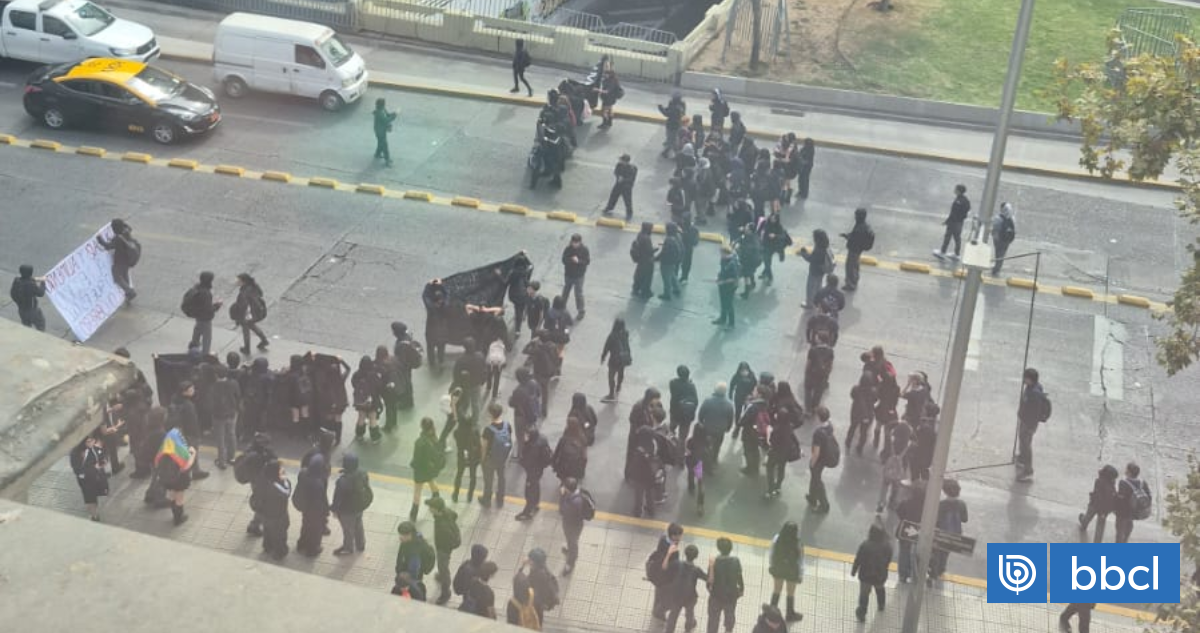
SANTIAGO, Chile — Hundreds of students from one of Chile’s most prestigious public high schools took over their campus Monday, blocking a major downtown avenue and sparking clashes with police as they demanded reforms to the country’s education system. The protest at the Instituto Nacional José Miguel Carrera, a historic institution founded in 1813, reflects growing frustration among Chilean youth over inequality in access to quality education.
The occupation began early Monday morning when students barricaded the school’s entrances and refused to allow classes to proceed, according to statements from the school administration. By mid-morning, demonstrators had spilled onto Avenida Libertador General Bernardo O’Higgins—commonly known as “La Alameda”—a central thoroughfare in Santiago, bringing traffic to a standstill during the morning commute.
Witnesses reported that police used water cannons and tear gas to disperse the crowd after protesters allegedly threw rocks and set small fires in the street. No serious injuries were immediately confirmed, though local media showed images of students with minor injuries being treated by paramedics. The Metropolitan Police confirmed they had made “a limited number of arrests” but did not provide an exact figure.
The Instituto Nacional, often referred to simply as “El Nacional,” is one of Chile’s oldest and most elite public schools, with a long tradition of educating the country’s political and intellectual leaders. Its student body of over 3,200 includes some of the highest-performing students in the nation, many of whom come from working-class backgrounds. The school’s occupation comes amid a wave of similar protests at other top-tier public high schools in Santiago, including the Liceo de Aplicación and Liceo N°1 Javiera Carrera, where students have also staged takeovers in recent days.
In a statement released Monday afternoon, the school’s administration acknowledged the protest but did not endorse its methods. “We recognize the students’ right to express their concerns, but we cannot support actions that disrupt the educational process and endanger the safety of our community,” the statement read. The administration added that it had initiated dialogue with student representatives to address their demands, though no specific grievances were outlined in the statement.
However, student leaders speaking to local media framed the protest as a response to what they described as systemic neglect of public education in Chile. “We’re not just fighting for better resources—we’re fighting for a future where every student, regardless of their background, has the same opportunities,” said one organizer, who identified herself only as Daniela. “The government keeps talking about reform, but nothing changes. We’re tired of waiting.”
The protest at the Instituto Nacional is the latest in a series of student-led demonstrations that have roiled Chile in recent years, often centering on issues of educational equity and access. The school’s symbolic importance—it was founded during Chile’s struggle for independence and has educated many of the country’s presidents and public figures—has amplified the visibility of the current occupation. Observers note that the protest could signal broader unrest among Chilean youth, particularly as the country grapples with economic inequality and political polarization.
By late afternoon, students had retreated back inside the school, though they vowed to continue the occupation indefinitely. “We’re not leaving until our voices are heard,” Daniela told reporters. Meanwhile, city officials warned that further disruptions to traffic or public order would not be tolerated, setting the stage for potential escalation in the coming days.
The Instituto Nacional’s administration has not yet announced whether classes will resume Tuesday, leaving thousands of students and parents in limbo. For now, the school’s historic gates remain closed, its halls silent, and its future uncertain as the standoff between students and authorities enters its second day.
