
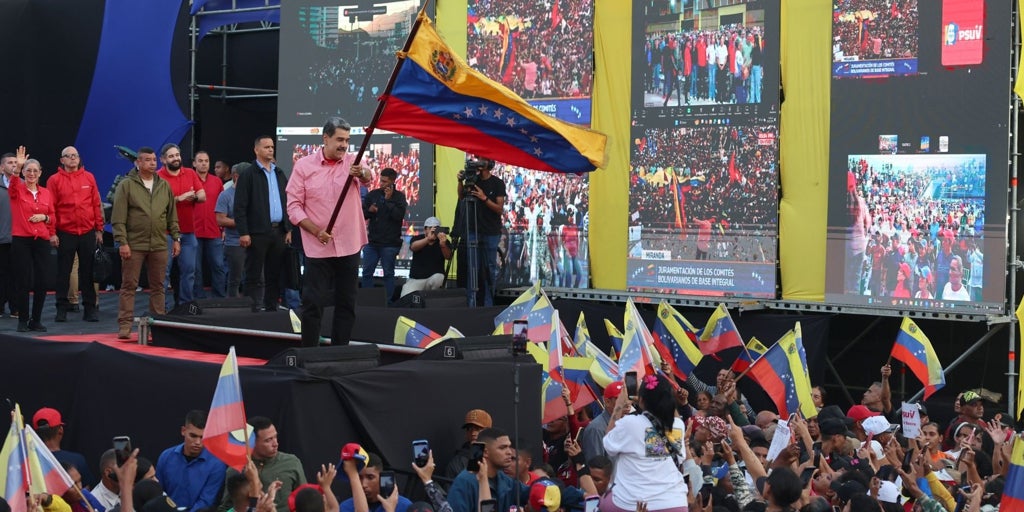
Washington is weighing military options in Venezuela as President Trump receives briefings on potential courses of action amid escalating tensions in the region. The discussions, unfolding against a backdrop of increased U.S. naval presence in the Caribbean, signal a sharper focus on the Maduro government and its alleged ties to drug trafficking and international cartels [[2]].Sources indicate that plans range from targeted strikes and special forces operations to maintaining current pressure and pursuing possible negotiations, with the potential for significant regional repercussions.
Recent meetings have provided U.S. military leaders with an opportunity to brief Donald Trump on potential courses of action regarding Venezuela, as tensions in the region continue to rise. The discussions, held at Trump’s Mar-a-Lago estate in Florida, come amid an increased military presence in the Caribbean and a tightening diplomatic squeeze on the government of Nicolás Maduro. The situation has reached a critical point, with Trump now weighing whether to act on the extensive military preparations – including aircraft carriers, fighter jets, intelligence assets, and regional allies – currently in place.
Targeting Maduro
Table of Contents
According to sources familiar with the conversations, the most aggressive option under consideration involves direct action against Maduro. Described internally as a rapid path forward, this approach carries significant risks. It would include targeted strikes within Venezuela, capture operations conducted by elite units, and even the possibility of eliminating Maduro or members of his inner circle. To that end, the U.S. has reportedly prepared a plan to discreetly deploy a detachment of the Delta Force, a highly specialized and secretive unit focused on hostage rescue, counterterrorism, and high-precision operations in hostile territory.
The legal justification cited centers on accusations that Maduro is involved in drug trafficking, with Washington alleging he leads a narco-state allied with Mexican and Colombian cartels. Under this scenario, the U.S. would act in “collective self-defense” on behalf of Colombia and Mexico, utilizing the already deployed Caribbean forces to carry out punitive actions. This remains the most drastic and uncertain outcome.
Precision Strikes
A less escalatory option involves limited strikes within Venezuela, targeting military infrastructure, drug storage facilities, or state assets linked to the narcotics trade. This would not involve a ground invasion or prolonged presence, but rather focused incursions designed to increase internal pressure on the Maduro regime. The plan also reportedly includes covert operations by the CIA and special forces missions for specific objectives, as recently detailed by The New York Times.
The Maduro regime has been providing military training to civilians in recent months due to pressure from the U.S.
The goal would be to erode cohesion within Maduro’s circle, encourage defections, and project an image of vulnerability without triggering a full-scale war.
Maintaining Pressure
A third option, according to sources, is to maintain extreme pressure without launching attacks within Venezuela. This is the approach Trump has pursued in recent months: sinking suspected drug smuggling vessels, conducting visible patrols with bombers, conducting maneuvers with regional allies, and increasing judicial rewards. This strategy aims to intimidate, create internal tensions within the Chavista structure, and maintain a sense of constant siege.
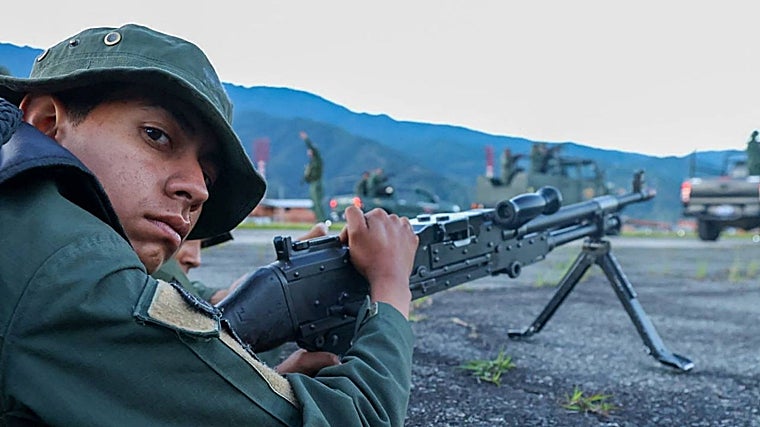
A Venezuelan military member participates in the deployment of the “Plan Independencia 200” defense plan.
The White House believes that a deployment of this magnitude – 15,000 military personnel, an operational aircraft carrier, F-35 fighter jets in Puerto Rico – could trigger fractures, discreet negotiations, or even a negotiated exit without the need for force within Venezuelan territory.
Since September 2, there have been 21 attacks against vessels suspected of drug trafficking in the Caribbean and eastern Pacific, resulting in at least 80 deaths. The frequency increased from a weekly pace to an almost daily cadence in late October, coinciding with the U.S. naval deployment in the region.
Negotiations
The least likely option is a negotiated settlement. This would involve facilitating the exile of Maduro and his allies to a country willing to accept them – with Turkey, Russia, Azerbaijan, and Cuba previously mentioned – as a way to avoid a larger conflict.
Sources at the National Security Council confirmed that intermediaries from the Maduro regime have offered to negotiate a potential leadership change, along with concessions regarding the Venezuelan military. However, both Trump and his top diplomat have so far rejected replacing current regime figures, such as Jorge and Delcy Rodríguez.
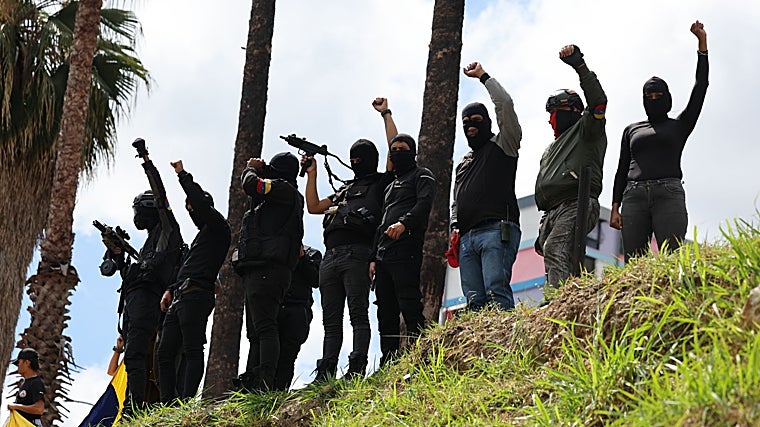
The “colectivos,” Chavista paramilitary organizations, have also participated in military exercises.
Democrats have argued in favor of negotiations, attempting to pass resolutions to prohibit Trump from using force. They prefer to focus on dismantling the repressive system, stabilizing the economy with assistance from the IMF and World Bank, reorganizing the oil industry, and supporting a transitional government. This is the longest and most complex path, but would also minimize military costs for the U.S.
Excluding Democrats
However, Trump is aware, as are his advisors, that the Biden White House previously negotiated with Maduro and offered various concessions, including the release of a close associate and the resumption of oil licenses, only to see him remain in power through alleged electoral fraud and the continued operation of a continental drug trafficking network.
Unlike during his first term, Trump has united his cabinet around this campaign of pressure and has decided not to involve the opposition. According to a source familiar with the deliberations, this approach is intended to allow Republicans to take credit for ending the dictatorship in Venezuela.
The escalating situation in Venezuela represents a significant challenge to regional stability and could have far-reaching consequences for international relations.
