
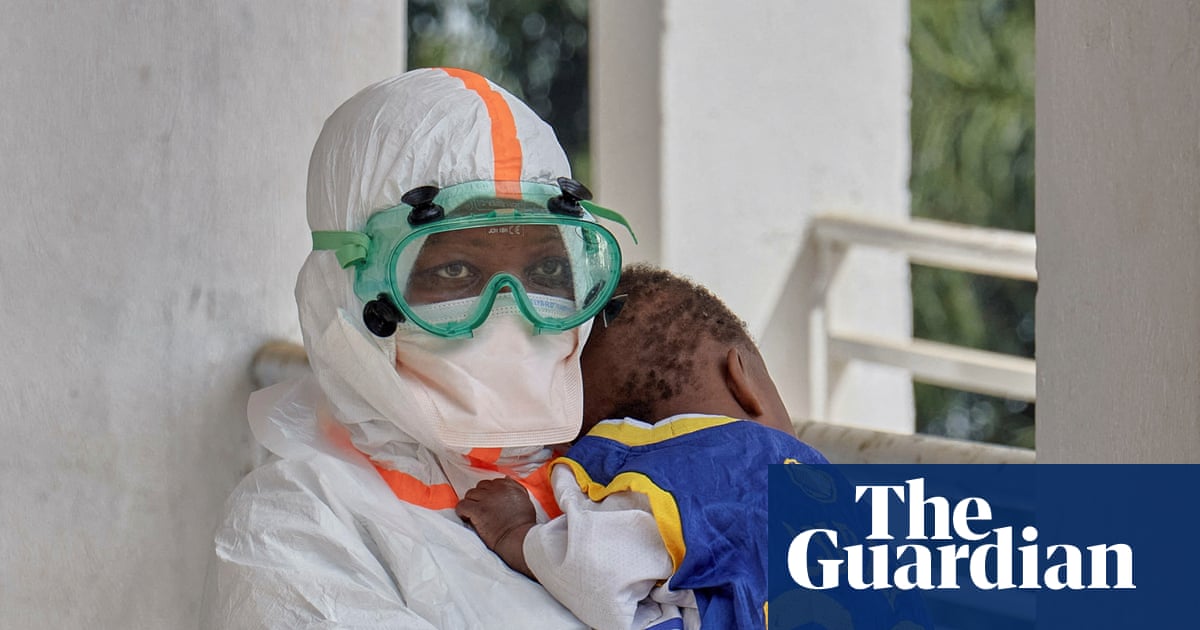
The Ebola outbreak in the Democratic Republic of the Congo and Uganda has claimed over 200 lives in its first month, with confirmed cases rising 38% in the last week alone. Africa CDC reports 894 confirmed cases across 32 health zones, as officials warn the situation remains far from controlled.
Current Scope of the Bundibugyo Virus Outbreak
The current outbreak, identified as the rare Bundibugyo strain of the Ebola virus, is proving significantly more aggressive than historical precedents. According to CP24, the 894 confirmed cases represent an infection rate three times higher than the 2000 Uganda outbreak at the same point in its progression. While the more common Zaire virus has been the source of Congo’s past 16 outbreaks, this Bundibugyo strain currently lacks approved vaccines or existing treatments.

The Bundibugyo virus was first identified in the Bundibugyo District of western Uganda in 2007. Unlike the Zaire ebolavirus, which has been the subject of intensive global research leading to the development of the rVSV-ZEBOV vaccine, the Bundibugyo strain has historically seen fewer large-scale outbreaks. This lack of a pre-existing, regulatory-approved vaccine creates a significant clinical hurdle. In standard outbreak response, vaccines are typically deployed in a “ring vaccination” strategy, where contacts and contacts-of-contacts of infected individuals are immunized to create a buffer. Without a proven vaccine for this specific strain, health agencies must rely entirely on traditional containment measures: early detection, isolation of patients, safe and dignified burials, and rigorous contact tracing.
The geographic concentration of the virus remains high. Ituri province in the Democratic Republic of the Congo accounts for more than 90 per cent of the total cases. While the disease has spread to North Kivu, South Kivu, and across the border into Uganda—where 19 confirmed cases and two deaths have been recorded—the primary burden remains in the eastern Congo region.
Strained Contact Tracing and Public Health Hurdles
Public health officials are facing a massive shortfall in contact tracing, which is considered a critical requirement for containment. Dr. Wessam Mankoula, a medical epidemiologist at Africa CDC, noted that the current number of tracked contacts is insufficient to manage the spread.
“For those 800 confirmed cases, we should have between 17,000 to 35,000 contacts that should be in our contact list.” — Dr. Wessam Mankoula
Currently, fewer than 15 per cent of the estimated required contacts are being evaluated. The difficulty in tracing is exacerbated by regional instability; nearly one million people have been displaced by conflict in Ituri, making it nearly impossible for health workers to maintain consistent monitoring in a landscape of dense forests and poor infrastructure. Furthermore, the mobility of miners in the region frequently disrupts the ability of health teams to track potential exposure chains. Contact tracing is the process of identifying, assessing, and managing people who have been exposed to a disease to prevent onward transmission. When a population is highly mobile due to conflict or economic necessity, such as artisanal mining, the “chain of transmission” becomes fragmented, allowing the virus to seed new clusters in areas previously considered unaffected.
Resource Shortfalls and International Funding Gaps
Despite significant pledges from the international community, frontline workers report a disconnect between promised funds and the reality on the ground. Of the over US$900 million pledged to combat the outbreak, only US$90 million has been released, according to data cited by The Guardian.
The operational impact of this funding delay is stark. Africa CDC estimates a requirement of 540 personnel to effectively address the crisis, yet only 84 are currently deployed. Local officials have expressed frustration regarding the visibility of support. Gratien Iracan, an MP for Bunia, stated that despite the large sums announced, these resources are not yet sufficiently visible in the affected areas. This sentiment has manifested as “incomprehension, anger and concern” among local populations, leading to misinformation and, in some instances, physical attacks on aid workers and treatment centers.
In public health emergencies, funding gaps often lead to a “logistical lag.” Even when funds are promised, the process of converting financial commitments into physical assets—such as personal protective equipment (PPE), specialized ambulances, laboratory reagents for diagnostic testing, and trained personnel—takes time. The discrepancy between the $900 million pledged and the $90 million released highlights a recurring challenge in global health security: the delay between the declaration of an emergency and the mobilization of tangible resources at the point of care.
What Comes Next for the Response Effort
The immediate path forward involves balancing rapid response with the logistical realities of a conflict zone. While African leaders are coordinating virtually to prioritize funding commitments, the situation on the ground remains volatile. Scientists are working to test and produce vaccines against the Bundibugyo virus, and there is early indication that existing antivirals may assist in patient outcomes. As of June 18, 2026, 74 patients have successfully recovered from the virus.

Dr. Mankoula emphasized that the response must be accelerated to prevent further escalation. The focus for the next 30 days will be on fast-tracking the release of pledged funds and expanding the workforce to reach the target of 540 personnel. For now, health agencies continue to urge caution as they struggle to gain the upper hand against the virus. The clinical management of Ebola, regardless of the strain, focuses on supportive care: intravenous fluids, electrolyte balancing, and management of secondary infections. Because no specific cure exists for the Bundibugyo strain, the survival of the 74 recovered patients underscores the importance of early hospital admission, which allows for aggressive supportive therapy before the disease progresses to severe organ failure or hemorrhagic shock.
Readers should understand that outbreak data is dynamic; figures regarding cases and deaths are updated frequently as surveillance improves and laboratory results are confirmed. The complexity of this outbreak is compounded by the lack of prior immunity and the absence of established countermeasures. For those residing in or traveling to the affected regions, it is essential to follow the guidance of local health ministries and international partners like the Africa CDC and the World Health Organization. If you or someone you know is showing symptoms—such as sudden fever, fatigue, muscle pain, or unexplained bleeding—in an affected region, consult your local healthcare provider or designated emergency response team immediately.
Find more reporting in our Health section.
