

The U.S. Department of Agriculture (USDA) has launched a multi-pronged response to a screwworm outbreak in livestock regions, deploying sterile insect technique (SIT) programs using irradiated flies and detection canines to contain the flesh-eating parasite, which threatens agricultural production across key states. The initiative, announced this week, marks the first coordinated federal effort since the 2024 re-emergence of the species in Florida and Texas.
A Parasite’s Return and the USDA’s Unconventional Arsenal
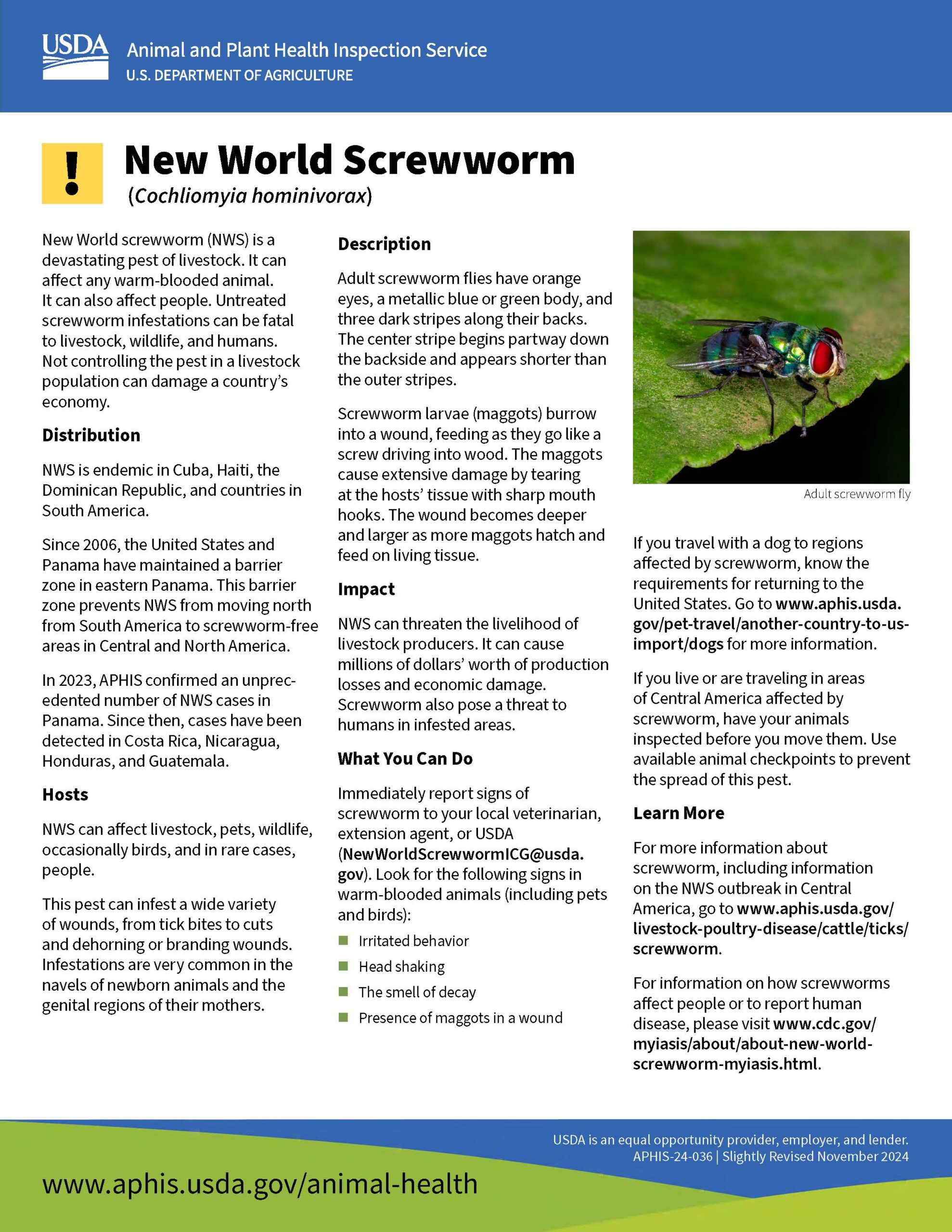
The screwworm (*Cochliomyia hominivorax*), a parasitic fly whose larvae burrow into living tissue, was declared eradicated from the U.S. in the 1980s through a decades-long sterile insect release program. But by 2024, infestations resurfaced in Florida’s citrus groves and Texas cattle ranches, forcing a rapid pivot in USDA strategy. The current outbreak—confirmed in at least seven states—has already cost producers an estimated $200 million in lost revenue and treatment costs, according to internal USDA projections shared with state agricultural agencies.
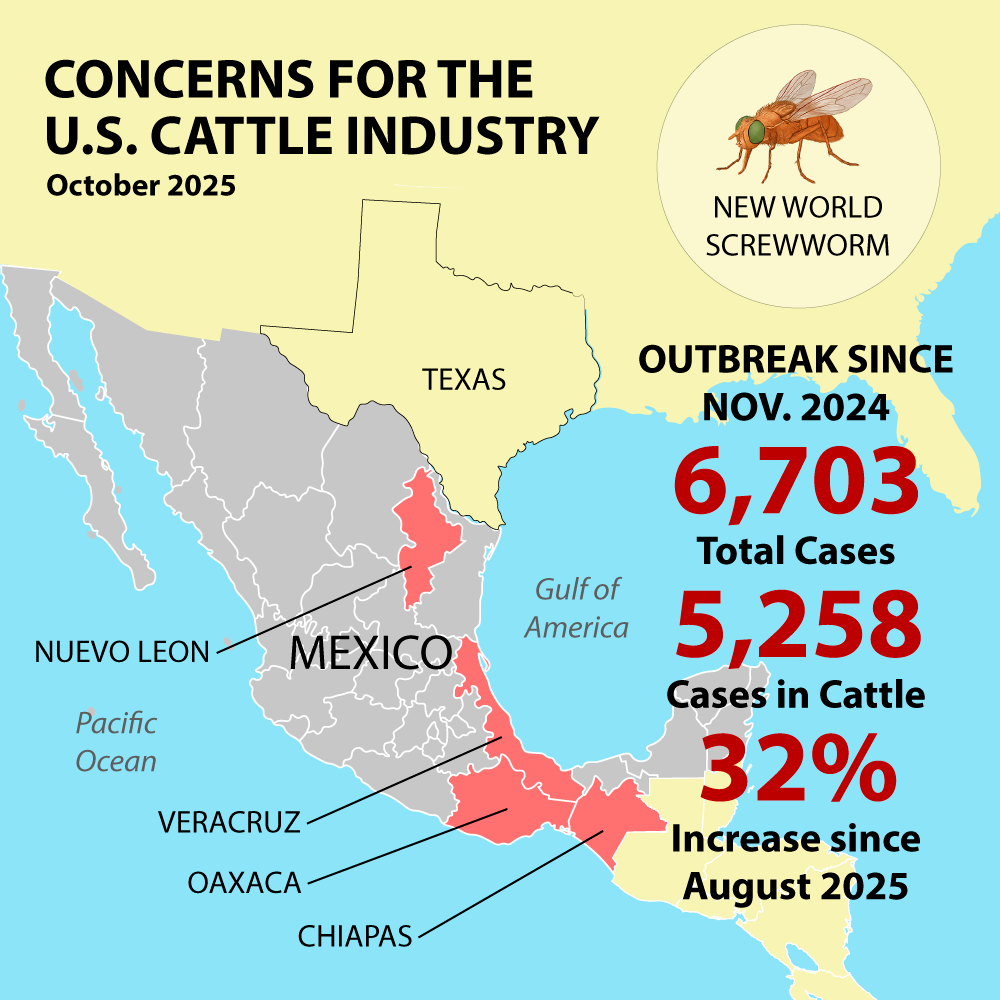
The USDA’s response hinges on two primary tools: the sterile insect technique (SIT), where millions of sterile male flies are released to outcompete wild populations, and a newly expanded canine detection program. The latter deploys specially trained dogs to sniff out screwworm-infested livestock, a method pioneered in Mexico’s successful 2020-2023 eradication campaign. “This isn’t just about containing the outbreak—it’s about rewriting the playbook for how we handle invasive species in the age of climate change,” said a senior USDA official, speaking on condition of anonymity due to ongoing interagency coordination.
Climate models cited in a May 2026 USDA briefing suggest that warmer winters and shifting rainfall patterns in the Southeast have created ideal conditions for screwworm proliferation. The parasite’s return underscores the fragility of eradication efforts, particularly as global trade and migration routes expand. Unlike traditional chemical treatments, which can harm non-target species, SIT and canine detection offer precision—though they require sustained funding and public-private partnerships.
Sterile Flies and the Logistics of Eradication
The USDA’s SIT program operates through a network of rearing facilities, including a newly upgraded $45 million plant in Gainesville, Florida, which can produce 100 million sterile flies per week. These flies, irradiated to prevent reproduction, are released in targeted zones where screwworm activity is detected. The process is labor-intensive: each sterile male must be released within a specific timeframe to maximize mating competition with wild flies.
Challenges remain. In Texas, where cattle herds are dense and rangelands span millions of acres, aerial releases have proven less effective than ground-based deployments near known infestation hotspots. “The biology of the screwworm favors stealth—larvae can go undetected for weeks,” noted Dr. Elena Vasquez, an entomologist with the USDA’s Agricultural Research Service. “Our canine teams are the early-warning system we didn’t have in the 1980s.”
Funding for the program comes from a combination of USDA disaster relief allocations and bipartisan appropriations passed in March 2026. However, some agricultural lobby groups have criticized the pace of deployments, arguing that private producers should bear a larger share of costs. The USDA has countered that the outbreak poses a national security risk, as screwworm infestations can disrupt food supply chains and tourism in affected regions.
Canine Detectives: The Nose Knows More Than Lab Tests
The USDA’s canine detection program, launched in collaboration with the University of Florida’s Institute of Food and Agricultural Sciences, has deployed 47 dogs trained to identify screwworm larvae in livestock manure, carcasses, and even live animals. The dogs—primarily Belgian Malinois and Labrador Retrievers—are paired with handlers who conduct sweeps of high-risk areas, including slaughterhouses and feedlots.
Preliminary data from Florida’s pilot program shows detection rates exceeding 90% in controlled tests, far outpacing traditional lab-based methods that can take days. “A dog can tell you in seconds whether a carcass is infested,” said Captain Mark Reynolds of the Florida Department of Agriculture and Consumer Services. “That’s the difference between containing an outbreak and watching it spread.”
Training for the canines involves exposure to screwworm larvae in controlled environments, followed by field exercises in areas with historical infestations. The program has faced logistical hurdles, including the need for specialized transport and housing for the dogs during deployments. Critics have also raised ethical concerns about the use of live larvae in training, though USDA officials emphasize that all materials are sourced from regulated facilities.
State-Level Responses and the Road Ahead
While the USDA coordinates the federal response, individual states have implemented supplementary measures. Florida’s Department of Agriculture has partnered with citrus growers to establish “screwworm-free zones” in central and southern regions, using baited traps and increased surveillance. Texas, meanwhile, has allocated $12 million in emergency funds to support ranchers in implementing preventive treatments.
The long-term success of the eradication effort hinges on several factors: sustained funding, interagency cooperation, and public compliance with reporting requirements. The USDA has warned that complacency could lead to a resurgence, as seen in Mexico’s 2023 setback when infestations flared up in border regions. “This isn’t a one-year project—it’s a decade-long commitment,” said a USDA spokesperson.
Looking ahead, the agency is exploring the use of gene-editing techniques to create flies resistant to screwworm larvae, though such methods remain in experimental phases. In the immediate term, the focus remains on scaling up SIT and canine detection programs, with an eye toward expanding into new high-risk states like Georgia and Alabama.
Why This Outbreak Matters Beyond Agriculture
The screwworm’s resurgence is more than an agricultural crisis—it’s a harbinger of challenges posed by climate change and globalization. The parasite’s ability to exploit warming temperatures and disrupted ecosystems mirrors trends seen with other invasive species, from ticks in the Northeast to mosquito-borne diseases in the South. “We’re seeing the early stages of a broader pattern,” said Dr. Vasquez. “Species that were once contained are now on the move.”
For producers, the economic stakes are clear: a prolonged outbreak could push marginal operations out of business, exacerbating rural depopulation trends. For consumers, the risk is less direct but no less real—disruptions in livestock and crop production can lead to higher food prices and supply shortages. The USDA’s response, while innovative, is a reminder that modern agriculture must adapt to a world where old threats return in new forms.
As of June 5, 2026, the USDA reports that screwworm activity has stabilized in Florida but remains active in Texas and Louisiana. The agency’s next major milestone is the expansion of canine detection teams to cover 80% of high-risk counties by September, with a full assessment of the SIT program’s effectiveness scheduled for early 2027.
