

Evidence of the Transient Maritime Anomaly
The maritime incident began to unfold in the final week of May 2026. According to satellite imagery analyzed by the maritime monitoring group SeaLight, a small, reflective object appeared near the entrance to the inner waters of Scarborough Shoal. The imagery, captured on May 28, suggested the presence of a fixed object rather than a transient optical phenomenon. This assessment was supported by additional data from Vantor, whose satellite photographs from May 27, 28, and 29 showed a peculiar structure—suspected to be a raft or buoy—accompanied by a barrier stretched across the water.
By June 1, the anomaly had vanished. The rapid appearance and disappearance of the object have left Philippine authorities working to identify its origin and purpose. Speaking on the sidelines of the Shangri-La Dialogue in Singapore on May 30, Secretary of National Defense Gilberto Teodoro acknowledged the reports but urged caution regarding immediate conclusions.
“I still don’t know what that is… Sometimes, they put buoys and other things there. It could be something from outside that drifted into the shoal.”Gilberto Teodoro, Secretary of National Defense of the Philippines, via Thanh Nien
While the Philippine government continues its investigation using various surveillance tools, the incident has highlighted the volatile nature of the Scarborough Shoal, which has been under de facto Chinese control since a tense naval standoff in 2012. The shoal, located 240 kilometers west of the Philippine island of Luzon, remains a frequent point of friction between Manila and Beijing, particularly regarding fishing rights and territorial sovereignty.
Escalation of Chinese Naval and Aerial Patrols
The discovery of the structure coincided with an intensified Chinese military presence in the area. On May 31, the Southern Theater Command of the People’s Liberation Army (PLA) announced that its naval and air units had conducted combat-readiness patrols in the territorial waters and airspace surrounding the shoal. The Chinese Coast Guard also confirmed it had carried out law enforcement patrols near Scarborough Shoal, claiming these actions were necessary to address activities that violated regional laws and regulations.
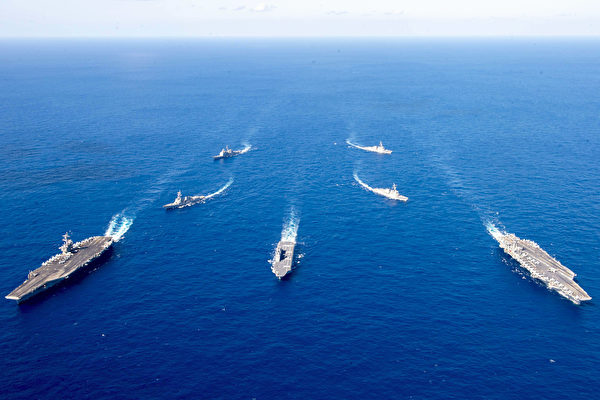
This uptick in activity was described by the PLA as an effective countermeasure to manage what they termed “provocations.” Reports from state-aligned outlets indicate that China has been consistently increasing its patrol frequency throughout May to protect what it defines as its national sovereignty and security. These operations occurred immediately following a five-day joint military exercise conducted by the Philippines and the United States in the same vicinity, underscoring the high-stakes nature of the territorial disputes.
Manila’s Strategic Defense and Resilience

Despite recent efforts to stabilize US-China relations—highlighted by a summit between President Donald Trump and leader Xi Jinping in mid-May—the Philippines maintains that its security situation remains precarious. Secretary Teodoro has been vocal about the persistent risks his nation faces, characterizing the situation as a long-term challenge that requires unwavering resolve.
In his remarks at the Shangri-La Dialogue, Secretary Teodoro emphasized that for the Philippines, there is no alternative to maintaining a strong defense posture. He argued that the nation is currently navigating a “serious threat” from China that encompasses both territorial integrity and political influence.
“For countries like the Philippines, which are facing a serious threat from China both territorially and politically, we have no choice but to maintain substantial resilience and stand up against China’s aggressive actions.”Gilberto Teodoro, Secretary of National Defense of the Philippines, via Trí Thức VN
The Philippine government’s Special Task Force on the West Philippine Sea has reaffirmed its commitment to upholding international law and protecting the country’s maritime rights. While the immediate mystery of the Scarborough structure remains unresolved, the incident serves as a bellwether for the ongoing tensions in the South China Sea. As of early June 2026, the area remains under close observation, with both Manila and Beijing continuing to assert their respective claims in a region where diplomatic cooling at the global level has yet to translate into stability on the water.
