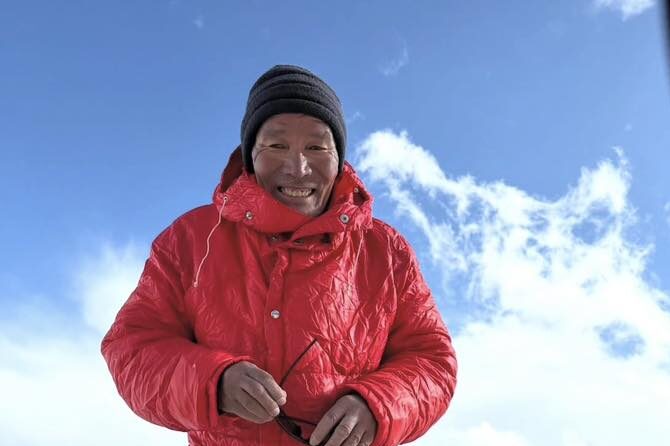
A Nepali climbing guide, Hillary Dawa Sherpa, has been rescued from Mount Everest after six days lost in the mountain’s most treacherous terrain, his survival defying the odds of the “death zone” where oxygen deprivation and subzero temperatures claim lives daily. Found crawling toward Base Camp on June 4, 2026, by a pollution control team, Dawa—suffering from severe frostbite—was airlifted to Kathmandu for emergency treatment. His ordeal exposes systemic failures in Everest’s commercial climbing industry, where cost-cutting permit-sharing and rushed operations left a season record-breaker with a grim human toll.
How a Garbage Team Became the Mountain’s Lifeline
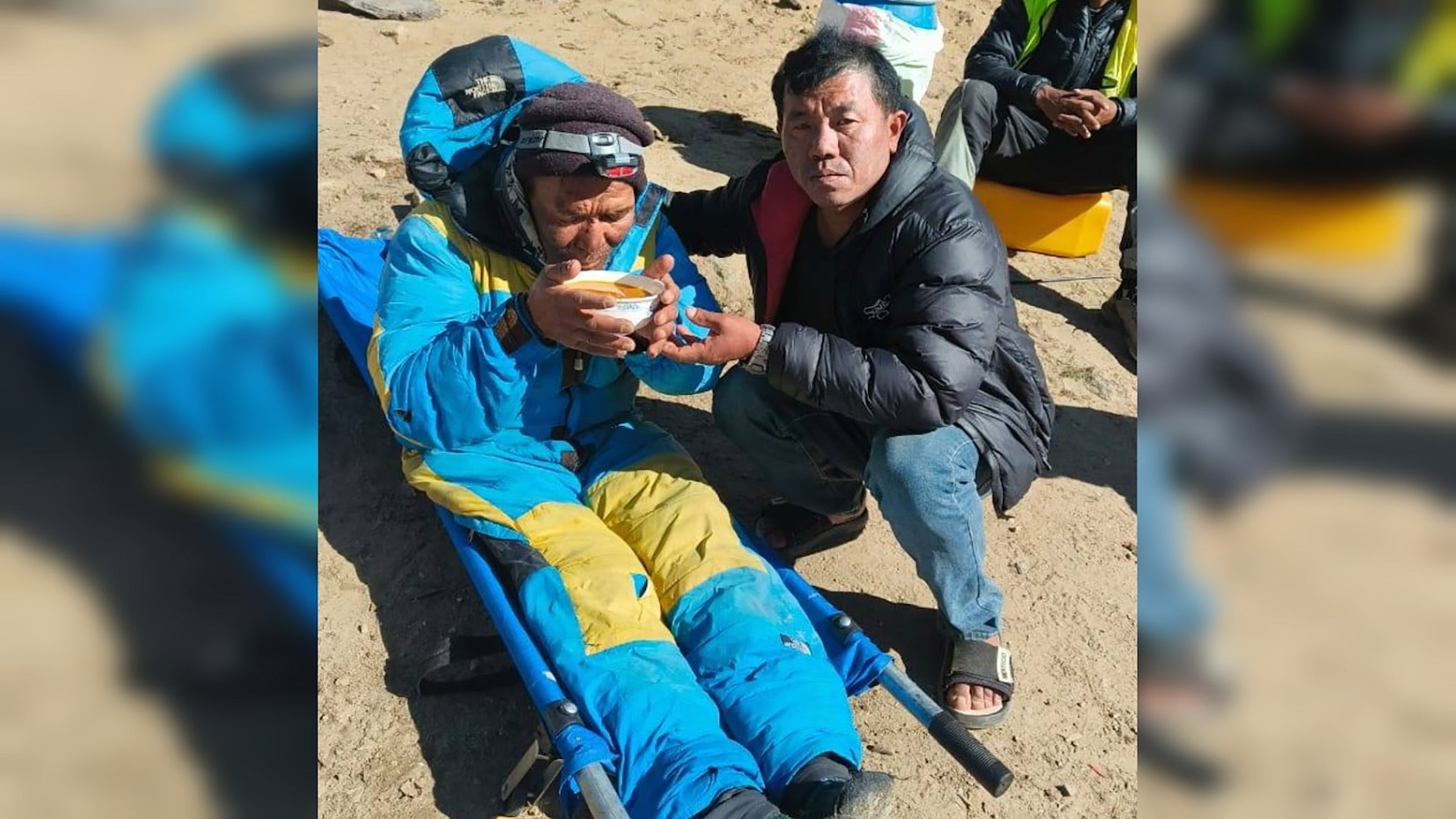
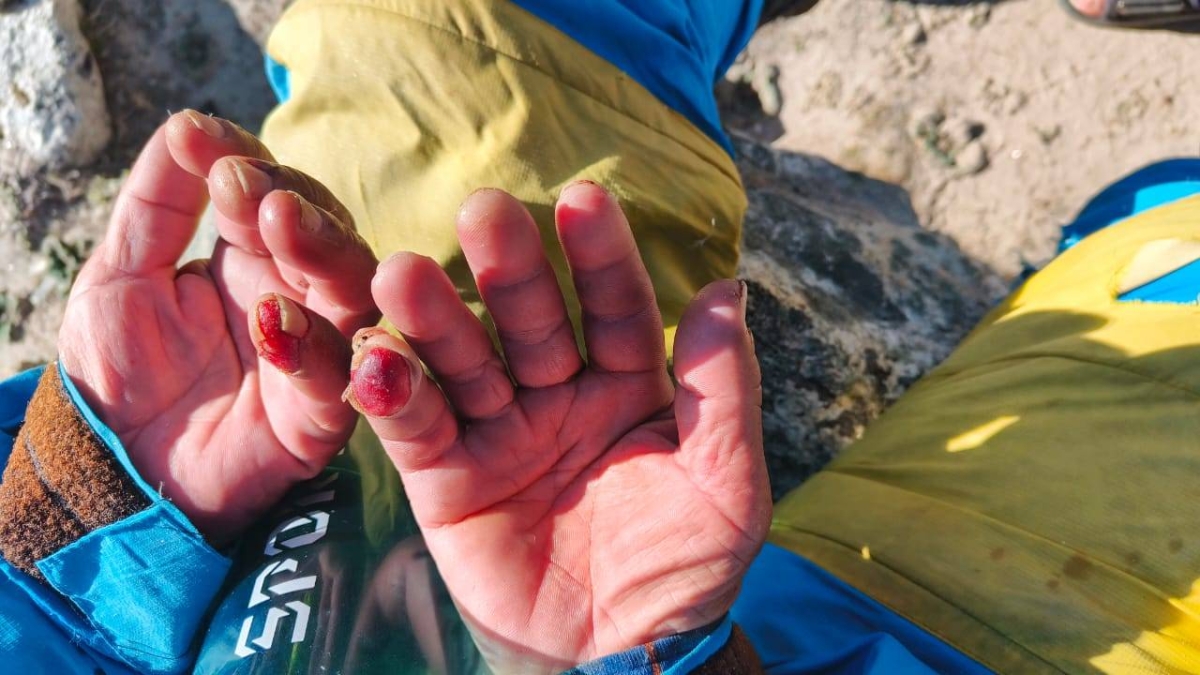
The rescue unfolded not through a dedicated search-and-rescue mission, but by accident: a routine cleanup crew from the Sagarmatha Pollution Control Committee (SPCC) spotted Dawa’s figure moving toward Base Camp. Tshering Sherpa, CEO of the SPCC, confirmed to Outside that Dawa was “crawling down” and suffering from frostbite so severe his hands were unusable. The images of him—still in his summit suit, eating and resting in Base Camp—were shared by a Nepali climber on Facebook, later verified by his family. Lakpa Sherpa, co-founder of 8K Expeditions, told Outside that Dawa had descended under his own power, a feat that would have required superhuman will in conditions where climbers often succumb to exhaustion or altitude sickness.
cluster (priority): Explorersweb »
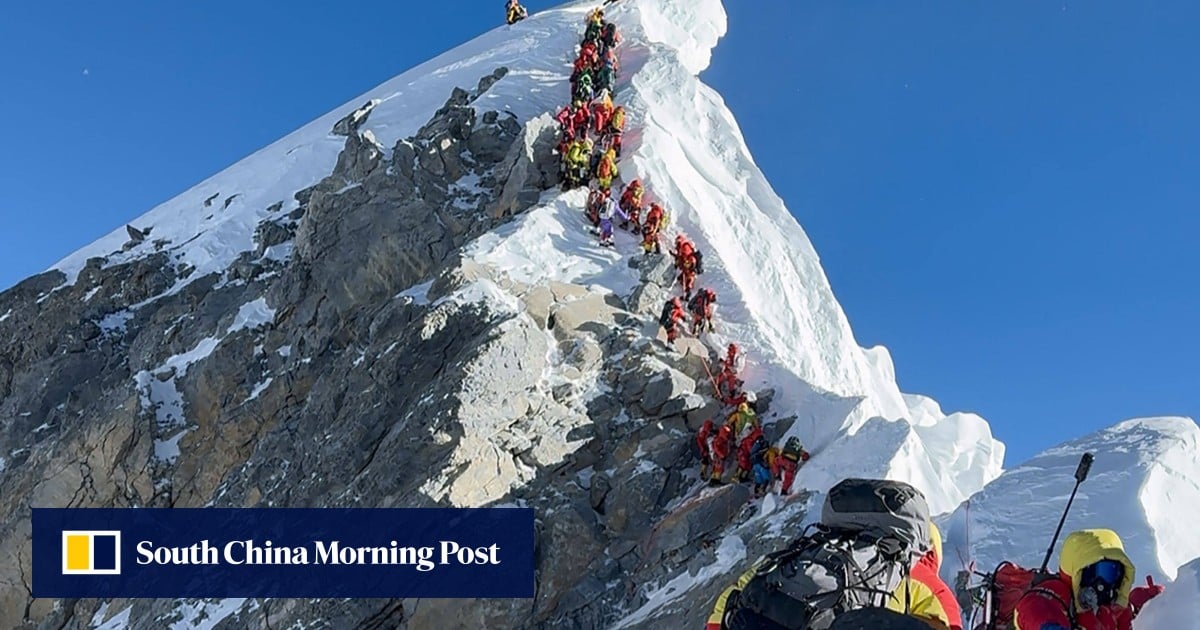
Dawa’s rescue came after a six-day disappearance that began on May 29, the final day of Everest’s busiest climbing season on record. With 950 climbers, guides, and high-altitude workers reaching the summit this year, the mountain’s usual chaos was amplified. Yet amid the record-breaking traffic, Dawa was abandoned near the Yellow Band—just above Camp III—after his Polish client abandoned the summit bid due to frostbite. While other climbers descended safely, Dawa was left behind, with no immediate rescue attempt launched. The Himalayan Times reported that “They waited for Dawa until the next day, but he didn’t come.” By May 31, the expedition’s members had returned to Base Camp, and the critical ladders across the Khumbu Icefall—Everest’s most lethal section—were removed. Dawa was still 23,300 feet above.
The Industry’s Dark Secret: Permit-Sharing and Negligence
Dawa’s story is not just one of survival—it’s a damning indictment of Everest’s commercial climbing industry. Himalayan Traverse Adventure, the outfit Dawa worked for, had not secured its own climbing permit. Instead, it shared one with 8K Expeditions, a common but controversial cost-cutting practice in Nepal’s climbing economy. Lakpa Sherpa, managing director of 8K Expeditions, told The Himalayan Times that “Himalayan Traverse obtained an Everest permit through 8K Expedition, but it handled the expedition entirely on its own.” This loophole meant that when Dawa went missing, questions of responsibility became blurred. Pemba Sherpa, founder of 8K Expeditions, told Explorersweb that his company had officially closed the Everest season on May 29, leaving no obligation to intervene. “We had only managed the climbing permits for their two clients,” he said, adding that the real negligence was the lack of an immediate ground search by Sherpas who could have helped Dawa descend.
cluster (priority): The Himalayan Times
The timeline of events reveals a pattern of recklessness. Dawa’s team summited at 5 p.m. on May 28—an unacceptably late hour for oxygen-assisted climbers, who typically summit between 6 a.m. and 10 a.m. to avoid exhaustion and altitude sickness. Pemba Sherpa noted that “most teams need less than 10-12 hours from Camp 4, even on the most crowded days.” Dawa’s team, however, took 18 hours to reach the summit, suggesting poor pacing and poor judgment. When the Polish client turned back due to frostbite, Dawa was left alone in the death zone—no food, no oxygen, no rescue plan.
What Happened in the Six Days No One Searched for Him
For six days, Dawa was alone between Camp III and the Khumbu Icefall, a stretch of the mountain where temperatures plummet to -40°C (-40°F) and winds exceed 100 mph. The Himalayan Times described his ordeal in harrowing detail: “He had nothing—no food, no bottled oxygen, no rescue team looking for him.” Stranded at extreme altitude without supplemental oxygen, his body would have been fighting for survival in conditions where even experienced climbers rarely last more than a few hours. Yet Dawa moved downward, slowly and painfully, covering the distance that separates life from death on Everest.
How A Nepali Sherpa Rescued A Climber From Everest 'Death Zone' | Insider News
The lack of a rescue effort is particularly damning. Pemba Sherpa told Explorersweb that “the real negligence is that the moment Hillary Dawa lost contact with Base Camp, they should have sent crew members—other Sherpas—immediately up on a ground search.” Sherpas are renowned for their ability to navigate Everest’s upper reaches, and a team of them could have located and assisted Dawa. Instead, the expedition dismantled the route below Camp 1, leaving no way to reach him. It wasn’t until June 3—six days later—that 8K Expeditions launched a helicopter search at the family’s request. The helicopter found no trace of Dawa, and the family was left with the agonizing uncertainty of whether he was alive or dead.
The Aftermath: Record Summits, Human Cost, and Unanswered Questions
Dawa’s rescue comes as Nepal celebrates a record-breaking climbing season. With over 1,000 summits for the first time in history, the 2026 spring season was a financial boon for the country, generating millions in revenue from permits, guides, and tourism. Yet behind the statistics lies a grim reality: five deaths on the mountain this season, and now the near-fatal abandonment of a Sherpa. Khim Lal Gautam of the Nepal Tourism Office told Outside that “We are so deeply saddened that at the very end this tragedy occurred. It reminds us how dangerous the mountain really is.” The irony is stark: Everest’s commercialization has made it more accessible, but also more perilous, as cost-cutting measures and rushed operations prioritize profits over safety.
cluster (priority): South China Morning Post
Dawa’s survival raises urgent questions about accountability. Who is responsible for his abandonment? Was it Himalayan Traverse, which left him behind? Or 8K Expeditions, which shared the permit but did not intervene? The Nepal Tourism Office has not issued a statement on whether legal action will be taken, but the incident has already sparked outrage among climbers and Sherpas alike. Pemba Sherpa’s admission to Explorersweb that “there were serious mishaps” suggests that this is not an isolated case. The practice of permit-sharing is widespread, and the lack of oversight leaves Sherpas vulnerable.
What Comes Next: Dawa’s Recovery and the Industry’s Reckoning
As of June 4, Dawa is in Kathmandu undergoing treatment for frostbite, which could take months to heal. His condition remains critical, and his family has expressed relief that he is alive but frustration at the circumstances that led to his abandonment. The Nepal Tourism Office has not yet commented on whether it will investigate the incident, but the pressure is mounting. Climbers and Sherpas alike are demanding answers—and reforms.
The broader implications for Everest’s climbing industry are significant. The mountain’s commercialization has turned it into a business, with permits sold to the highest bidder and safety often an afterthought. Dawa’s ordeal exposes the human cost of this approach. While Nepal celebrates its record-breaking season, the question remains: at what price? The rescue of Hillary Dawa Sherpa is a miracle, but it should also serve as a wake-up call. The industry’s reliance on cost-cutting measures and the exploitation of Sherpas cannot continue unchecked. If another climber—or another Sherpa—is left behind, the mountain’s reputation as a graveyard will only grow.
For now, the focus is on Dawa’s recovery. His survival is a testament to the human spirit, but it also underscores the urgent need for reform in an industry that has grown too focused on profits and too indifferent to the lives of those who make the summits possible.
Bio:
John Smith is the World Editor at Headlinez.News, leading the global news desk and overseeing international correspondents. With 15 years of field experience across Europe, the Middle East, and Asia, John has reported from conflict zones, summits, and humanitarian missions. His deep understanding of geopolitical trends and cross-cultural reporting ensures that readers receive accurate, balanced perspectives on world events that shape the global narrative.
Expertise: International reporting, geopolitics, diplomacy, conflict journalism, foreign policy analysis.
Location: London, United Kingdom