
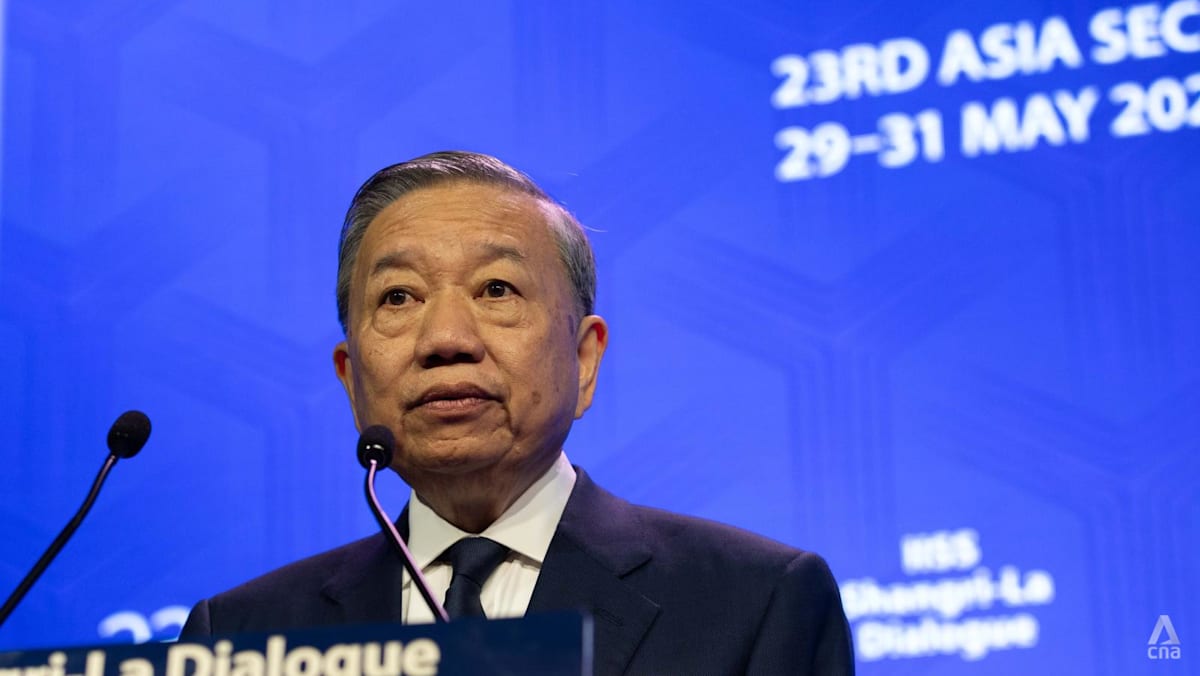
Vietnam’s President To Lam delivered a high-stakes address at the 23rd Shangri-La Dialogue in Singapore on May 29, 2026, outlining three global crises—eroding international law, flawed development models, and fractured strategic trust—while urging a rules-based approach to regional security. The speech, his first major foreign policy statement since assuming the presidency in April 2026, coincided with a state visit to Singapore that underscored bilateral economic ties and regional diplomacy.
Three Crises and Solutions: Lam’s Keynote Address
Lam’s keynote at the Shangri-La Dialogue, Asia’s premier defense forum, framed global instability as a convergence of three interlinked challenges. “The three crises confronting our world today are not inevitable realities that we are bound to accept,” he declared, calling for reinforced international law, inclusive growth, and “dialogue and transparency.” The speech, delivered to defense ministers, generals, and analysts, emphasized that the Asia-Pacific—“the world’s most dynamic centre of growth”—must also become a hub for solutions to mounting pressures like supply chain fragmentation and climate change.
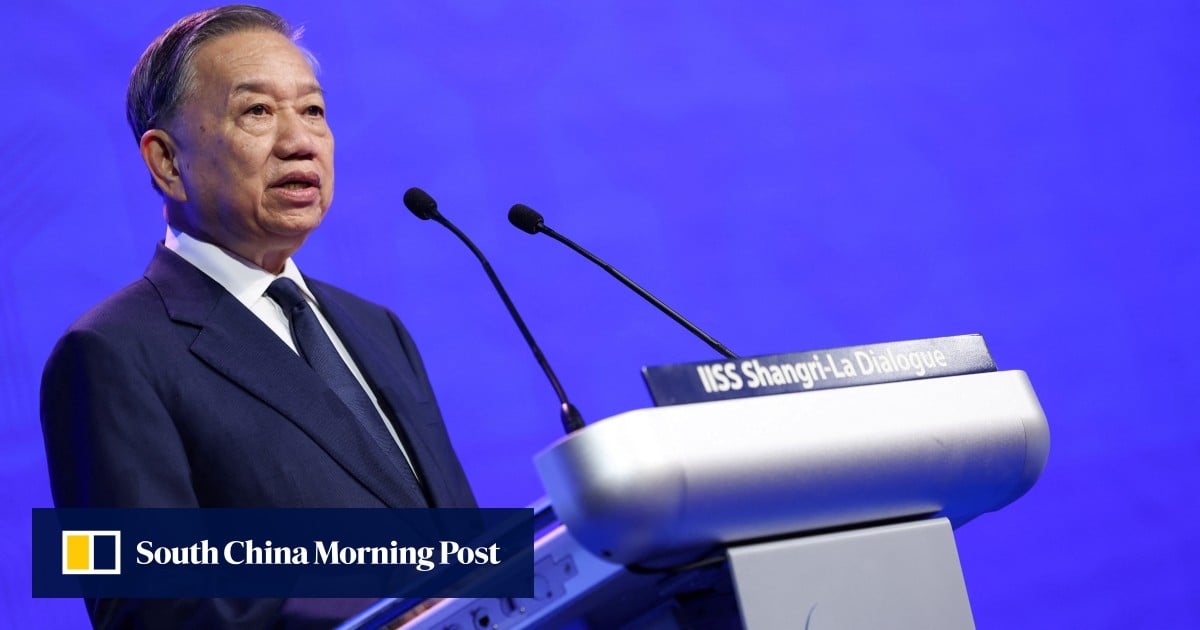

“A durable regional order cannot be built upon perpetual fear and mutual distrust,” Lam warned, citing the “erosion of strategic trust” as a silent but dangerous crisis. He argued that states must manage differences through “responsible commitment,” ensuring competition remains “bounded, responsible, and predictable.” His remarks echoed a broader push for multilateralism, with the Vietnamese leader stating, “all countries with legitimate interests can have a role to play in contributing to its peace, stability, and development.”
The address drew attention to China’s low-key presence at the event. While U.S. Defense Secretary Pete Hegseth and counterparts from Australia, Japan, and France attended, China’s defense minister, Dong Jun, skipped the forum for the second consecutive year. Instead, Beijing sent military scholars from the People’s Liberation Army National Defence University, a move critics called a missed opportunity for engagement.
Bilateral Ties and Economic Cooperation
Lam’s speech was part of a broader state visit to Singapore, the first leg of his tour of ASEAN nations since becoming head of state. The visit highlighted deepening ties between the two nations, with bilateral trade in goods reaching $40 billion in 2025 and Singapore accounting for nearly $10.2 billion in foreign direct investment to Vietnam in 2024. The two countries upgraded their relationship to a Comprehensive Strategic Partnership in March 2025, a milestone achieved during Lam’s previous visit to Singapore as Communist Party chief.
During the visit, Lam and Singapore’s President Tharman Shanmugaratnam hosted a state banquet, and the leaders planted a Hopea recopei tree—a symbol of “deep roots and flourishing” bilateral relations. They also discussed plans for the next phase of the Vietnam-Singapore Industrial Parks (VSIP 2.0), focusing on smart technology, sustainability, and higher-value investments. The VSIPs, a joint venture between Sembcorp and Vietnam’s Becamex, currently operate 22 parks across 15 provinces.
Regional Dynamics and the Role of External Powers
Lam’s speech reflected Vietnam’s balancing act in a region increasingly defined by U.S.-China rivalry. While advocating for “responsible commitment” from all nations, he avoided direct criticism of either superpower, instead framing the Asia-Pacific as a “theatre of intense strategic competition” where “defensive measures may even be perceived as provocation.” His remarks echoed a broader ASEAN sentiment of neutrality, though analysts noted Vietnam’s growing alignment with U.S. security initiatives.
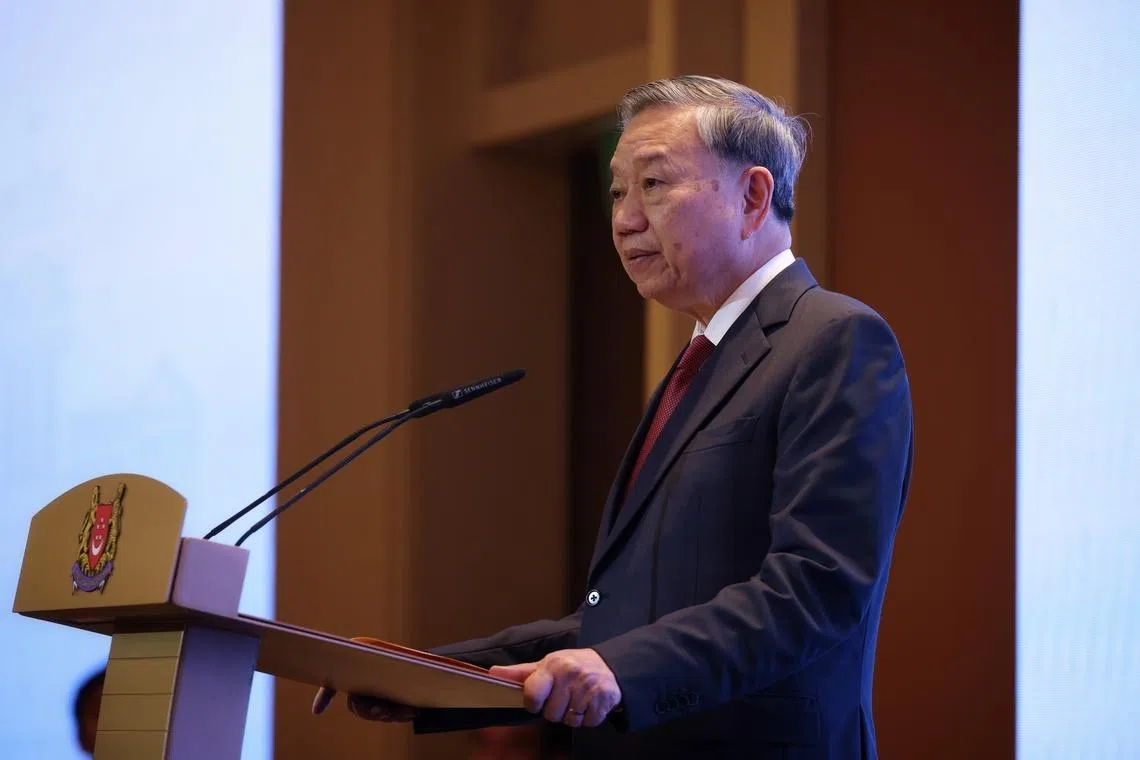
The Shangri-La Dialogue, hosted by the International Institute for Strategic Studies (IISS), also featured U.S. Defense Secretary Pete Hegseth and Japanese Defense Minister Shinjiro Koizumi. Lam’s emphasis on “strategic trust” resonated with Singapore’s own foreign policy, which prioritizes multilateral engagement and economic interdependence. “This is the world’s most dynamic centre of growth, but also a theatre of intense strategic competition,” he said, underscoring the need for pragmatic cooperation amid rising tensions.
China’s Absence and the Path Forward
China’s absence from the Shangri-La Dialogue underscored the region’s geopolitical fissures. While Beijing has historically been a key player in ASEAN forums, its delegation this year was limited to academic and military experts, a shift seen as a strategic signal. Lam’s call for “dialogue and transparency” contrasted with China’s more assertive posture in the South China Sea, where territorial disputes remain unresolved.
Looking ahead, the coming months will test Vietnam’s ability to navigate these dynamics. Lam’s presidency, marked by a dual role as Communist Party chief and state leader, positions him to shape the country’s foreign policy amid shifting global alliances. The VSIP 2.0 project and ongoing diplomatic engagements with Singapore and the U.S. suggest a focus on economic integration and security partnerships, even as Vietnam seeks to maintain its non-aligned tradition.
As Lam’s speech made clear, the Asia-Pacific is at a crossroads.
