
Okay, here’s a short introductory paragraph designed to be prepended to the provided HTML snippet (which appears to be a series of repeated <div> tags):
This document appears to be a series of nested, empty div elements. While seemingly simple, this structure is often used in web development for layout purposes, testing, or as a placeholder for dynamically generated content. Understanding how these elements interact and are styled with CSS is crucial for front-end web design and functionality.
Description of Choices:
* Acknowledges the unusual structure: It immediately notes the repetitive nature of the code.
* Provides context: Suggests why someone might create such a thing (layout, testing, dynamic content).
* Hints at relevance: Mentions CSS and front-end development, indicating a reason to care about this structure.
* Keeps it concise: Stays within the 2-4 sentence goal.
* Uses code tags for clarity: When referencing the div element, it is wrapped in <code> tags to improve readability.
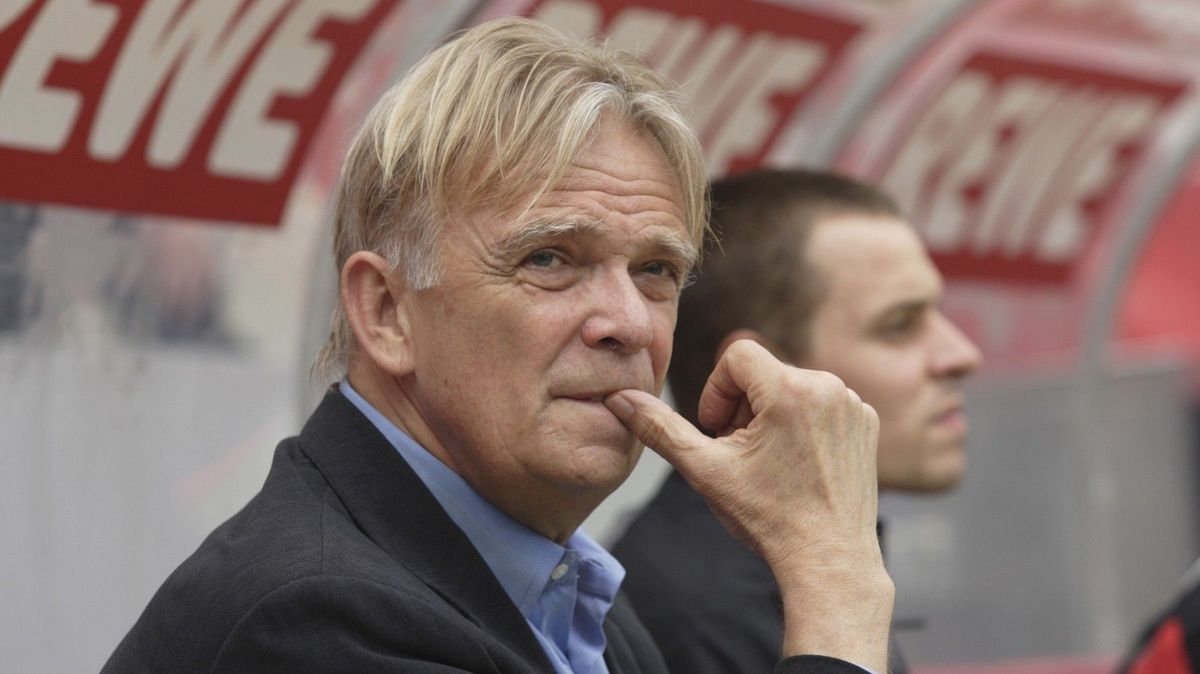
Volker Finke, a figure more renowned for his coaching acumen than his playing career, played a pivotal role in establishing a small regional football club in southwestern Germany. Facing financial challenges common to clubs in less affluent areas, Finke, acting as both manager and strategist, devised innovative solutions to maintain the club’s competitive standing.
Despite overseeing three relegations, Finke remained committed to the club, quickly securing promotions that allowed him to rebuild. His meticulous approach ultimately led to the club’s sustained presence in the Bundesliga and participation in European competitions – a trajectory that draws parallels to the current situation facing their opponents, Plzeň.
What’s more surprising heading into the match: Freiburg’s second-place standing in the Europa League table, or Plzeň’s eighth-place position?
The shift to the new European competition format, with its league-style standings encompassing eight different opponents in both the Champions League and Europa League, remains a point of contention. This change, which eliminates traditional group stages, is difficult to follow and makes it challenging to assess the relative value of Freiburg’s second-place ranking versus Plzeň’s eighth.
The primary driver behind these changes appears to be increasing revenue through expanded television coverage and sponsorships. This raises questions about the increasing commercialization of football and whether the sport’s integrity is being compromised in the pursuit of profit. Clubs are now employing larger squads – often around 30 to 35 players, compared to 18 to 25 in the past – reflecting this trend.
Is this evolution entirely detrimental?
While not entirely negative, football is undeniably changing under the influence of commerce and media. The ability of clubs to adapt to these changes – and whether they see value in increased matches and potential economic benefits – will be crucial. The current rules, which prevent teams eliminated from the Champions League from dropping into the Europa League and then the Conference League, also raise questions.
Returning to Freiburg and Plzeň, is it surprising to see two relatively regional clubs performing so well?
Freiburg’s performance is certainly noteworthy. Their recent 3-1 victory at Nice, following a somewhat underwhelming home win against Basel, demonstrated their capabilities against strong competition. Such results are a positive indicator for the club. Plzeň’s strong start, remaining undefeated and securing a win against AS Roma, has also been impressive.
What kind of reputation does Czech football have in Germany?
Historically, German clubs have always been interested in scouting players from abroad, and it’s fascinating to track where they look. In the 1990s, Freiburg began actively scouting in the Czech Republic. Currently, there are five Czech players in the Bundesliga, a significant decrease from the four times that number at the beginning of the millennium.
Patrik Schick is the most prominent Czech player in the Bundesliga today. When healthy, he consistently scores goals and competes for the league’s top scorer title.
What comes to mind when you think of Czech football?
Slavia Prague immediately springs to mind, particularly their run in the UEFA Cup. At the time, that was a significant achievement for a club the size of Freiburg. Early in my tenure, the club president set the goal of simply staying in the second division, which we accomplished. The following year, we were promoted to the Bundesliga, and then, unexpectedly, finished third, qualifying for the UEFA Cup. Our first match was against Slavia. Czech football has lost some of its prominence, but it remains one of the strongest among smaller and mid-sized footballing nations, ahead of countries like Poland, Hungary, and Croatia at the club level. You are in a better position than Austria, from my perspective.
Which Czech players have left the biggest impression on you?
Jan Koller immediately comes to mind. Not just because of his size. I don’t follow Czech football as closely these days. Furthermore, almost every player now has an agent or representative who promotes them to clubs, which is a very different system than 30 years ago when I had a better overview of European and Czech players because they were more affordable. I recall Viktoria Plzeň being the most successful Czech club of the last decade, both in terms of domestic titles and appearances in the Champions League. However, if you asked me about African football, I could provide much more detailed information. I still maintain my contacts there and am often asked for consultations or assistance regarding players from Africa.
How do German footballers typically view opponents from the Czech Republic? Do they underestimate them?
I don’t believe Freiburg will underestimate Plzeň. Not at all. Freiburg is still not in a position to consider themselves a giant. They have also never spent so much money on summer transfers as they have this year – nearly 33 million euros, an incredible figure for them. Everyone feels a sense of responsibility, and they approach the game accordingly.
I can imagine that in the minds of Czech players, something like this will kick in: If I have a good game, maybe it will open doors for me in the Bundesliga.
How did you guard against underestimating opponents during your own coaching career?
Simply by constantly reminding players that we weren’t among the giants who could afford to take things for granted – not in the Bundesliga, and certainly not in European competitions. I observed that underestimation is most common among big teams from England, France, Italy, Germany, and Spain. When they play against smaller teams, players often believe it will be easy. Then come unexpected results. That’s what makes football so interesting. I’ll repeat a well-worn phrase: there are no truly small teams anymore. Of course, a club from Luxembourg will likely never reach the semi-finals of a European competition. That’s just not going to happen.
In club football, there’s a third group, sometimes called the minnows. If they beat someone from the second group, that’s good, but…
Let me perhaps refine that with the example of Freiburg. In the last three years, we’ve won all three home games against Bayern Munich. And that creates further motivation. Therefore, I believe that the match against a German club will be a challenge for Plzeň, even if it’s a relatively “small” club like Freiburg. I can imagine that Czech players will be thinking: If I have a good game, maybe it will open doors for me in the Bundesliga.
What does SC Freiburg prioritize today?
In addition to their ambitious youth, they prioritize stability. This began to take shape under the previous long-term coach, Christian Streich, who brought in players like Christian Günter, who became captain, and Nicolas Höfler. I appreciate the generational change, with more and more young players becoming key players, and, according to available information, Premier League clubs are showing interest in them. That’s a great indicator for a club like Freiburg.
Some of Freiburg’s young players have already left, though. You always tried to prevent that, didn’t you?
That’s a fair assessment. I always told players that before the age of 25, they should play where they grew up, where they become a first-team player and continue to develop. Only then should they look around to see if there’s a place for them in a bigger club. That’s why I always wanted to keep them. They shouldn’t immediately chase big money.
What are your memories of the 1995 match against Slavia Prague, which was also Freiburg’s debut in European competitions?
I still have it vividly in my mind, and I will until the end of my life. I was actually quite nervous about it because I felt it came too soon. We weren’t fully prepared. In the two-legged format at the time, we paid the price for our inexperience. But five years later, after our second appearance in the competition, we reached the third round, where we were unfortunately eliminated by Feyenoord Rotterdam, who went on to defeat Borussia Dortmund in the final.
Was that one of your coaching milestones?
Certainly. Also, because we knew that Slavia had a rich history. At that time, they were performing well, reaching the semi-finals of the UEFA Cup. I also remember one interesting detail. We had a masseur on our staff who came from the Czech Republic. Unfortunately, I can’t recall his name.
Yes, that rings a bell. I asked him for all possible phone numbers of people not only in the Czech Republic to gather as much information about Slavia as possible. Back then, it didn’t work like it does now, when you can find everything on the internet. So, I gathered recordings of Slavia’s matches from the domestic league, had newspaper articles translated. It was very close, and we lost at home, 1-2. And I admit, even after all these years, that Slavia surprised us.
