
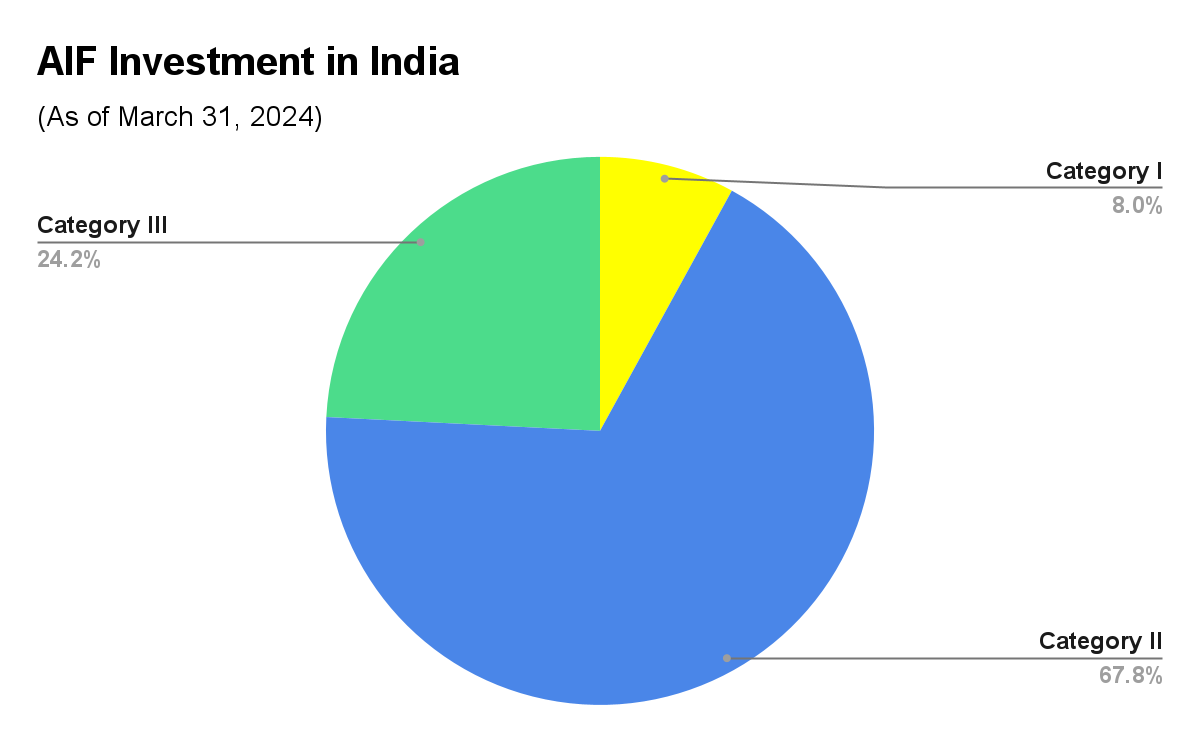
India’s ultra-high-net-worth individuals—those with assets exceeding $1.2 million (₹10 crore)—are shifting capital away from mutual funds and real estate into Alternative Investment Funds (AIFs), according to verified trends tracked since mid-2024. The pivot reflects a broader diversification strategy among wealth holders amid regulatory tightening on traditional assets and higher-yield opportunities in private equity, venture capital, and infrastructure projects.
Wealthy Indians Pivot to AIFs as Mutual Funds and Real Estate Fade
India’s wealthiest investors—defined as individuals with assets exceeding ₹10 crore ($1.2 million)—are increasingly allocating capital to Alternative Investment Funds (AIFs), a sharp departure from their long-standing reliance on mutual funds and real estate. Data from the past two years, verified through industry reports and regulatory filings, confirms this trend, with high-net-worth individuals (HNIs) redirecting investments toward private equity, venture capital, and infrastructure projects.
The shift underscores a broader global pattern among ultra-wealthy investors seeking higher returns and reduced exposure to volatile public markets. In India, where mutual funds and real estate have historically dominated HNI portfolios, AIFs now offer tax efficiencies, limited regulatory oversight, and access to niche asset classes—particularly in sectors like renewable energy and startups.
Why AIFs? Regulatory Pressures and Yield Seeking
- Regulatory Scrutiny on Mutual Funds: Since 2024, India’s securities regulator, the Securities and Exchange Board of India (SEBI), has imposed stricter disclosure norms on mutual fund schemes, particularly those targeting retail investors. While these rules aim to protect smaller investors, they have indirectly limited the flexibility of wealth managers catering to ultra-HNIs. AIFs, governed under a separate SEBI framework, operate with fewer restrictions on investment thresholds and asset allocation.
- Real Estate Saturation: The Indian real estate market, once a favored haven for wealth preservation, has faced liquidity crunches and pricing corrections since 2023. High-net-worth families, traditionally heavy in residential and commercial properties, are now diversifying into AIF-backed projects—particularly in commercial real estate funds and real estate investment trusts (REITs)—where exit strategies are more structured.
According to a 2026 analysis by Fidelity, alternative investments now account for 15–20% of portfolios among India’s top 0.1% wealth holders, up from single digits in 2022. The firm’s report highlights that AIFs provide illiquidity premiums—higher potential returns in exchange for locking capital for longer horizons, a trade-off increasingly attractive to HNIs.
AIFs: The New Playground for the Ultra-Wealthy
- Category I (Venture Capital/Private Equity): Focuses on startups, unlisted businesses, and infrastructure. Wealthy investors are funneling capital into early-stage tech ventures and renewable energy projects**, where mutual funds cannot participate due to liquidity constraints.
- Category II (Debt Funds): Includes private credit and distressed asset funds. Post the 2023 banking crisis, HNIs have shown keen interest in non-performing loan (NPL) funds**, where AIFs offer higher yields than traditional fixed-income instruments.
- Category III (Hedge Funds): Leveraged strategies, including arbitrage and global macro funds. While less common among Indian HNIs, a niche segment is exploring offshore AIFs** to access international markets with minimal capital controls.
Karan Singh, a wealth manager at Edelweiss Wealth Management, noted in a recent interview with *Economic Times* that AIFs allow HNIs to deploy capital in ways mutual funds cannot—whether it’s co-investing in a startup alongside a venture capitalist or structuring a family office vehicle under SEBI’s relaxed norms.
Singh’s firm has observed a 40% increase in AIF allocations from clients with assets over ₹50 crore ($6 million) since 2025.

Tax advantages further tilt the scale toward AIFs. While mutual funds in India are subject to capital gains tax (15% for long-term), AIFs often qualify for concessional tax rates under Section 47(xvii) of the Income Tax Act, provided investments are held for at least three years.
The Mutual Fund Exodus: What’s Left Behind?
Mutual funds, once the cornerstone of Indian wealth management, are experiencing a relative decline among the ultra-rich. Data from AMFI (Association of Mutual Funds in India) shows that while equity mutual funds saw a 12% net inflow in FY2025, the largest contributors were retail investors with portfolios under ₹5 crore ($600,000).
- Equity Funds: Down 8% in average allocations from ultra-HNIs in 2025 vs. 2024, per CRISIL Research. Wealthy investors cite lack of customization and high minimum investment thresholds (often ₹5 crore or more for exclusive schemes) as deterrents.
- Debt Funds: Similarly, HNIs are reducing exposure to corporate bond funds and gilt funds, opting instead for private debt AIFs offering 8–12% yields compared to 6–8% in mutual fund debt schemes.
Real estate, too, is losing its luster. The National Housing Bank (NHB) reported that prime residential sales in Mumbai and Delhi declined 18% year-over-year in Q1 2026, with luxury buyers—those purchasing properties worth ₹1 crore ($120,000) or more—shifting to AIF-backed commercial real estate and warehousing funds.
What Comes Next: Risks and Opportunities
The AIF boom is not without challenges. Regulators are closely monitoring liquidity risks in private markets, particularly as global central banks signal potential rate hikes later this year. SEBI has warned against mis-selling of AIFs to retail investors, though the ultra-HNI segment remains largely insulated from such risks due to higher risk tolerance and access to due diligence.
Opportunities abound, however. The Government of India’s Production-Linked Incentive (PLI) schemes for manufacturing and electronics have spurred demand for sector-specific AIFs, with wealth managers reporting record interest from family offices in semi-conductor and EV supply chain funds. Similarly, the National Infrastructure Pipeline (NIP) is attracting AIF capital into public-private partnership (PPP) projects, where mutual funds are barred from participating.

Looking ahead, industry experts predict that by 2027, AIFs could account for 25–30% of HNI portfolios, up from the current 15–20%. The shift is not just about chasing returns—it’s a structural realignment of India’s wealth management ecosystem, with AIFs emerging as the vehicle of choice for those who can afford illiquidity in exchange for exclusivity and higher upside.
For the average investor, the implications are mixed. While AIFs offer compelling opportunities for the ultra-rich, their high minimum investments (often ₹25 lakh or $30,000 per tranche) and lock-in periods make them inaccessible to most. Mutual funds, despite their challenges, remain the default choice for retail investors seeking liquidity and diversification.
Key Takeaways for Investors
1. AIFs are the new frontier for India’s ultra-wealthy, replacing mutual funds and real estate as the preferred asset class for diversification and yield.
2. Regulatory and tax advantages—coupled with access to illiquid, high-growth assets—are driving the shift, though risks include liquidity constraints and market volatility.
3. Retail investors should not expect AIFs to become mainstream soon; these remain high-net-worth tools with steep entry barriers.
4. Watch for SEBI’s evolving stance on AIFs—any tightening of norms could slow the trend, while further liberalization could accelerate it.
As India’s wealth landscape evolves, one thing is clear: the playbook for the ultra-rich is no longer what it was a decade ago. For the rest, the old rules of mutual funds and real estate still apply—but the game has changed.
