
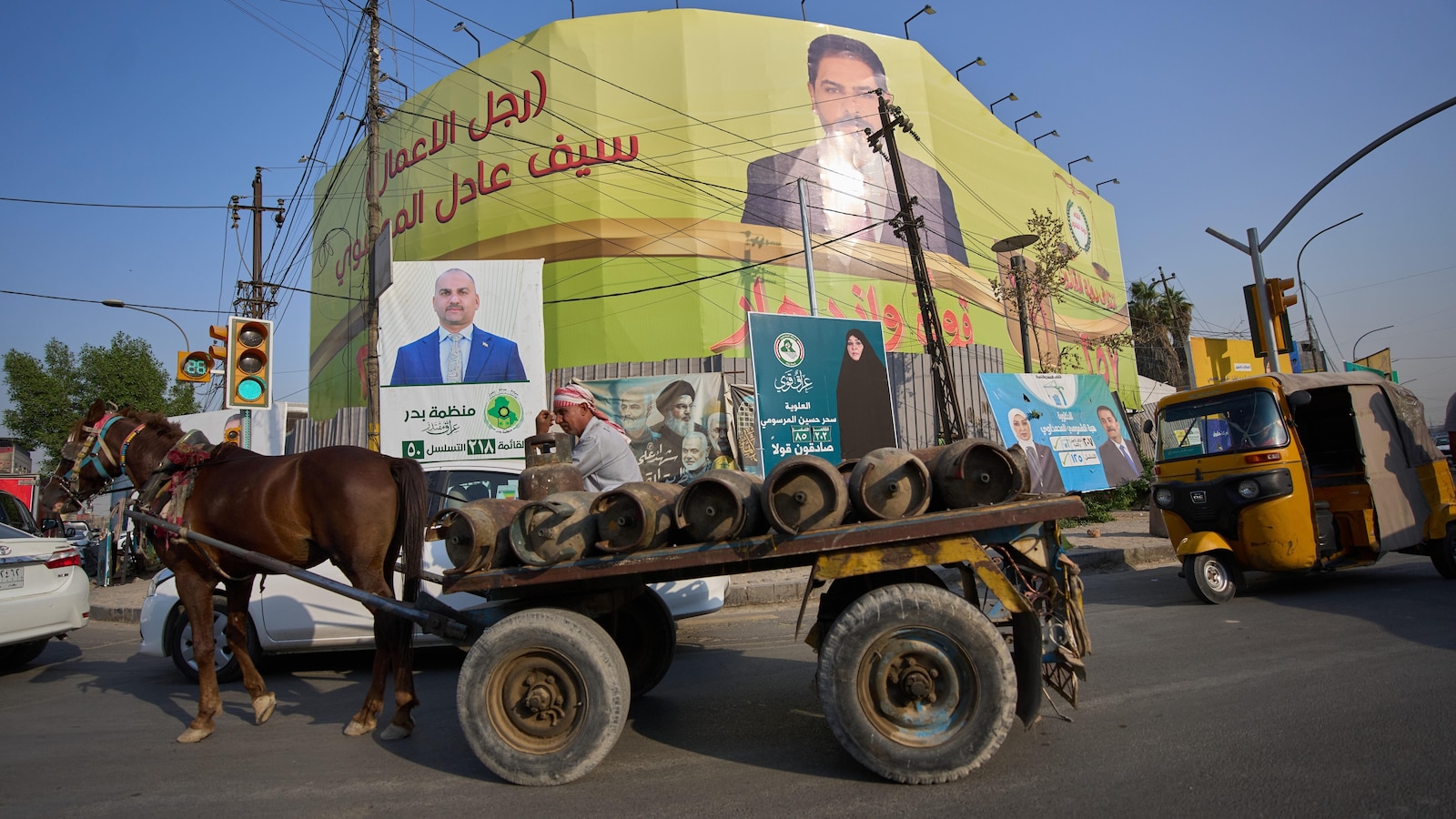
Iraq Begins Parliamentary Elections Amid Regional Tensions
Iraqis have begun voting in parliamentary elections, starting with security forces and displaced persons today, with the general election scheduled for Tuesday, a vote that will significantly shape the country’s political future and its delicate regional balancing act.
This year’s election marks the seventh since the 2003 U.S.-led invasion and the ousting of Saddam Hussein, a period characterized by civil war and the rise of extremist groups. While violence has decreased in recent years, economic hardship and inadequate public services – including frequent power outages despite Iraq’s vast energy resources – are now primary concerns for voters. The election law mandates that 25% of the 329 parliamentary seats be reserved for women, with nine allocated to religious minorities, maintaining Iraq’s post-2003 power-sharing system.
A total of 7,744 candidates are competing, representing a range of sectarian-aligned parties and independent hopefuls, including prominent Shiite blocs and Kurdish parties. Several Iran-linked Shiite militias are also participating through associated political parties, such as Kataib Hezbollah’s Harakat Huqouq and the Sadiqoun Bloc led by Qais al-Khazali. However, the influential Sadrist Movement, led by Muqtada al-Sadr, is boycotting the election, a move that could significantly alter the political landscape, especially in the Sadrist stronghold of Sadr City. Voter registration numbers are down from 2021, with only 21.4 million of 32 million eligible voters having updated their information. For more information on Iraq’s political system, see the Council on Foreign Relations.
Prime Minister Mohammed Shia al-Sudani, who assumed office in 2022 with the support of pro-Iran parties, is seeking a second term but faces challenges from within his own coalition and increasing pressure from the United States to rein in Iran-backed militias. The fate of the Popular Mobilization Forces, a coalition of militias formally under military control but operating with significant autonomy, is a key point of contention. Yesterday, Baghdad Provincial Council member Safaa al-Mashhadani was assassinated, highlighting ongoing security concerns despite overall improvements. This election is crucial as it will determine Iraq’s ability to navigate escalating regional tensions, particularly concerning the potential for conflict between Israel and Iran, and maintain its complex relationship with both Tehran and Washington; learn more about the U.S. relationship with Iraq on the State Department website.
Officials anticipate the final results will take several weeks to tally and verify.
